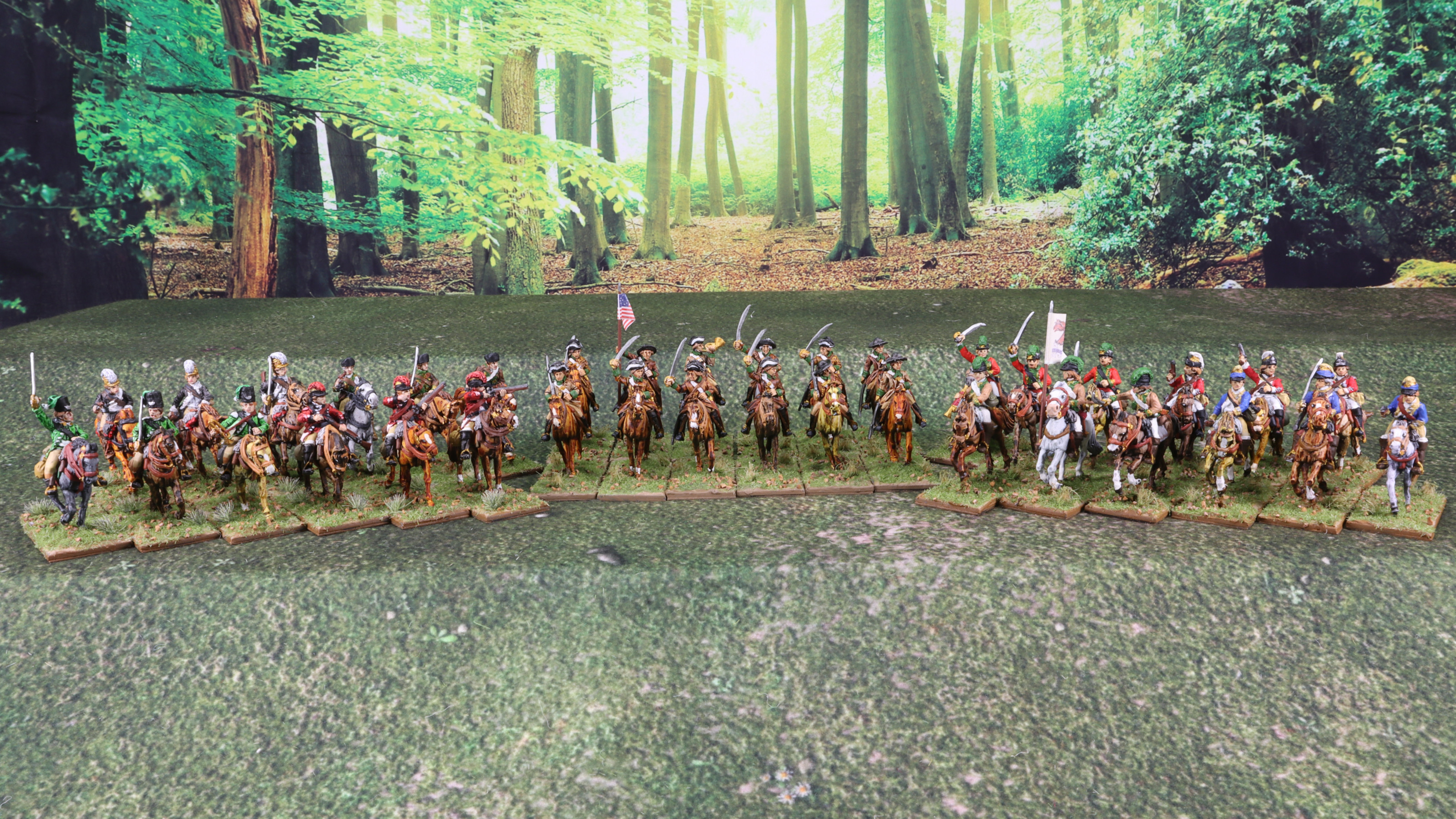
All of them are white metal castings. Some of them had separate riders and horses and some were one piece. In general, it is easier to paint separate pieces, but it does require an extra assembly step of gluing the rider to the saddle. Some of these have extra weapon arm options which require gluing also.
It's been a while since I assembled metal models. They require some good cutters and files for clean-up. The gluing, I use epoxy for strength and permanency, is a bit tougher than plastic models. And straightening out the inevitable bent weapons, arms, and legs takes some time too.
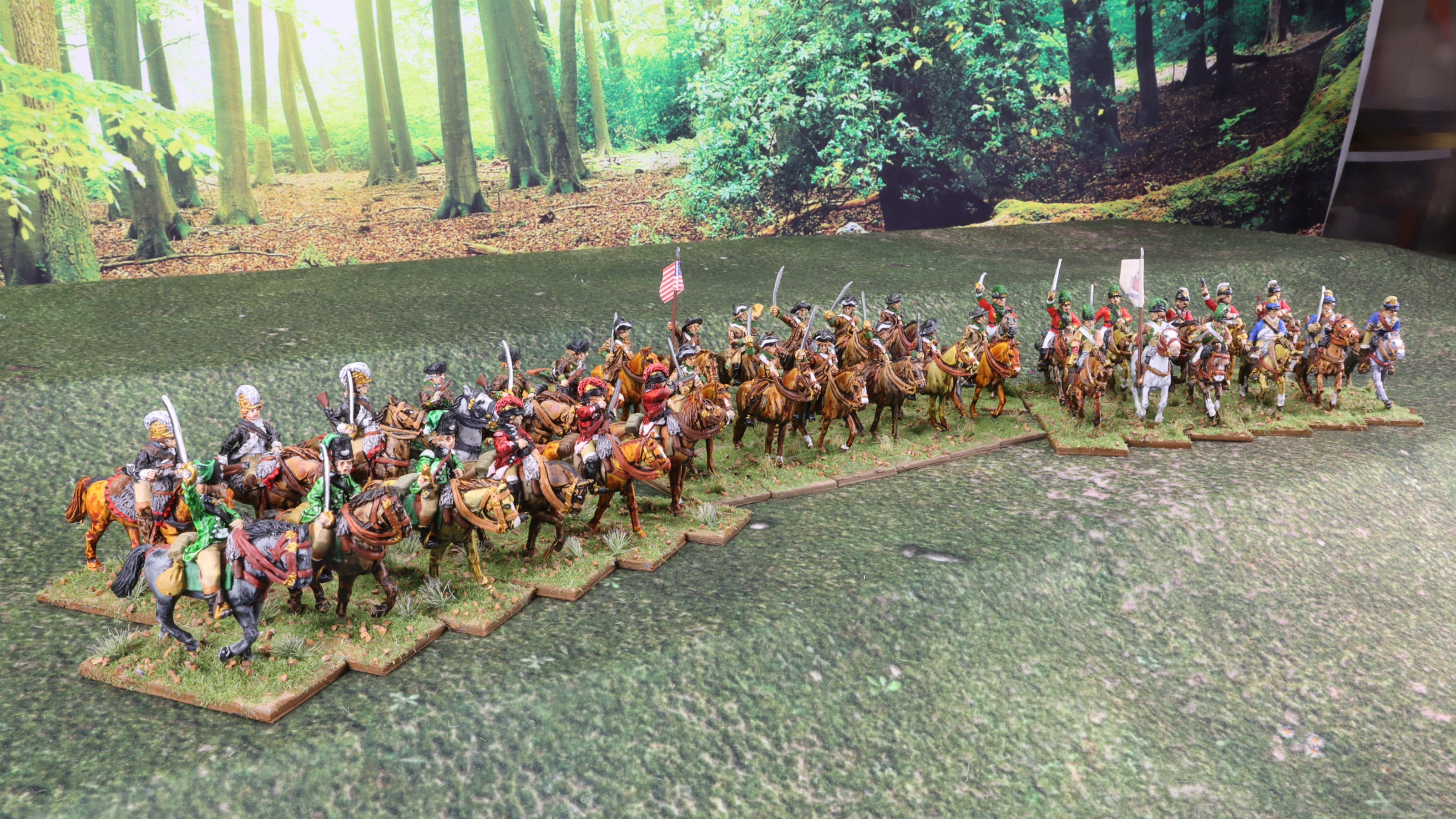
This batch of cavalry were painted in the same manner. I used Army Painter Speedpaints and Vallejo Express Paints for the horses and some coats. Speedpaints and Express Paints are translucent acrylic inks that provide a bit of free shading on a figure. They are faster but sometimes look basic and require touch up.
After speed paints, I tend to do the riders and the details with regular opaque acrylic paints. Here I use ArmyPainter Warpaints and Vallejo Model Colors in the normal modeling fashion: base color, mid tones, and highlights. This takes longer than speed paints, but I like the more finished look better.
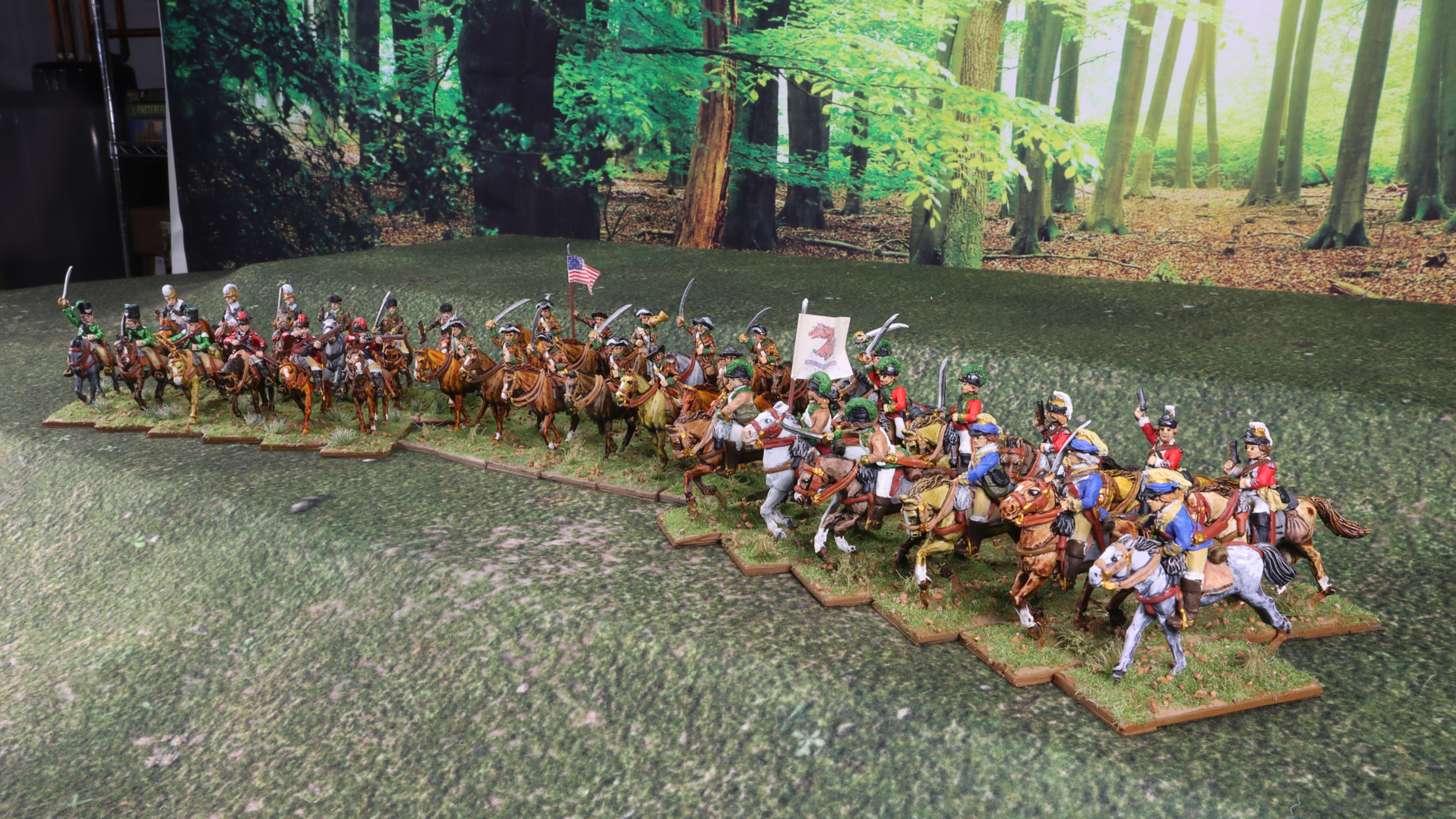
They are all based in the same manner. The model is epoxied to a flat plastic base. The plastic base is glued to a flat ferrous metal base which lets them magnetically attach to a storage box or tray. (Photo at the end of this article.) Finally the base gets some scale rocks, grass, and any features like the grass tufts shown here.
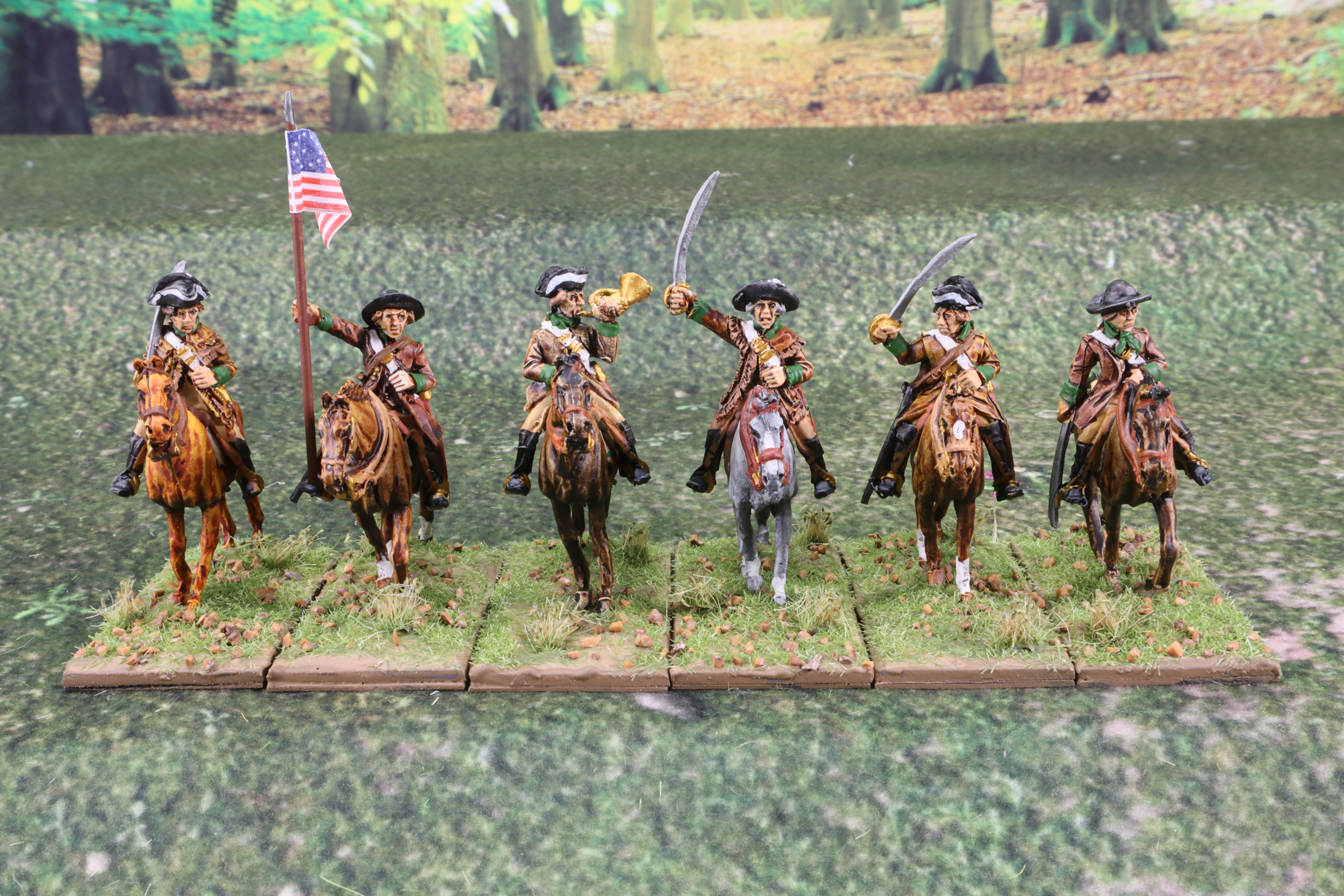
These figures are from Brigade Games. AWI - American War of Independence line. There are three product codes (BG-AWI170, 171, and 172) which are command, sword-shouldered, and sword-raised. Details are good, and Brigade Games have an extensive American War of Independence line.
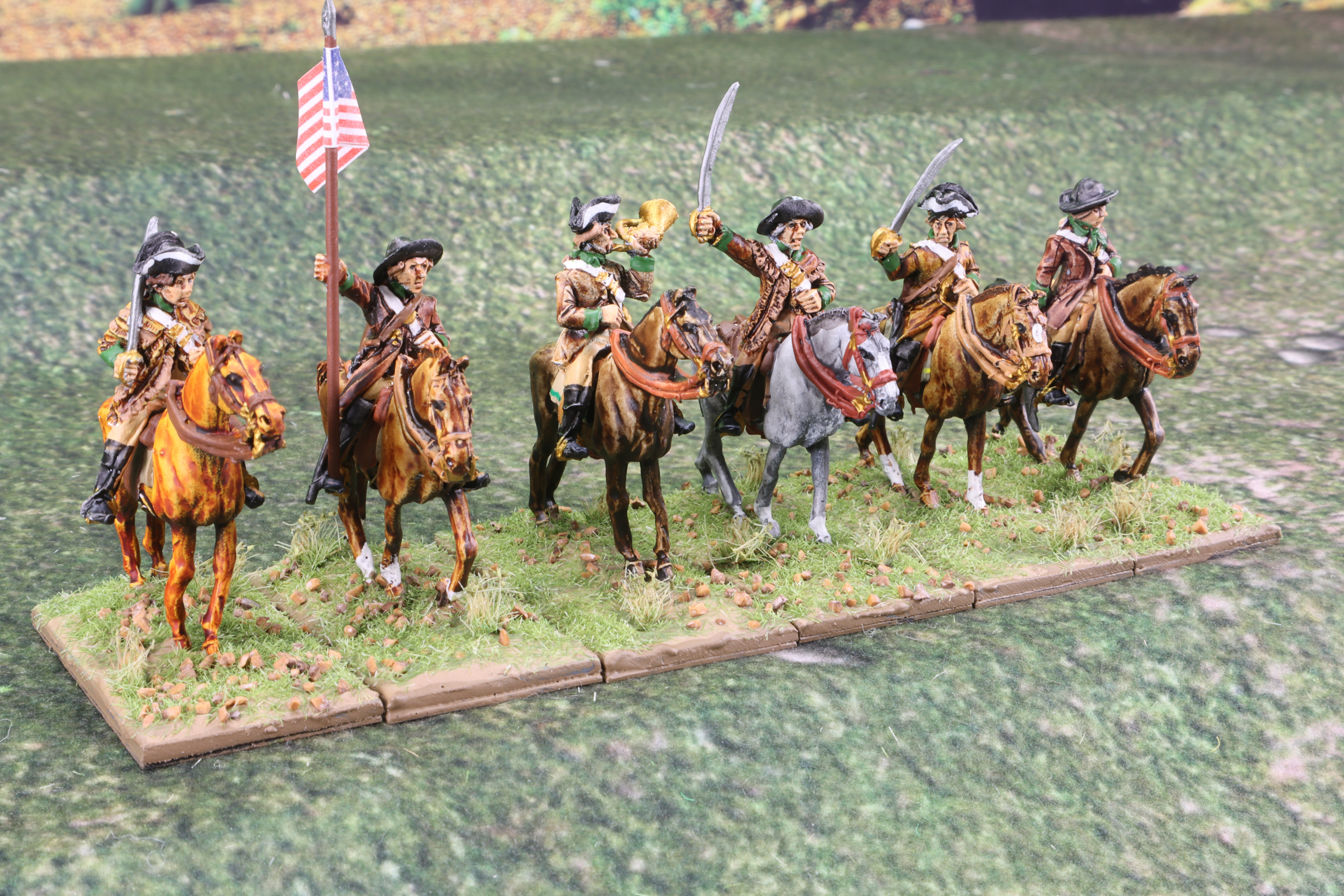
Horses and jackets are painted with speed paints. It looks pretty basic to me. Perhaps next time I will add more highlighting. When you have lots of figures in a group sometimes the details do not matter.
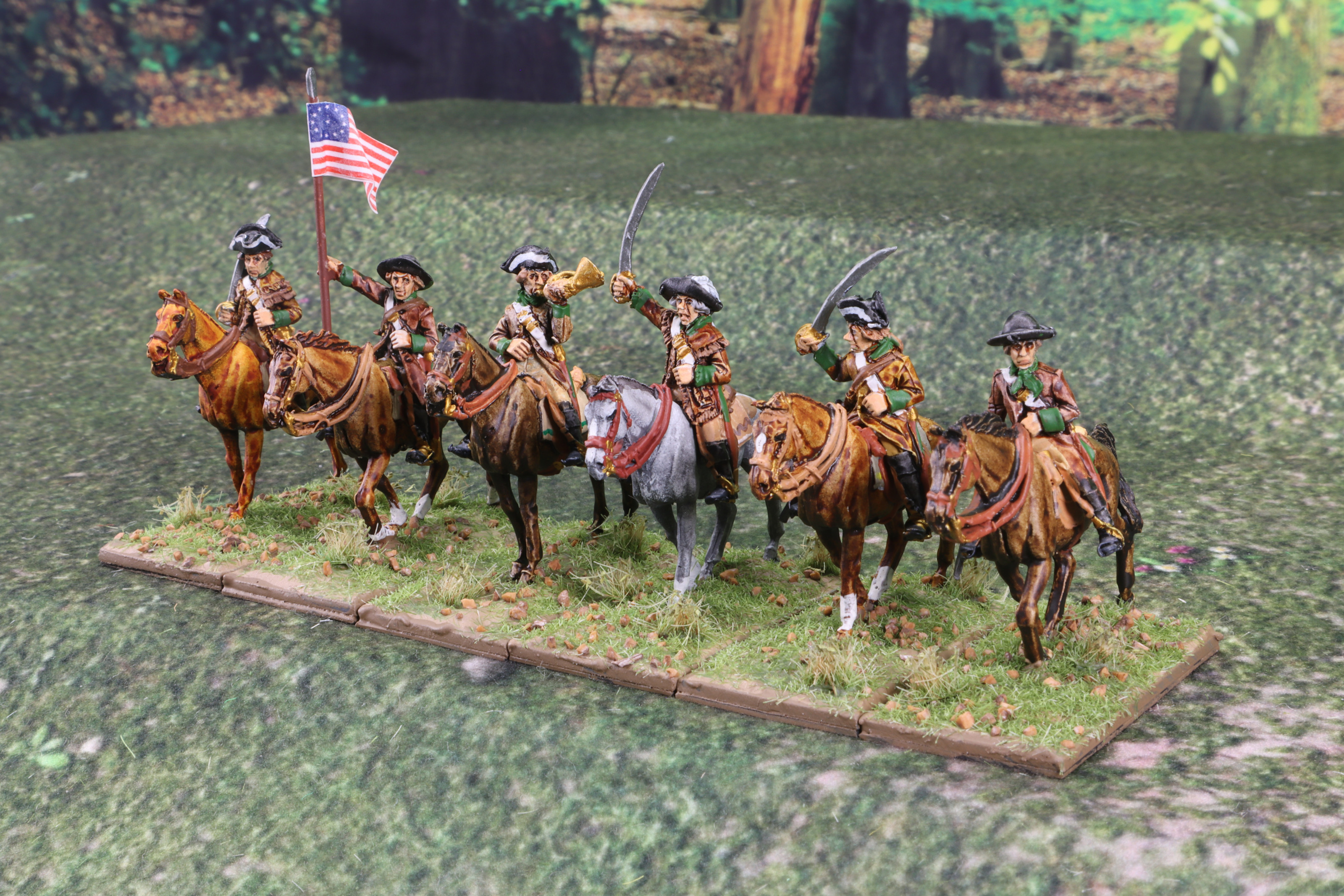
These don't represent one specific militia cavalry unit, but I envisioned them as some group of Virginia militia ready to battle in the southern theater, perhaps at the Battle of Guildford Court House. The flag bearer holds the "Cowpens Flag" used at the Battle of Cowpens, also in the southern theater.
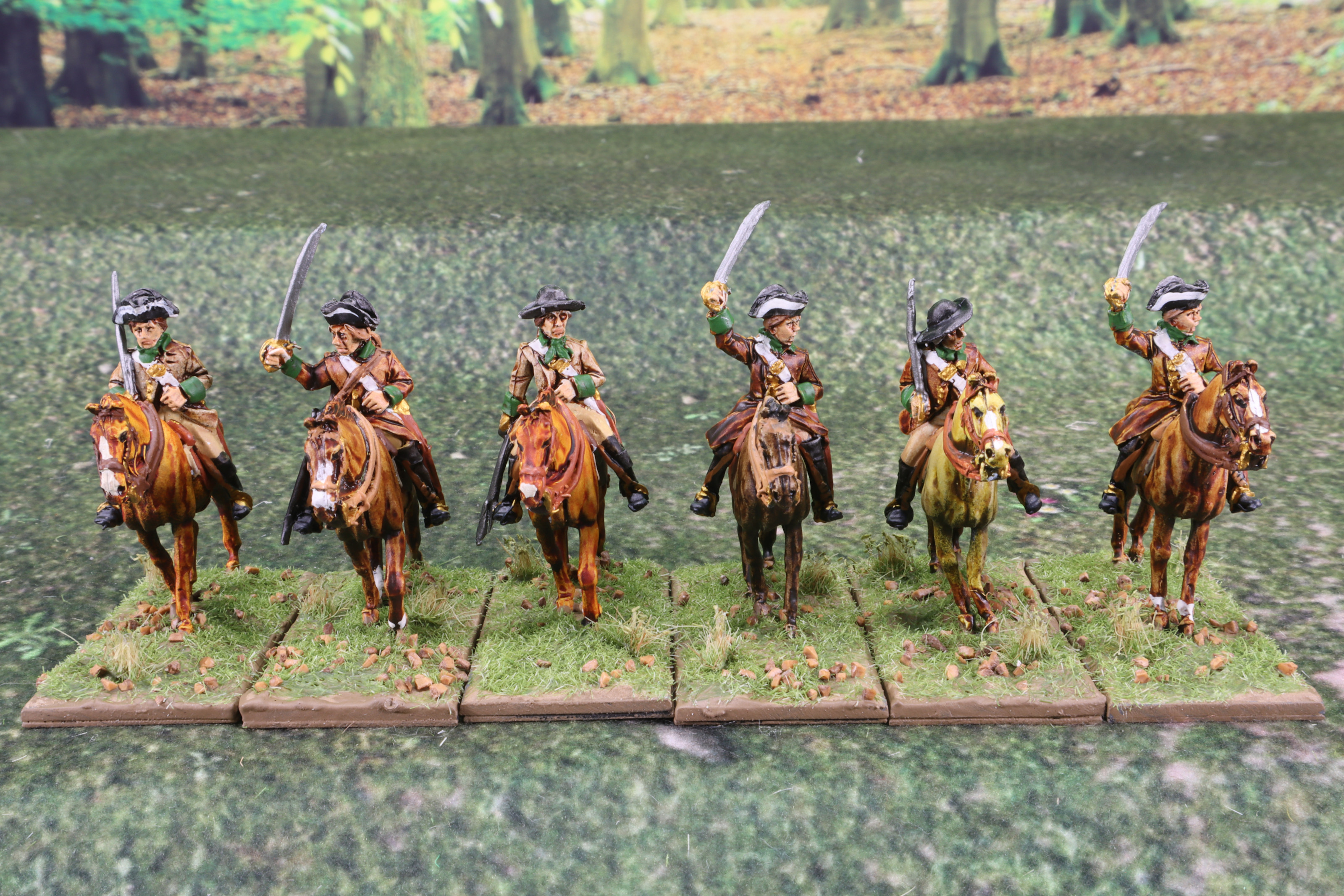
The minis are photographed in the same manner. The background setting is done with a cloth terrain mat draped over some books for elevation. There is a photographers forest background which is left slightly out of focus for effect.
Since minis don't move, there is a camera with a tripod, lots of LED lighting (which lets you control the color temperature of the light), and a very tiny aperture. A f-stop of F22 is needed to get good front to back focus for the minis.
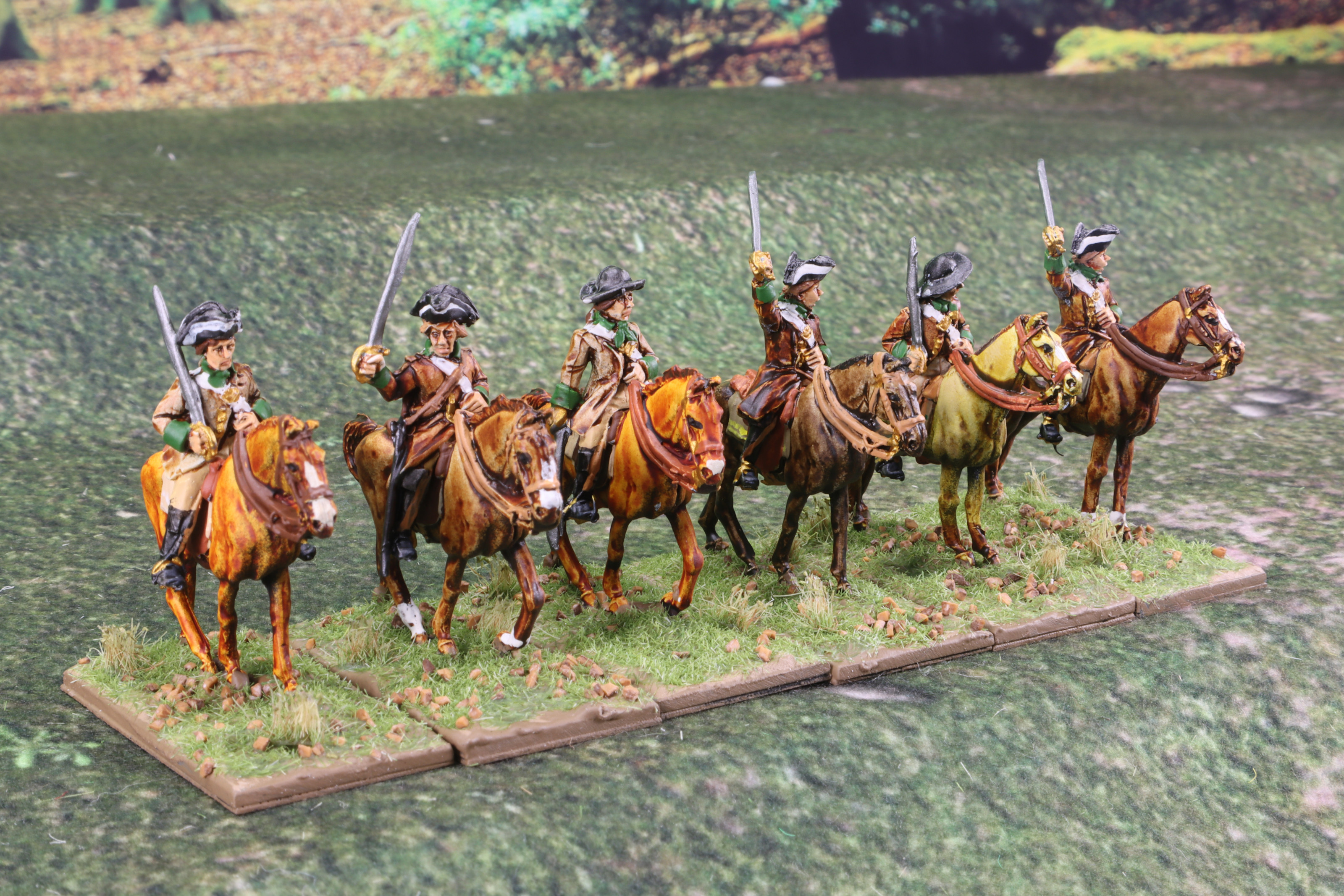
With photos this large, every painting mistake is magnified. My ageing eyes can take it to a certain level, but if I really wanted to be better, I should get some magnifiers. It's a time cost versus benefit calculation.
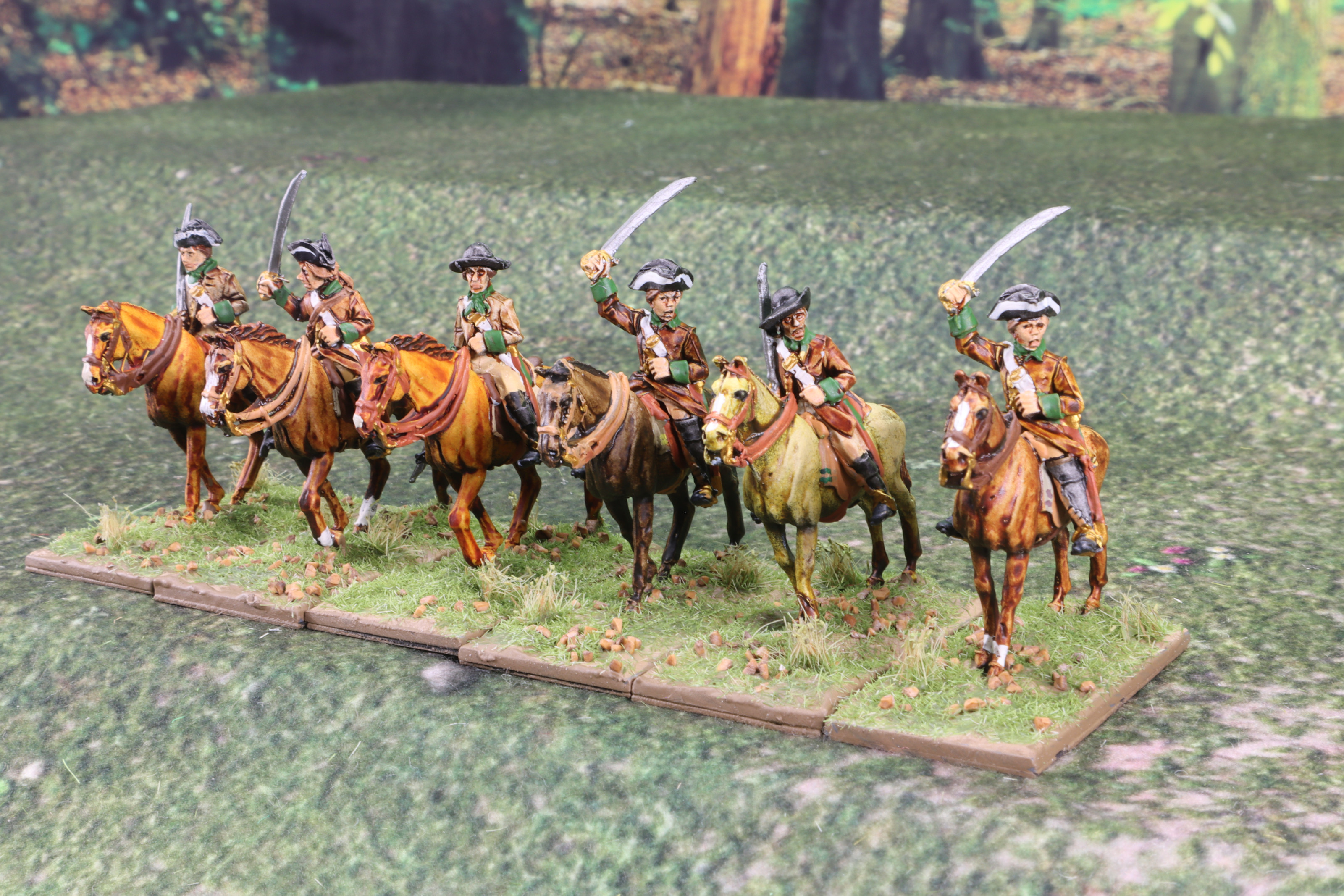
I say US Militia, but for gaming purposes, I'm sure they could also be used as Loyalist Militia cavalry as well.
Loyalists were people in the American War for Independence who fought for the British side. There were plenty of Loyalists in the states, such that many historians call the AWI America's first civil war.
During the war the Revolutionaries and Loyalists killed each other and confiscated homes and farms. After the war many Loyalists moved to other countries or laid low to avoid further punishment.
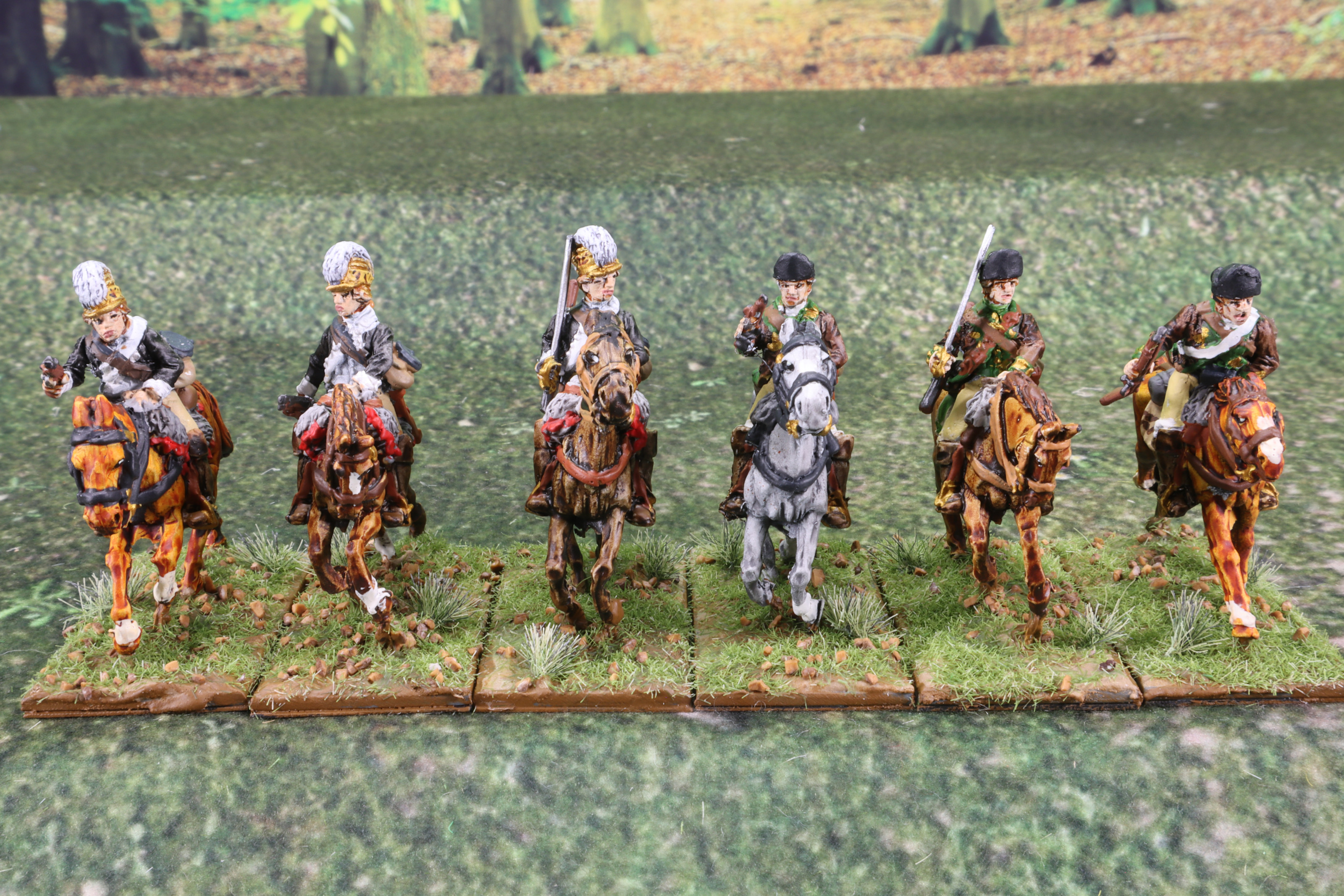
The first three cavalry men in black coats are US 4th Continental Light Dragoons. Originally dressed in captured British red coats with white facings, the dragoons had dyed the coats black to avoid being shot by friendly troops. The figures are from Perry Miniatures AW 191.
A dragoon is typically a cavalry combatant who can dismount and fight on foot as well.
The second three cavalry men in brown coats are US 1st Continental Light Dragoons. These cavalry fought with Count Casimir Pulaski, who is the namesake for the Pulaski Skyway bridge in New Jersey. The cavalry had multiple uniforms including this brown uniform with green facings. Later in the war they fought in the southern US theater. The figures are from Perry Miniatures AW 185.
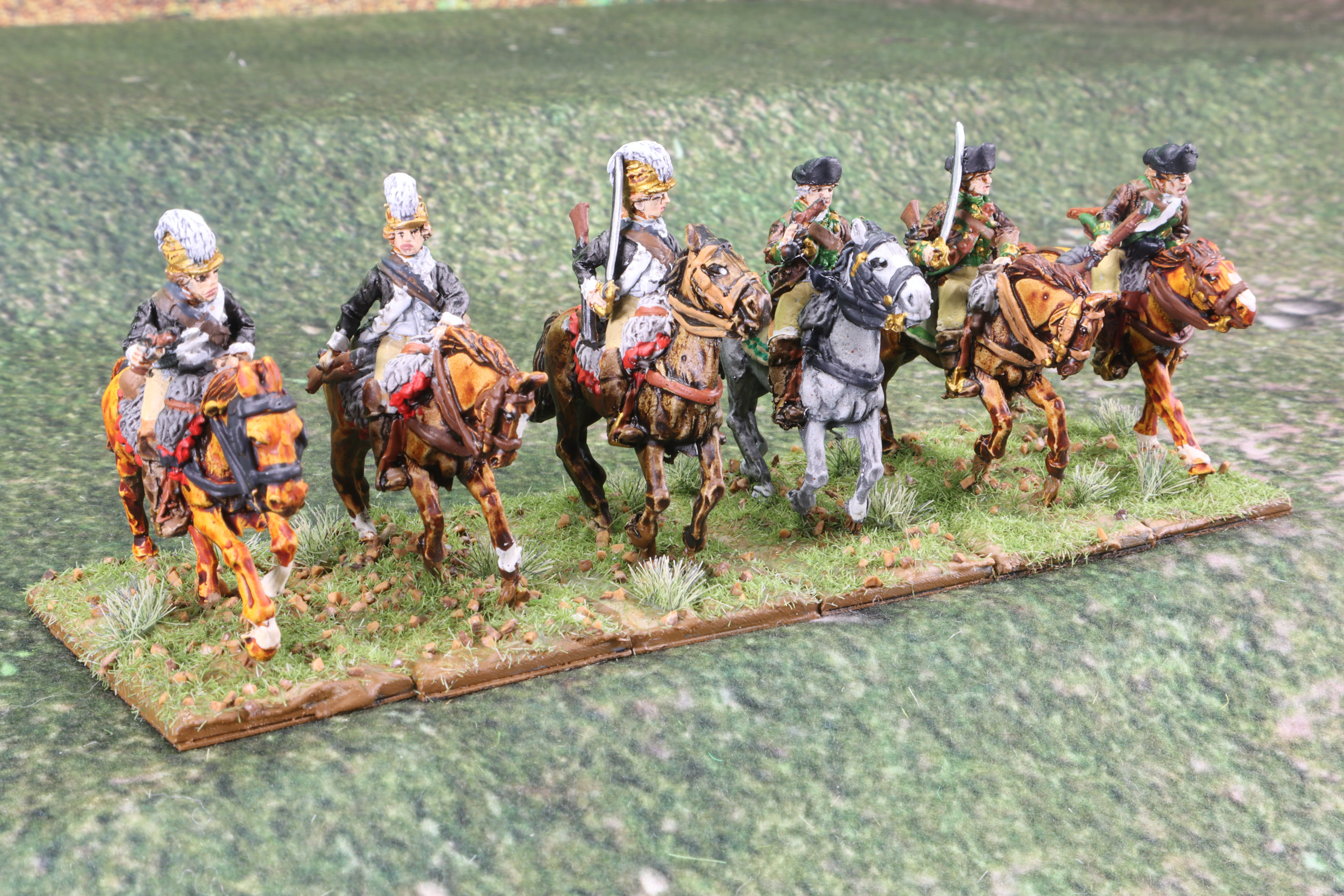
You might notice these cavalry figures often have a furry thing at the bottom of the horse's mane, near the saddle pommel. I saw these in many paintings, but could not find what they were from the web.
I discovered a reenactor group and sent an email to to 4th Light Dragoons, Moylan's Horse. They very quickly replied that they are bear or sheep skin furs, attached to the pistol holsters, and they keep the pistols dry and ready to fire. The leather pistol holsters stick out from the bottom of the furs.
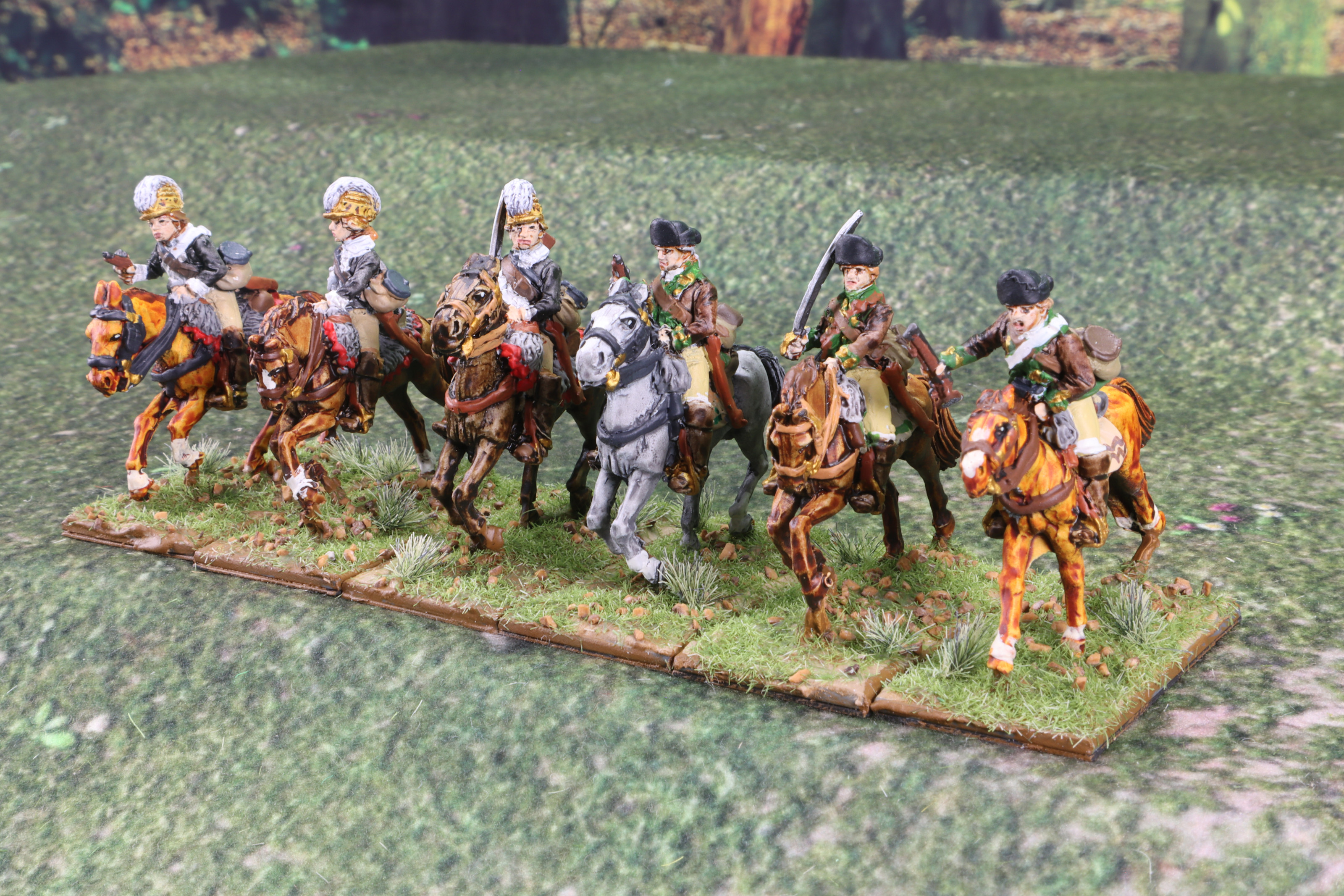
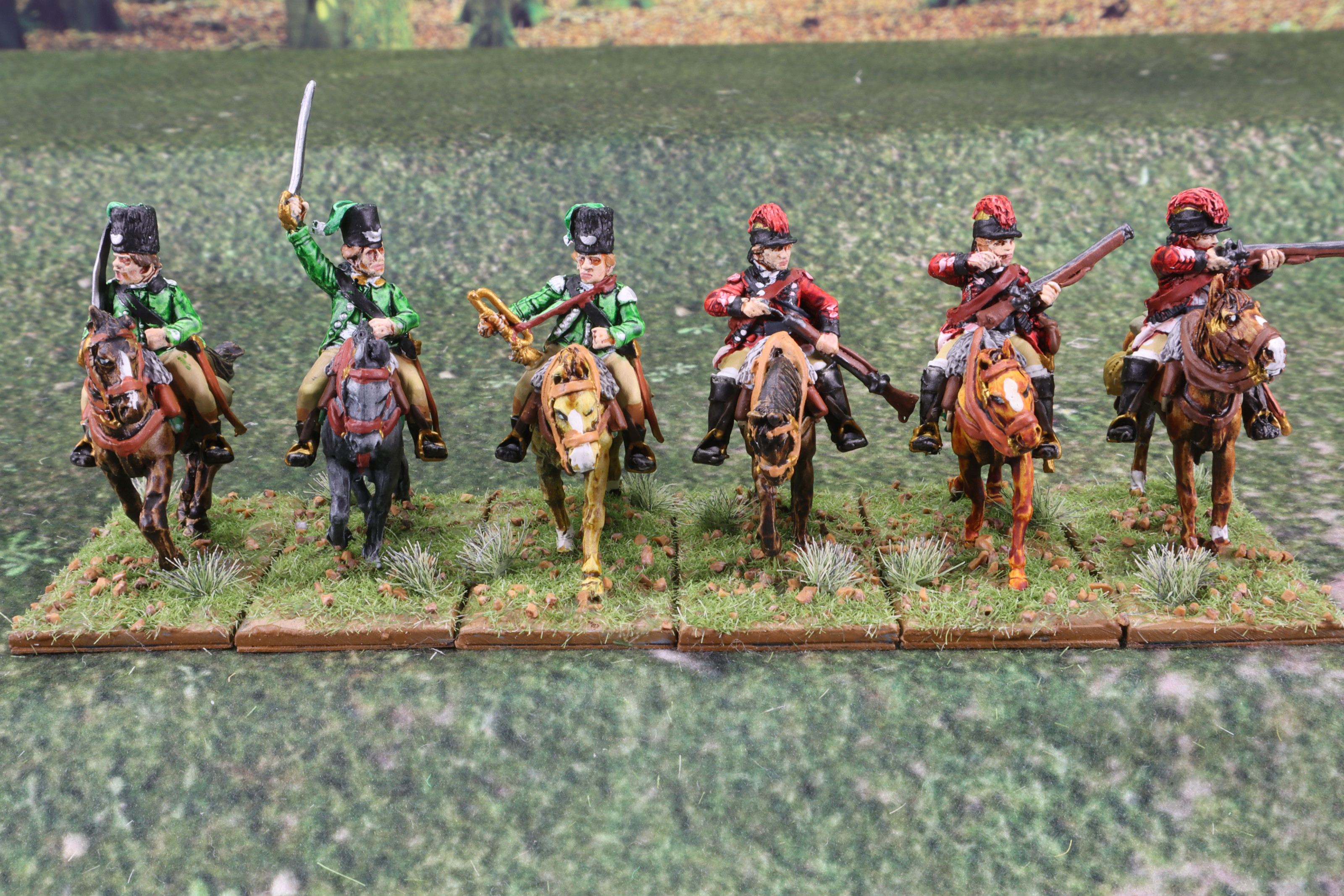
The first three cavalry in the green coats and black facings are are the Loyalist Queen's Rangers. Later they were named Simcoe's Rangers after John Graves Simcoe. They successfully campaigned all over during the AWI and later surrended at Yorktown. They are known by the silver crescent on their hussar style helmet.
The figures are from Perry Miniatures AW 27.
The second group of three cavalry in the red coats are the British 16th Light Dragoons also known as the Queen's Own. They carry carbine rifles.
The figures are from Perry Miniatures AW 18.
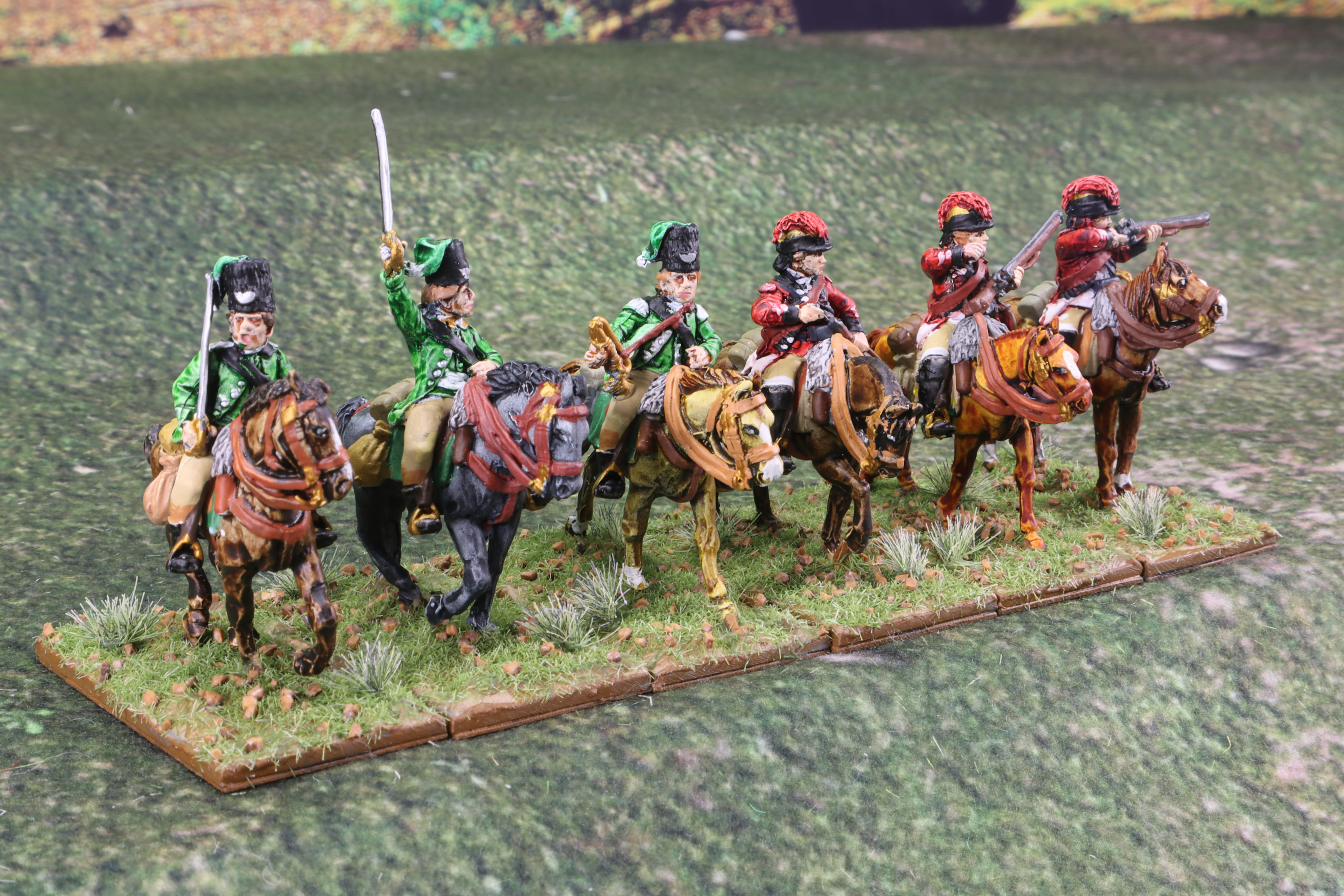
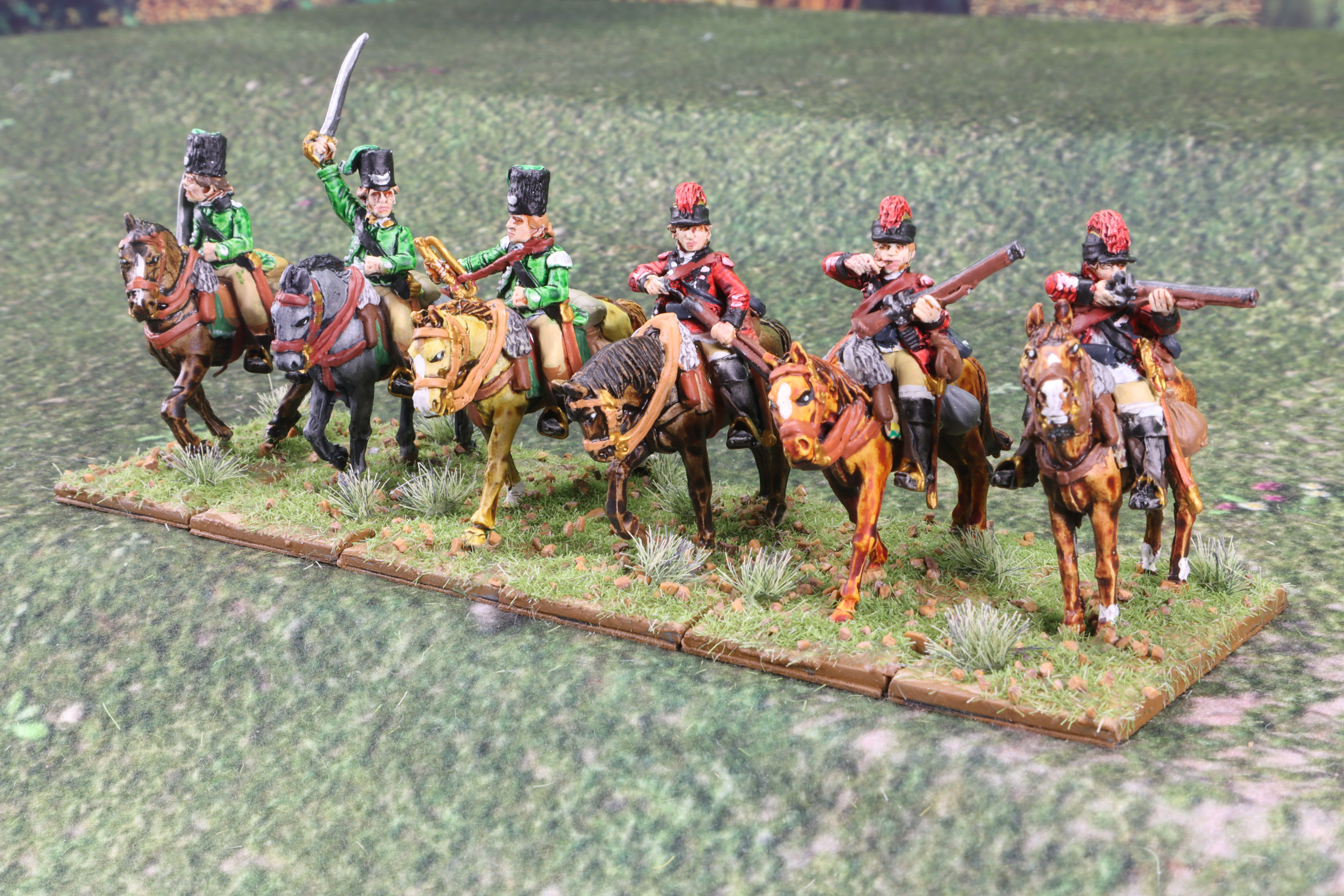
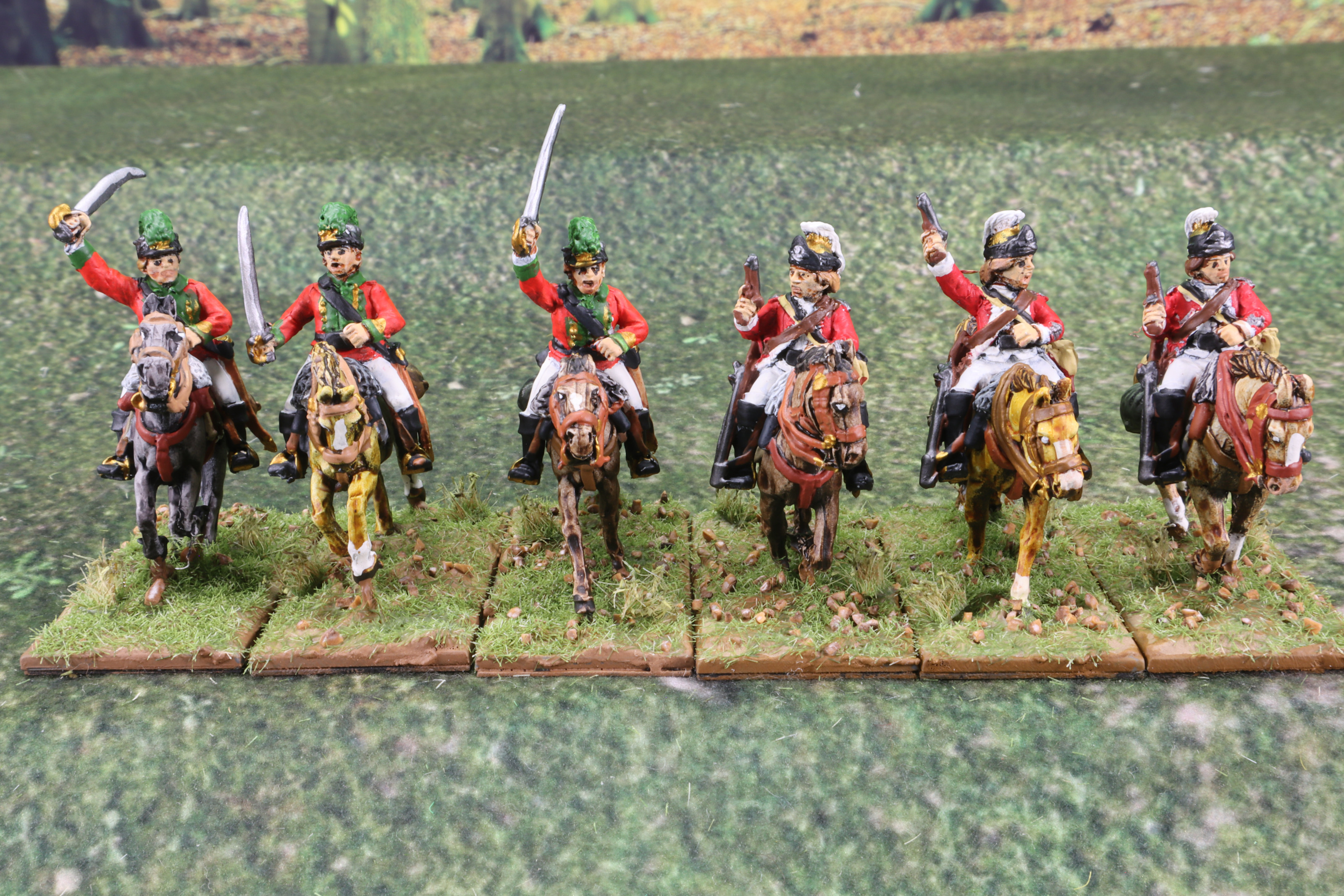
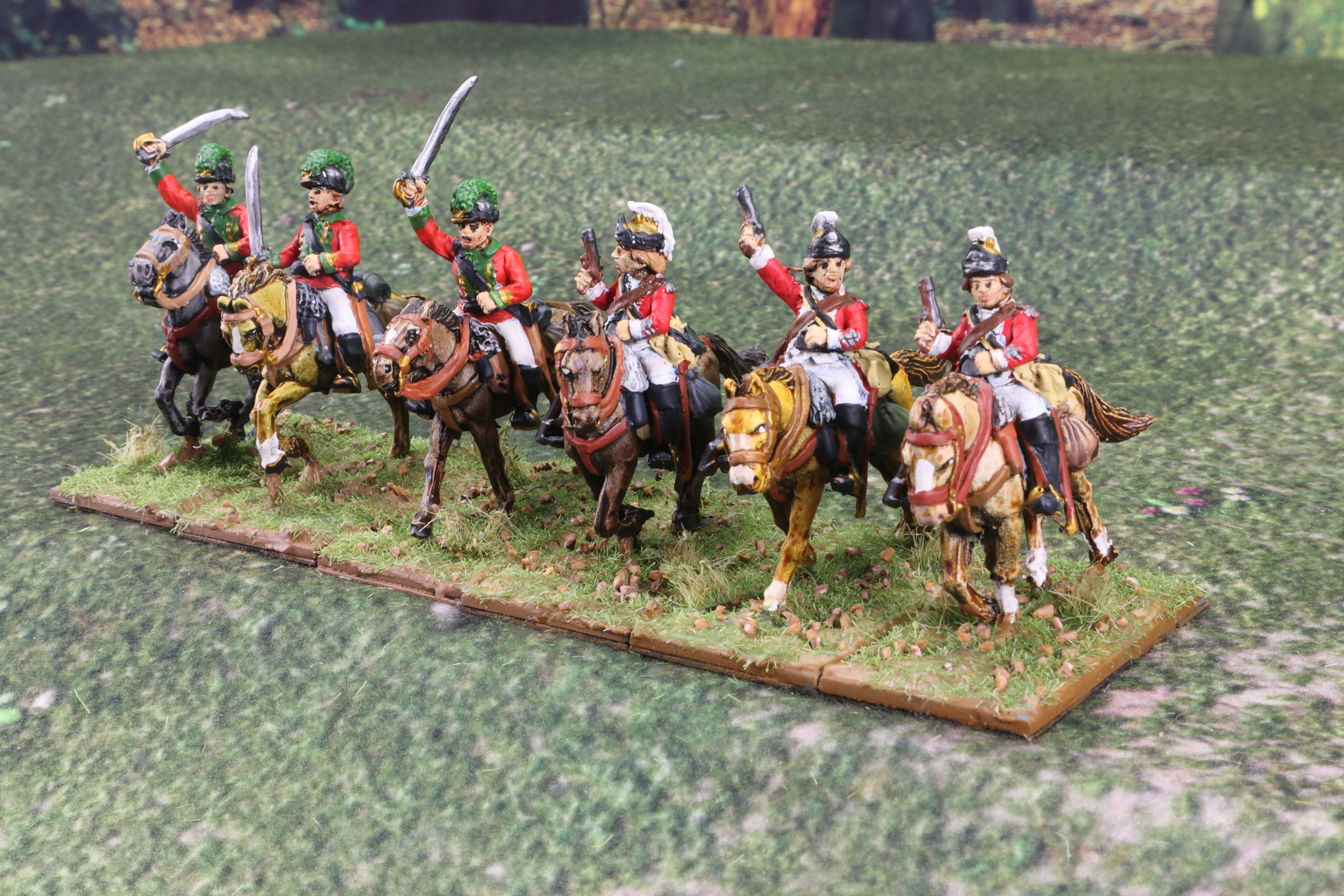
The first three cavalry figures in red coats with green facings are the Loyalist British Legion formed by Sir Henry Clinton in 1778 from Loyalists of New York, Pennsylvania, and New Jersey and commanded by Lord Cathcart. They are famous for their leader Banastre Tarleton, who was known to be a ruthless pursuer of fleeing militia and was successful in the early part of the war. This helmet was known at the Tarleton helmet. They were badly cut up in the Southern theater at Cowpens and Guildford Court House.
The figures are from Perry Miniatures AW 132.
The second group of figures with the red coats and white facings is the British 17th Light Dragoons or Light Lancers. This regiment fought at Bunker Hill and many of the New York battles. Like Tarleton's Legion, they were counter charged and suffered at the battle of Cowpens. On their black helmet there is a silver skull and cross bones with a banner saying "OR GLORY". Death or glory!
The figures are from Perry Miniatures AW 15.
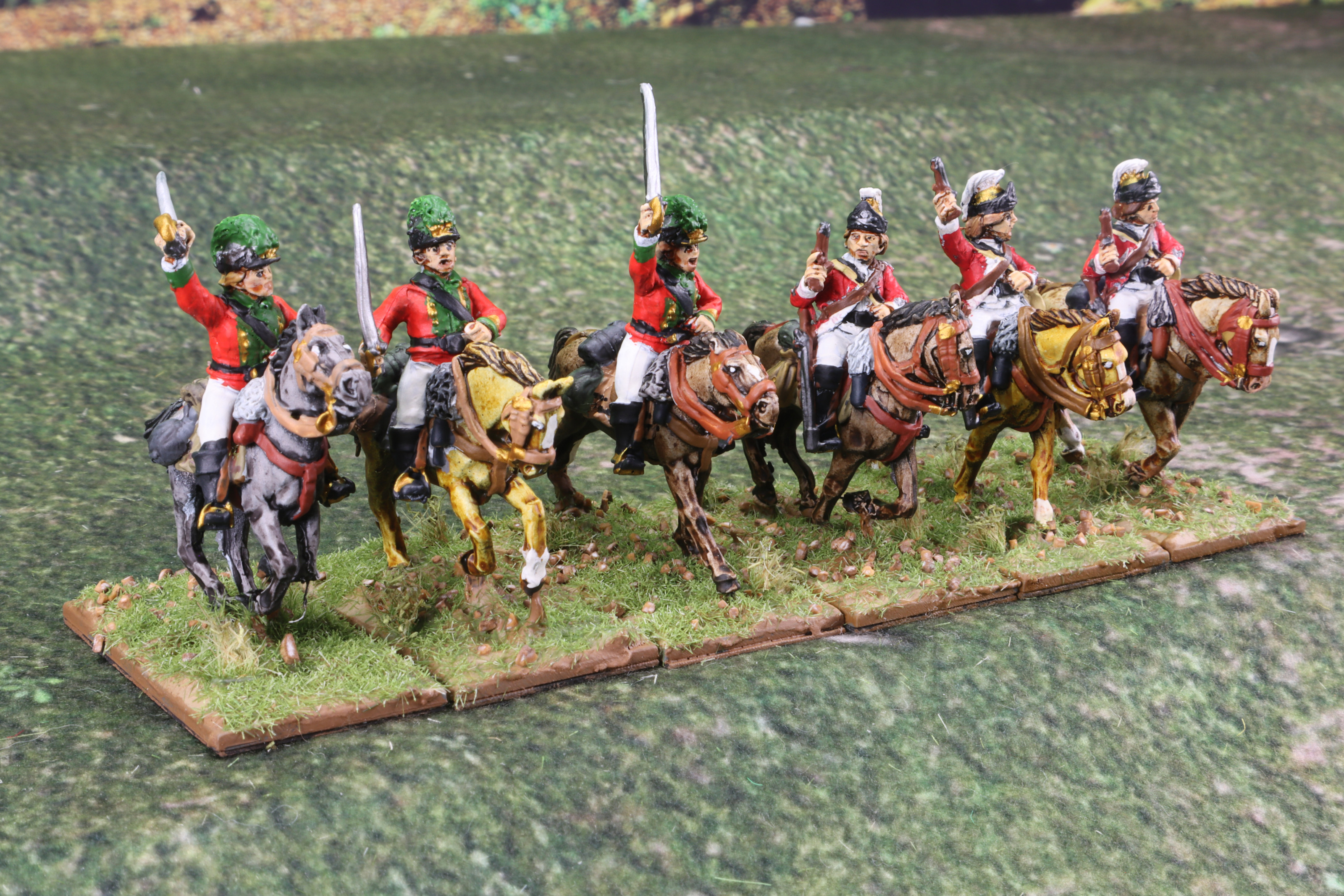
I was painting these figures when I read the David Griffin book Lost British Forts of Long Island. It turns out that Banastre Tarleton was in Coram, New York with his unit foraging the horses in the lush Long Island farms. I was painting the red coat of the figure with the paint I bought at Men at Arms hobby store in Coram, New York!
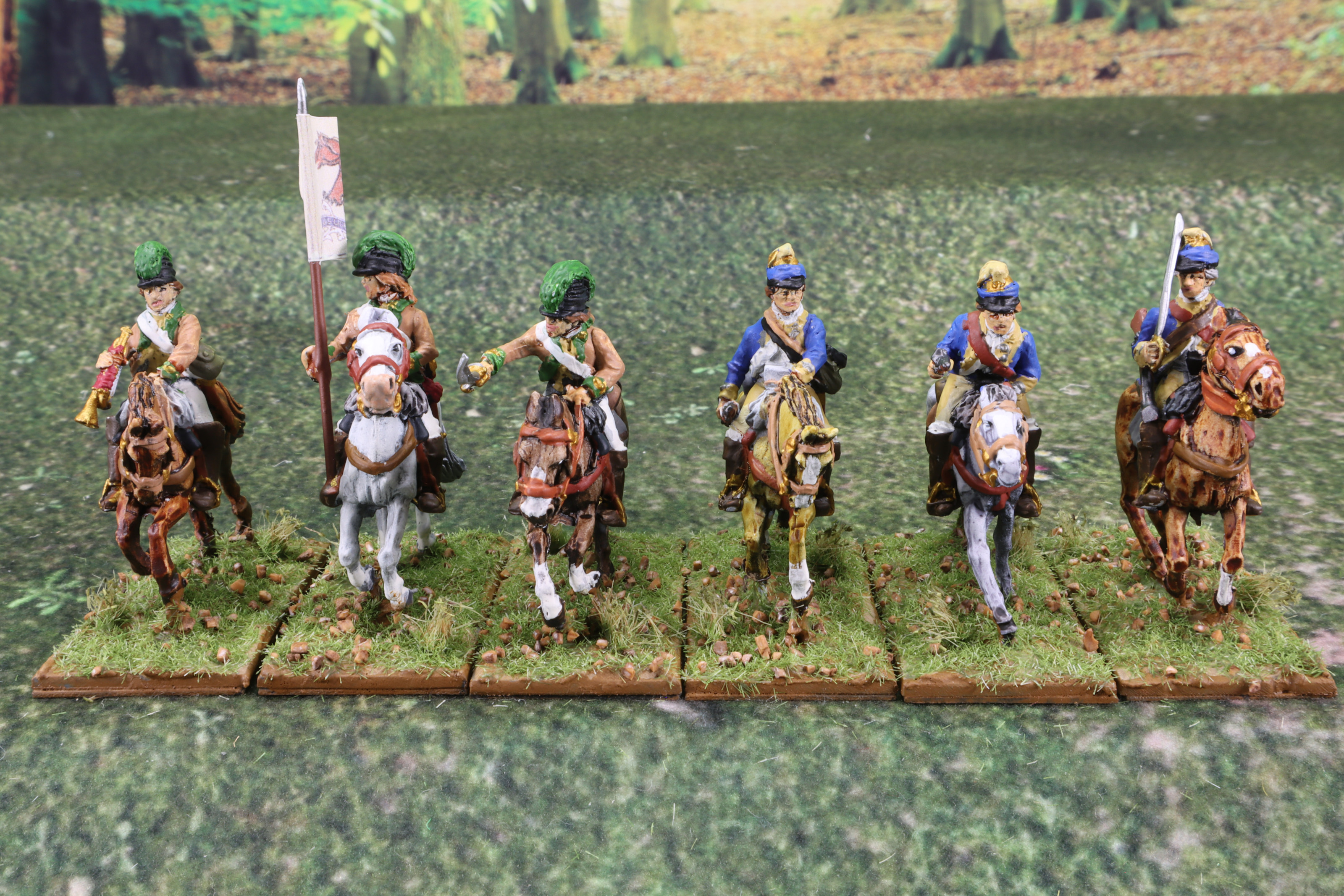
The first three figures on the left in brown coats and green facings are Lee's Legion. They were part of the US 1st Continental Light Dragoons but later reformed as an independent unit under Henry "Light Horse Harry" Lee. This unit also served in the southern US theater at Battle of Guildford Court House. The flag bear carries their regimental emblem.
The figures are from Perry Miniatures AW 182.
The second group of figures with the blue uniform and buff facings are the US 2nd Continental Light Dragoons. These troop were largely from Connecticut, Massachussets, and new Jersey. They fought at the Battle of Saratoga and Yorktown.
The figures are from Perry Miniatures AW 182.
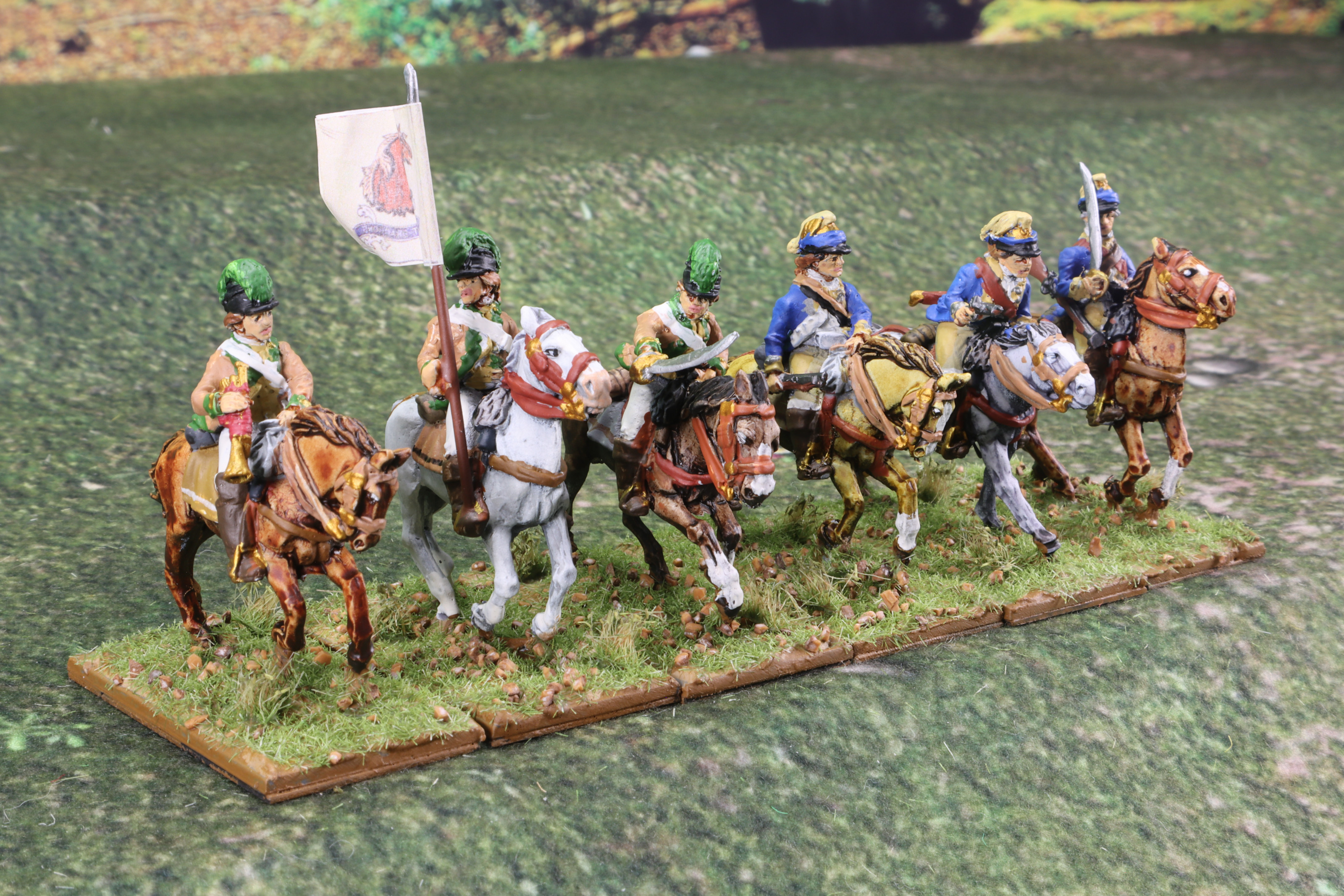
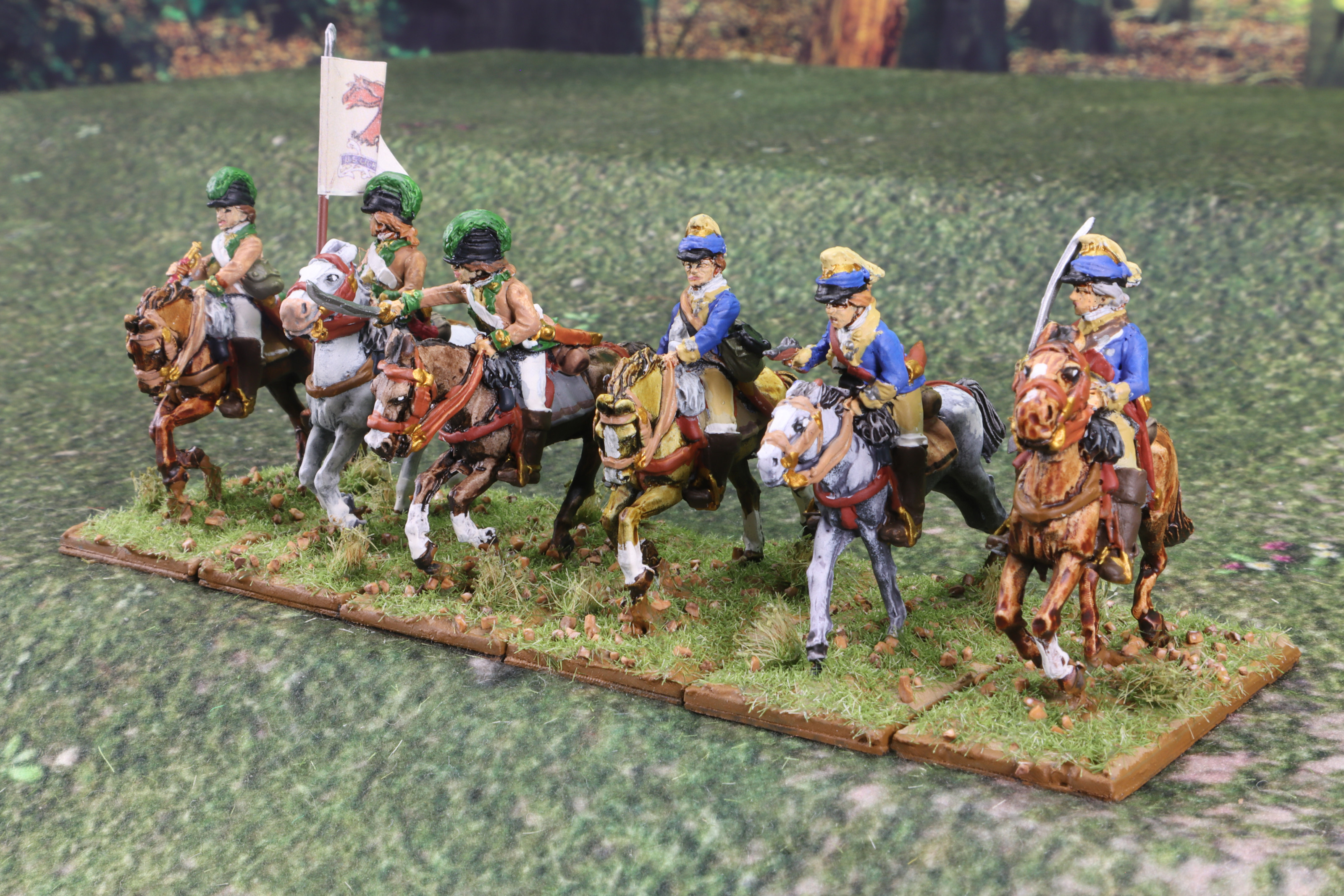
The 2nd Continental Dragoons also served as George Washington's personal body guard. They also served as "Washington's Eyes" because they served in spying duty. Major Benjamin Tallmadge served as a spy on Long Island.
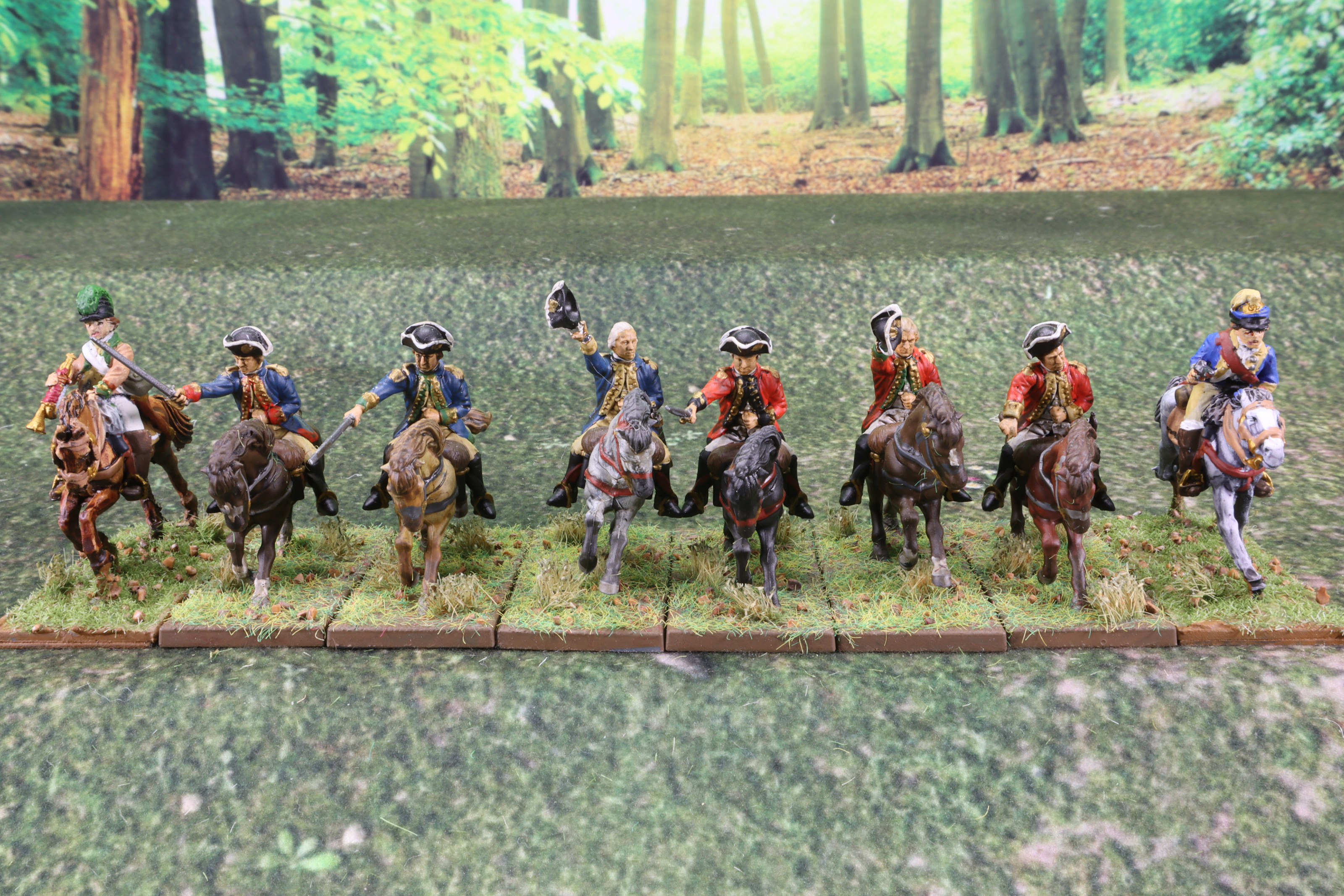
This photo shows six Cavalry General figures in the center. From left to right the figures represent Gates, Greene, Washington, Cornwallis, Howe, and Clinton. They are plastic miniatures from Warlord Games artillery and commanders set.
The commanders are flanked by two of Perry Miniatures from the previous photos. You can see the metal Perry Miniatures are slightly larger than the plastic Warlord Games miniatures.
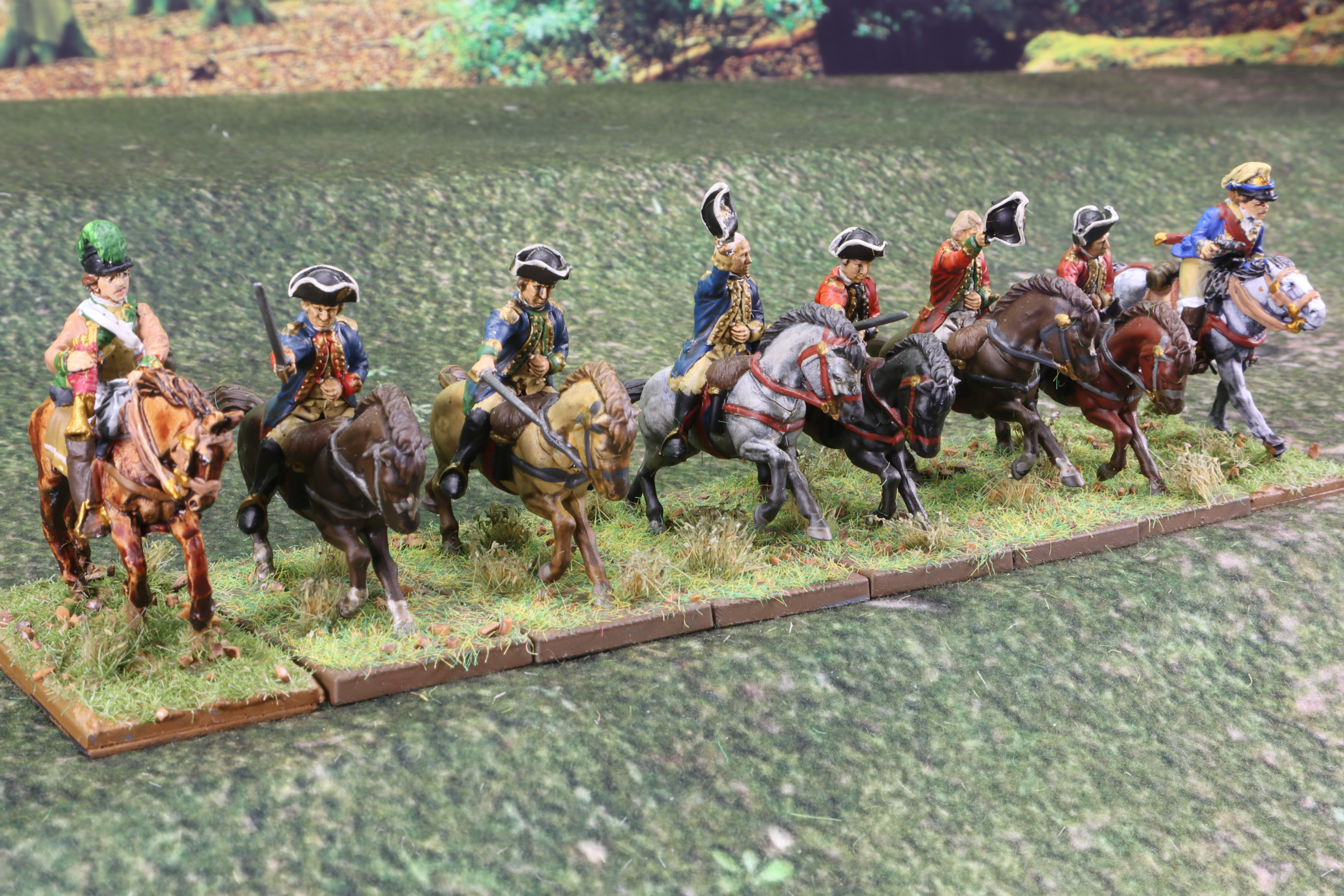
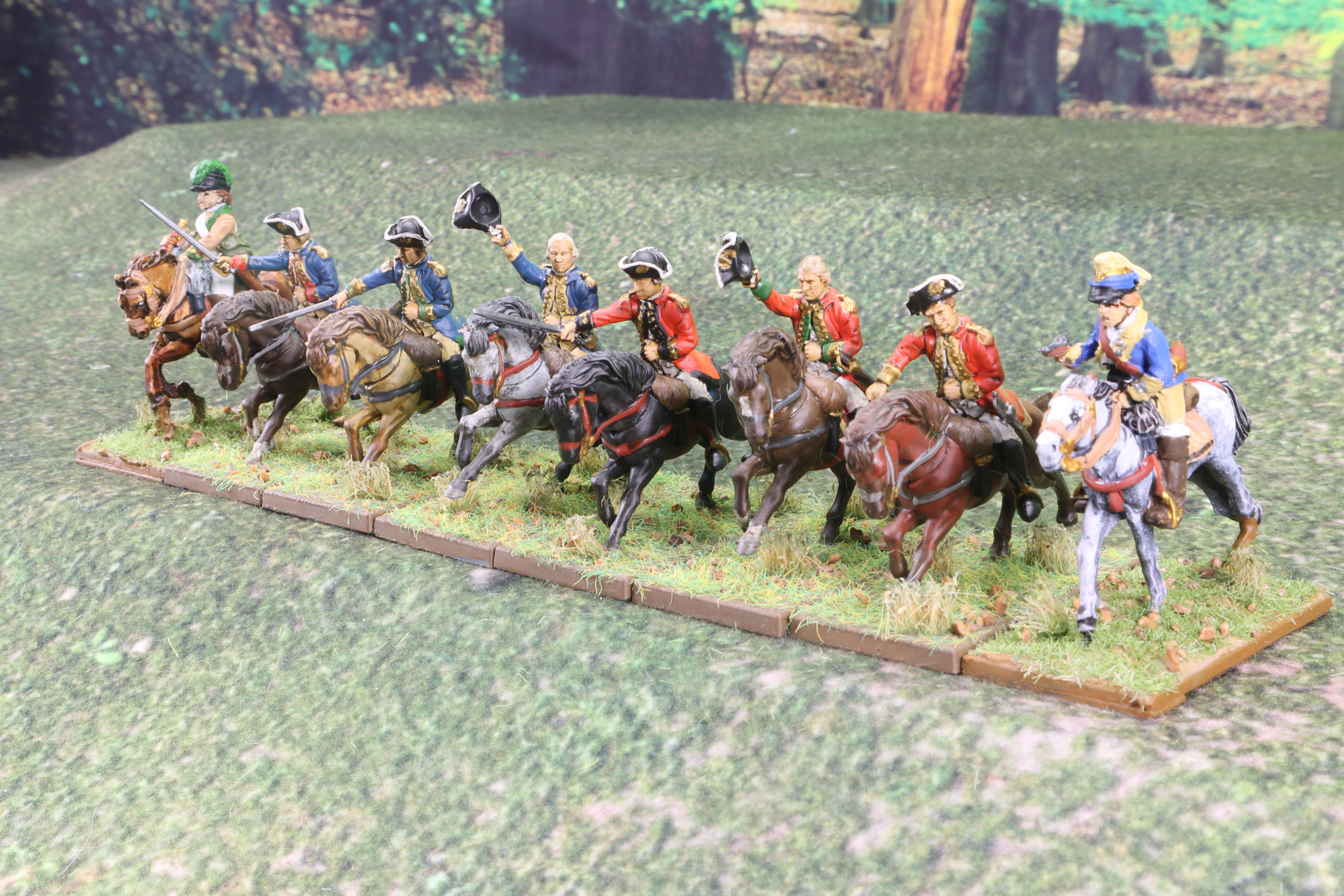
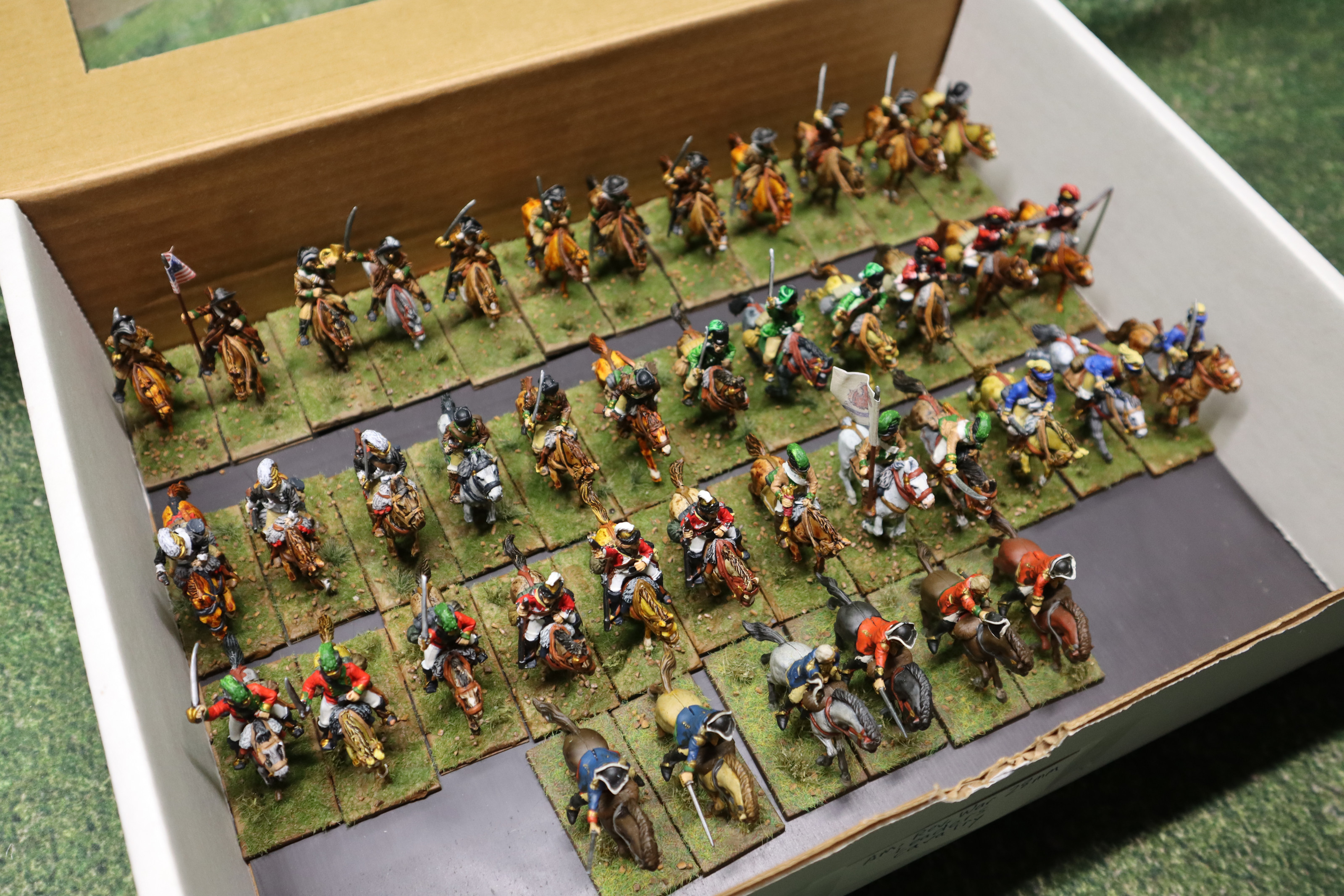
The box is a cardboard literature mailer. Very inexpensive, about one dollar a box. I line the box bottom with magnetic sheet, the kind used for car door advertisements. Also very inexpensive. The figures all have ferrous sheet metal on the bottom, and they stick to the box bottom and do not slide around.