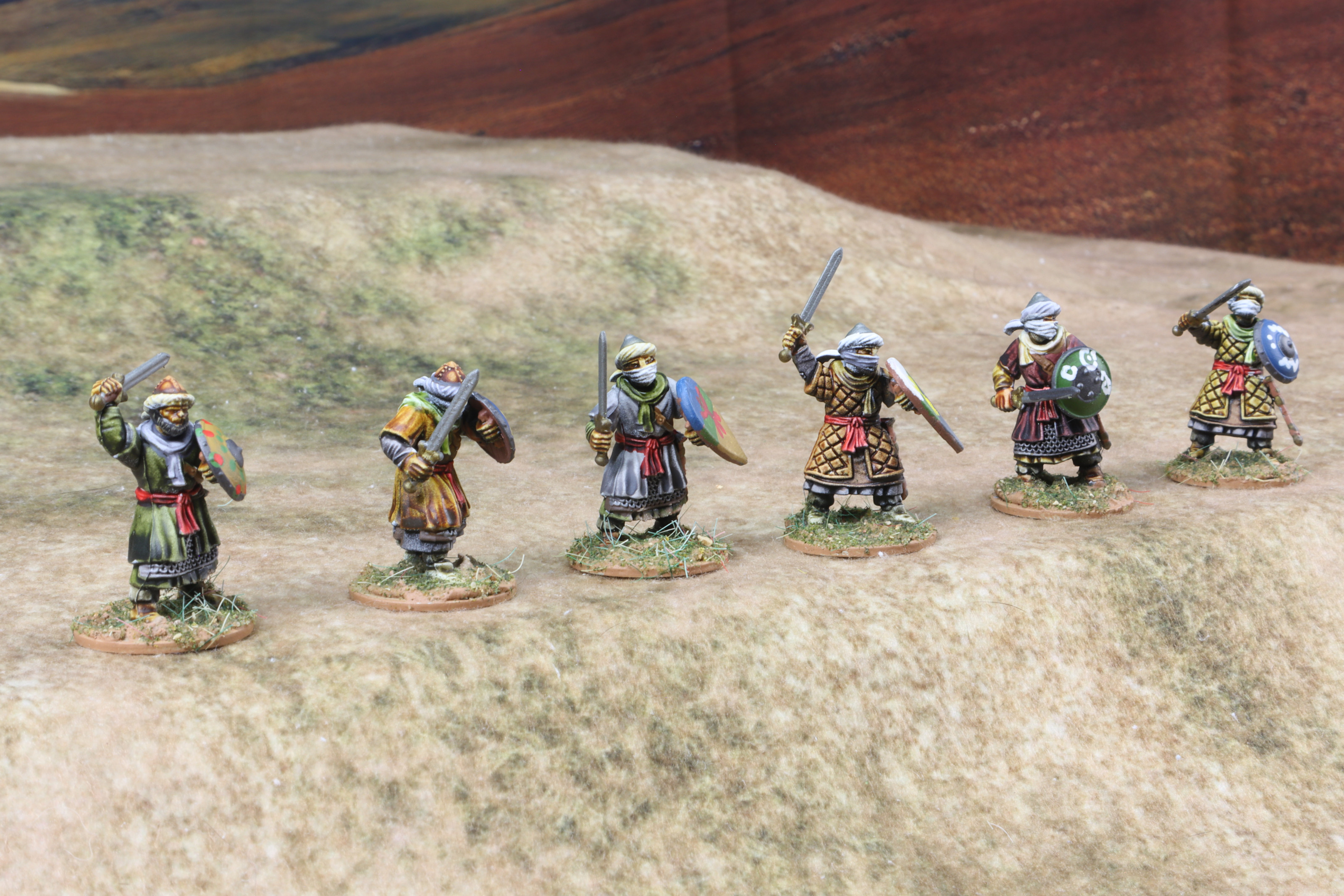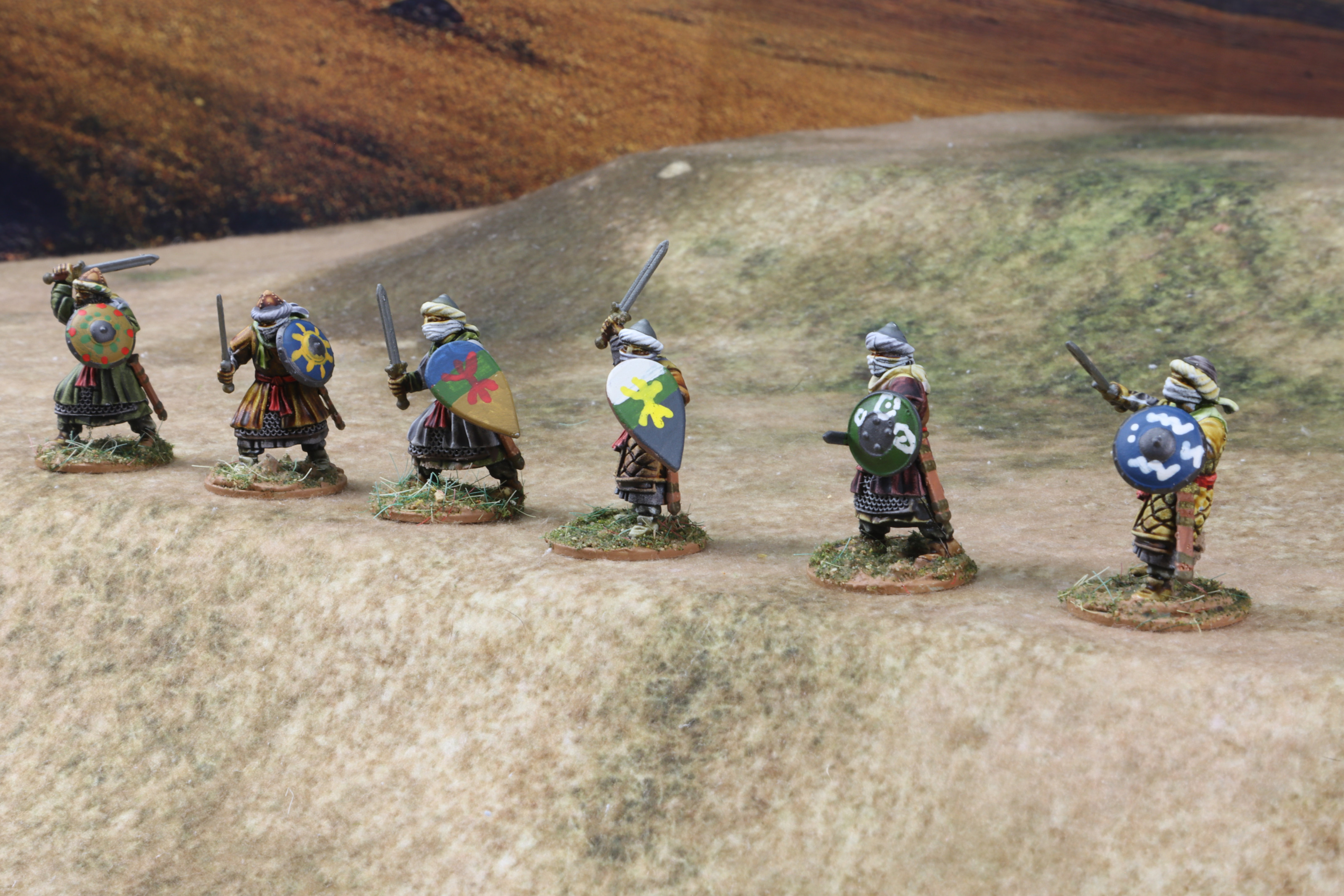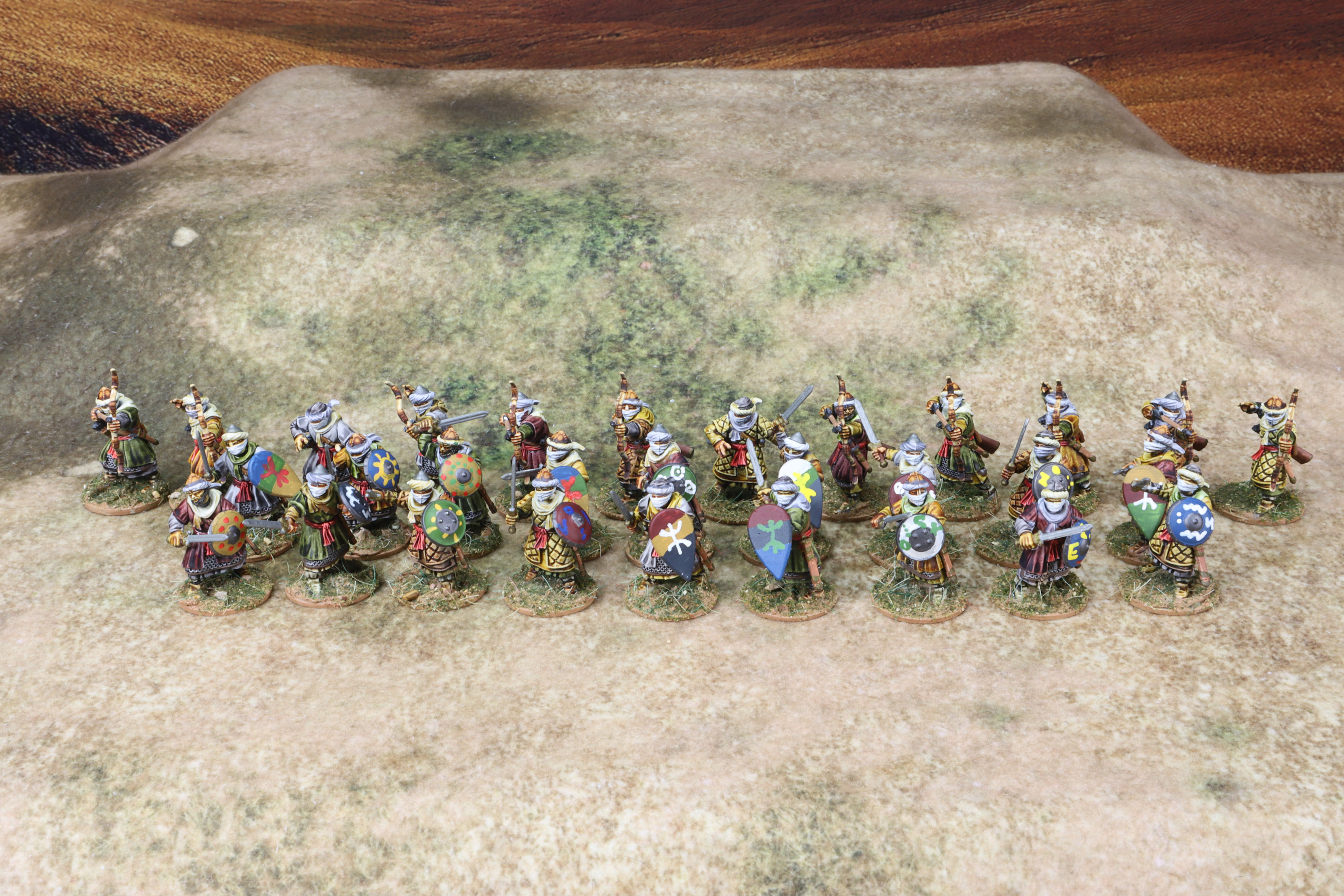
The Fireforge box of Berber infantry allow you to make 30 miniature models with six body poses and a variety of heads and weapons. Here I have decided to make 12 archers and 18 sword and shield infantry. The bodies have padded or chainmail armor, and the only weapon options are bows and swords as shown. The period for these figures would be the Islamic conquest of North Africa in the 8th and 9th century CE.
The models are a joy to assemble and paint. They are slightly oversize which makes them a little taller than Gripping Beast plastics and about the same scale as Victrix plastics. They have no puddle bases, so that makes them a little shorter and tougher to base.
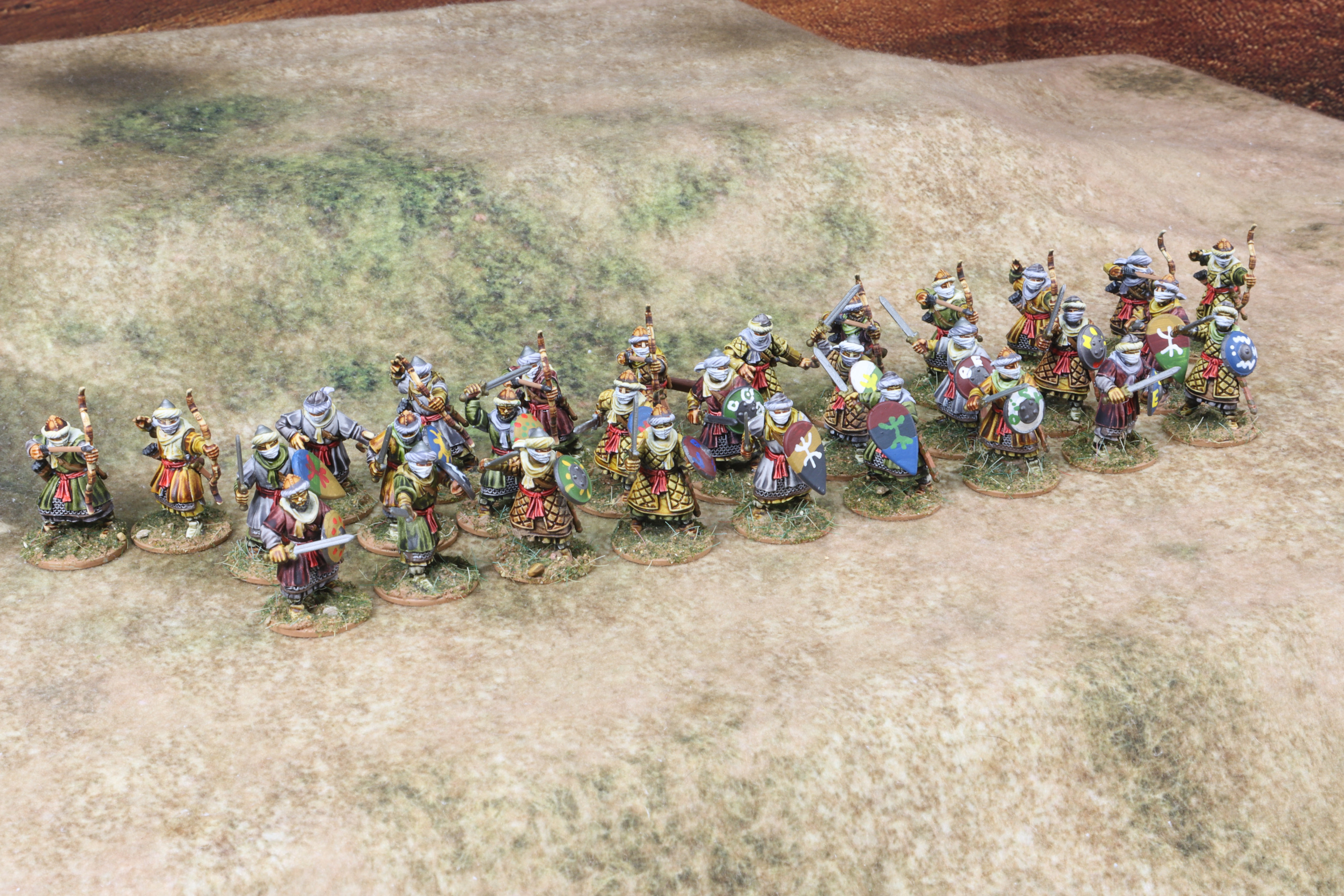
The figures are painted mostly with Vallejo Xpress paints and a few Army Painter Speedpaints. Additional details such as weapons and shields are done with normal acrylic model paints.
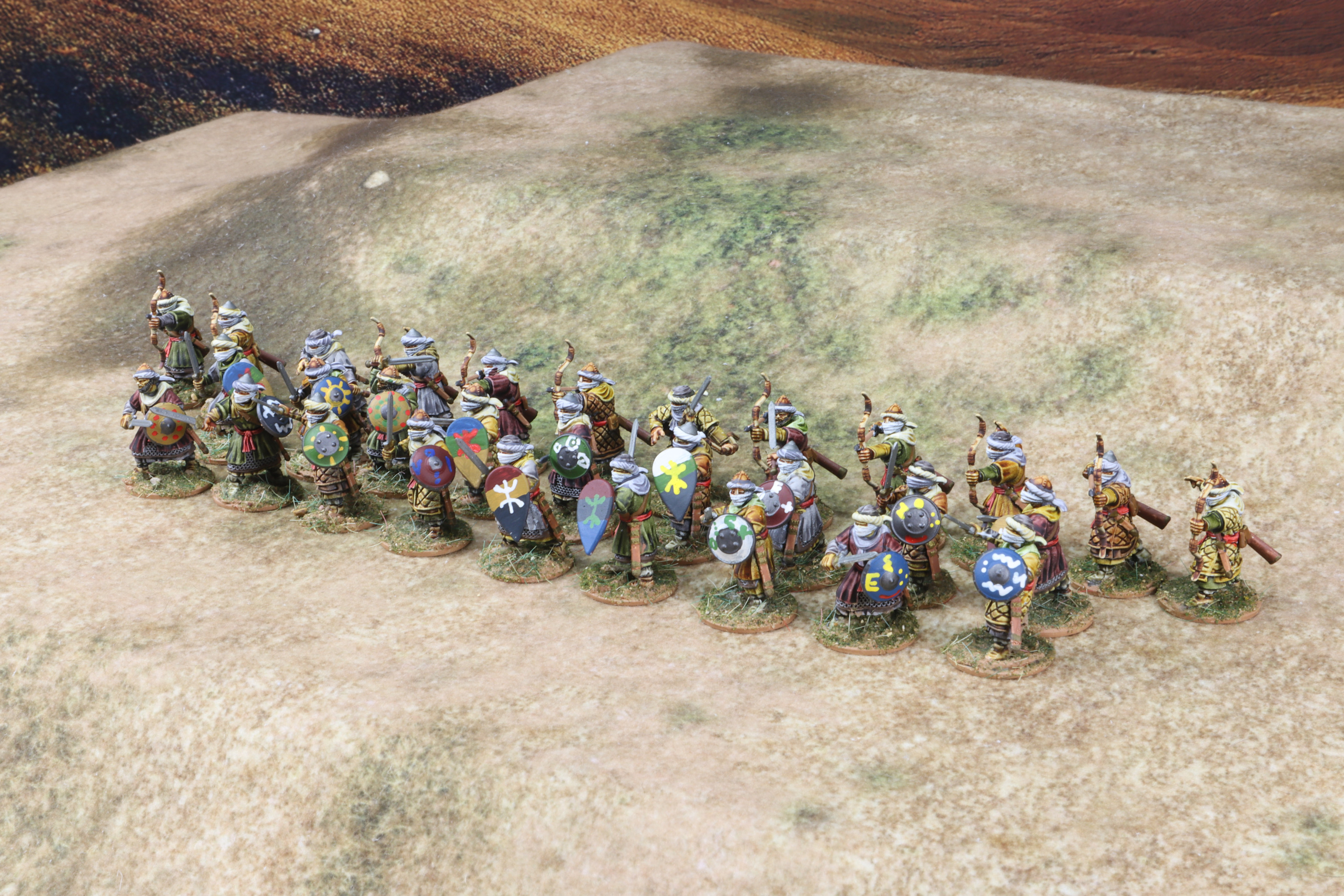
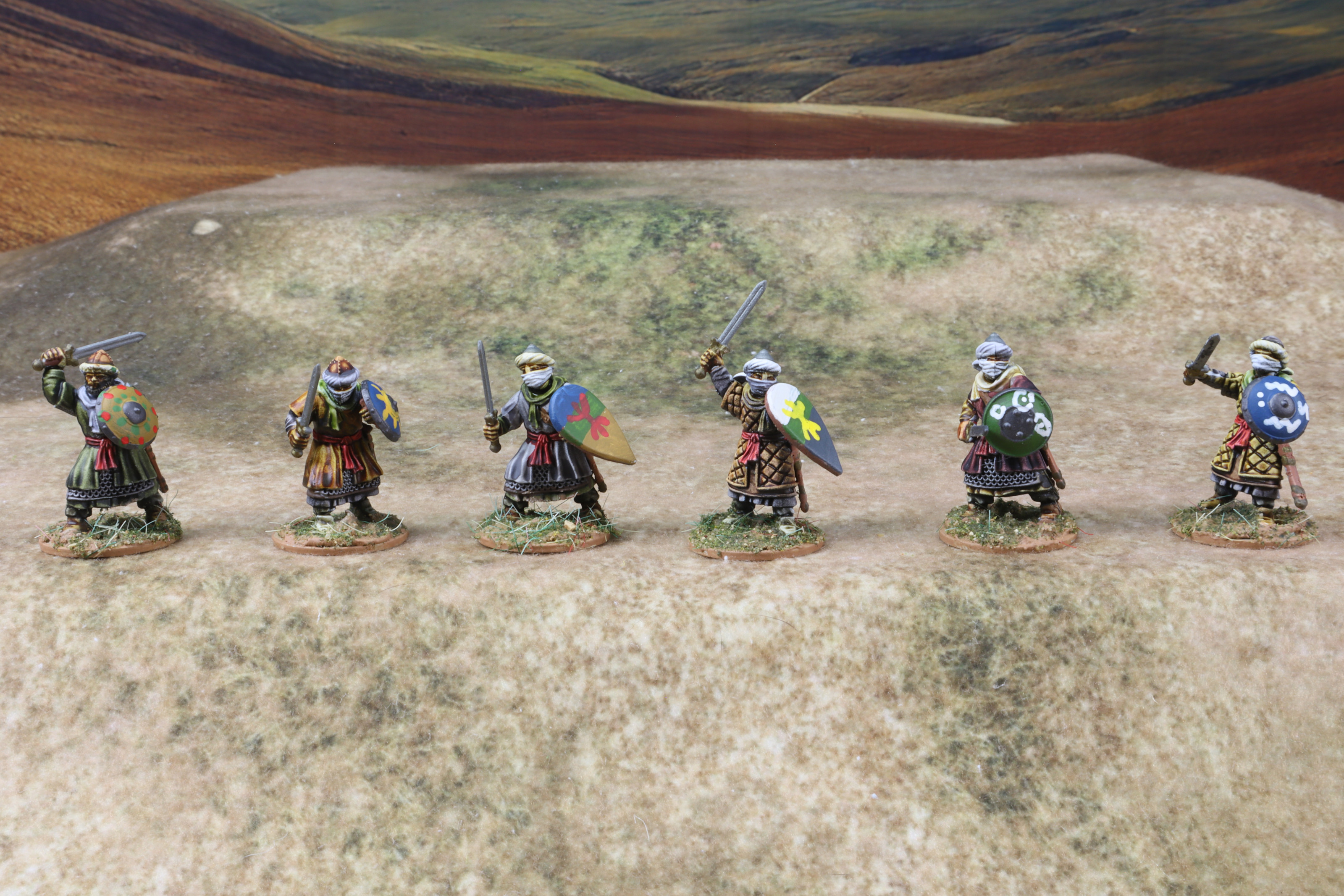
I tried to stick to the natural colors of the Berbers as they might have been during the 8th century: lots of greens, tans, grays and an occasional red.
For this photo session, I have a slightly arid looking grass mat with mountains in the background. The Atlas Mountains of Africa divide the coastal Mediterranean region from the interior Sahara.
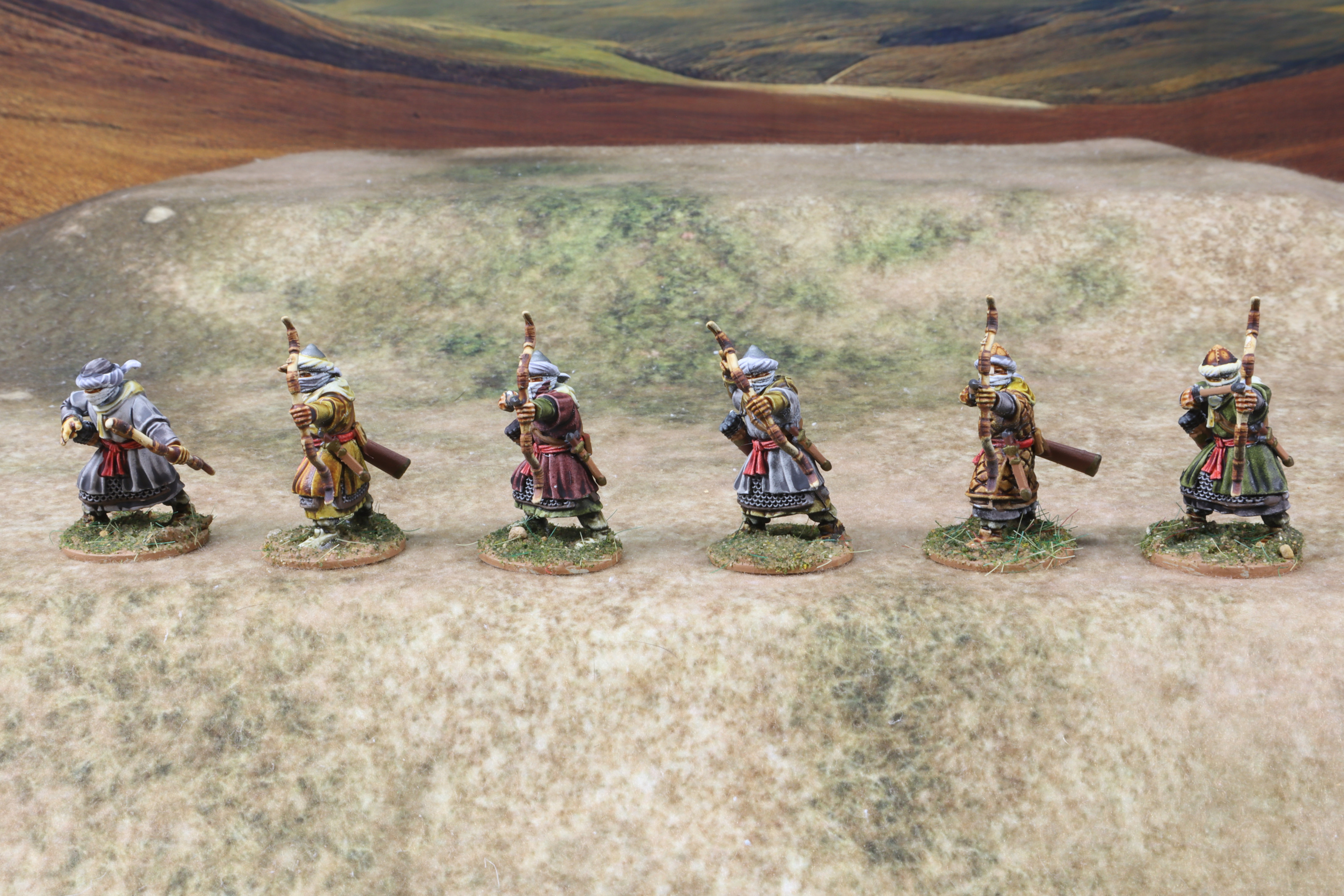
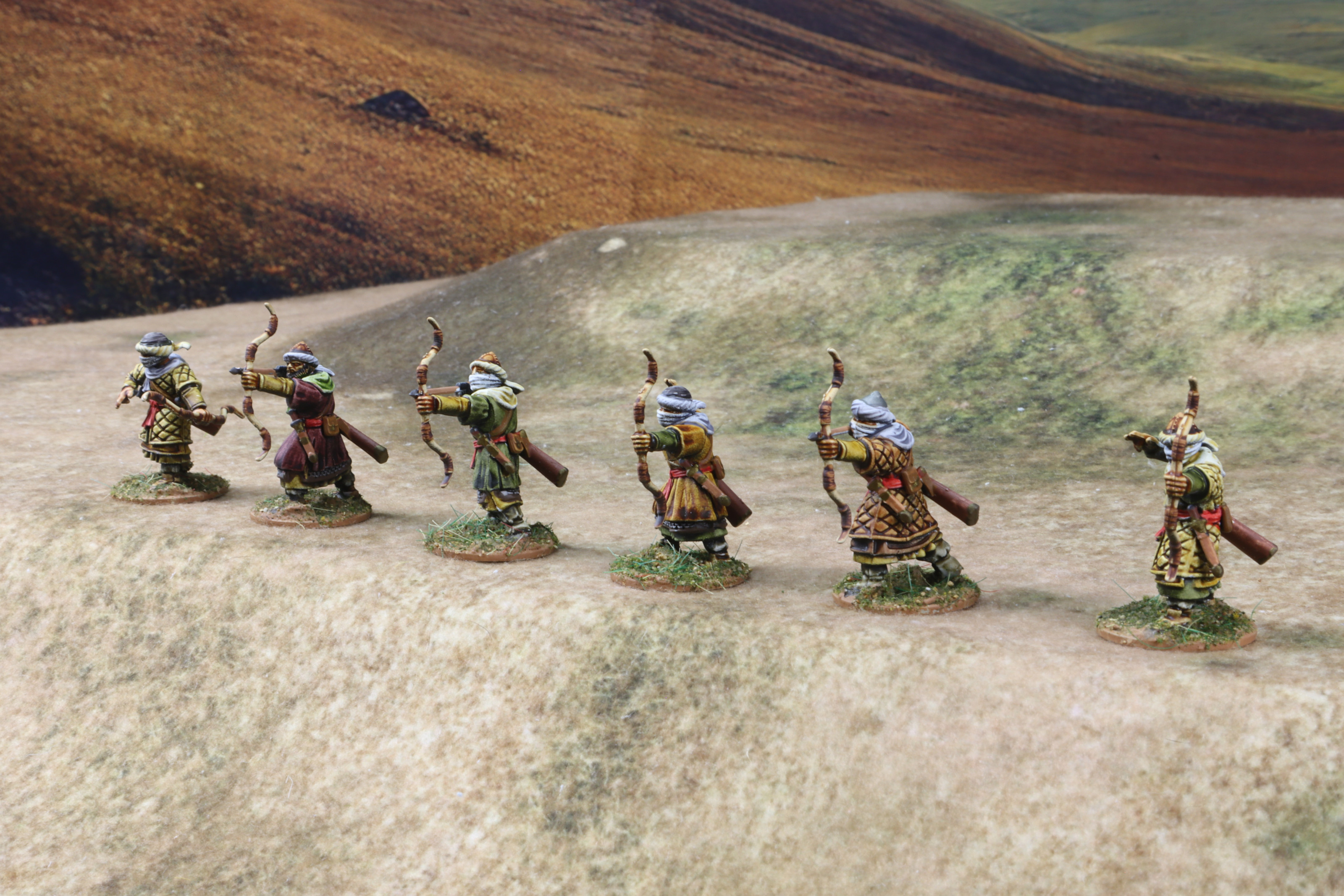
All the archers have powerful compound bows. They also have padded or chainmail armor covered by tunics. The head options mostly have turbans and face coverings and a variety of helmets.
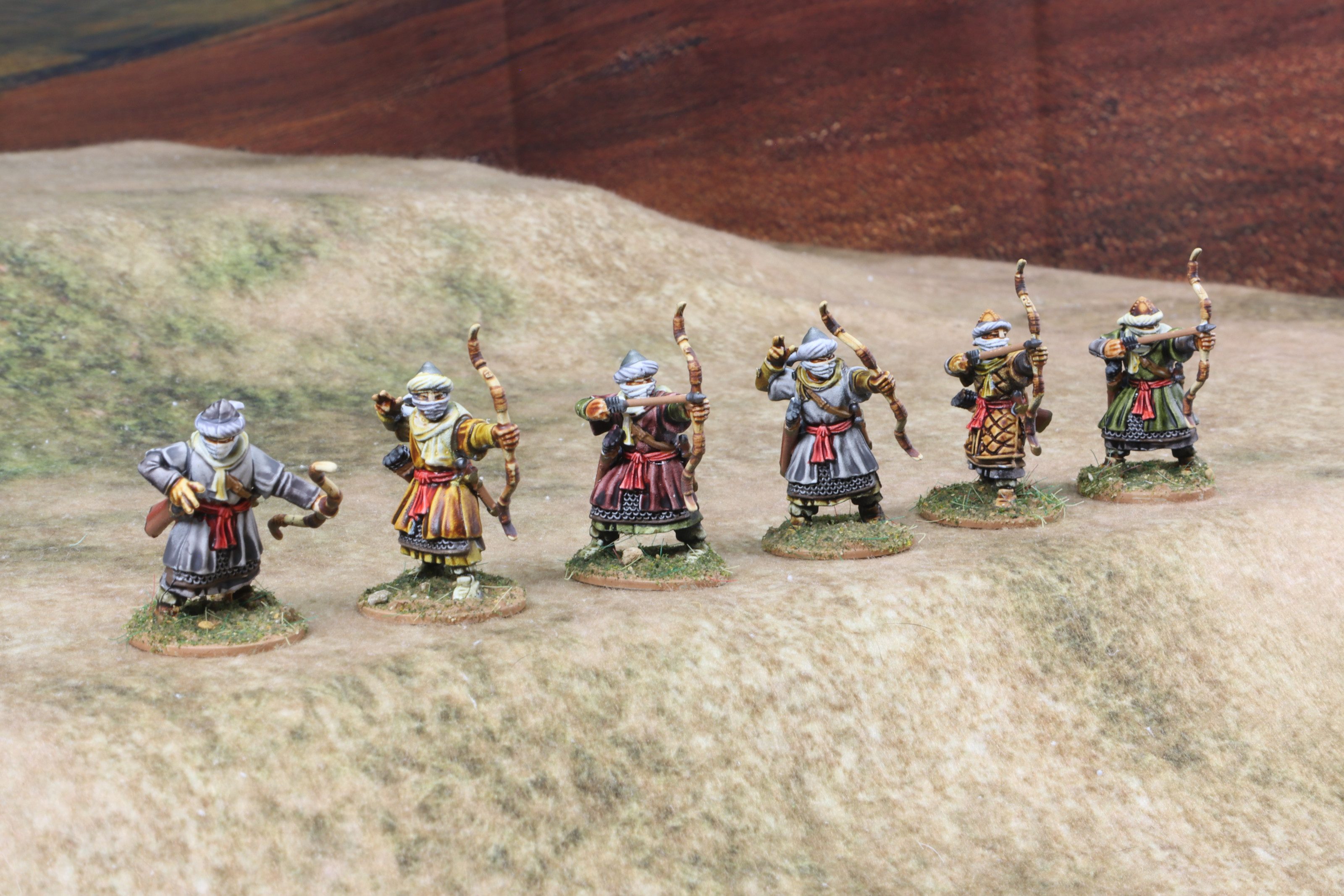
To unify this group of soldiers, they all have a red sash. This might be helpful when war gaming and trying to separate your Berber unit from your Muslim Arabs.
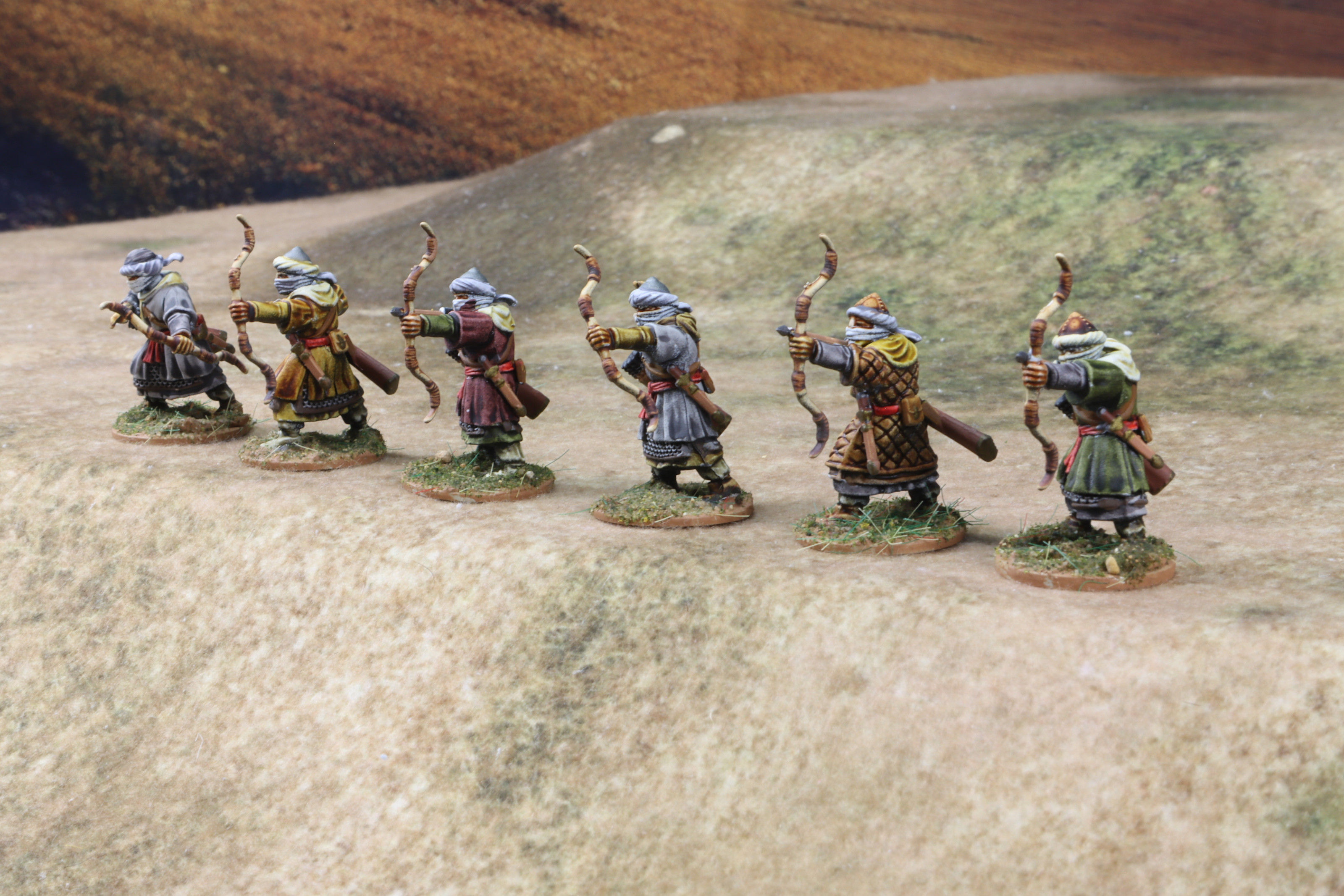
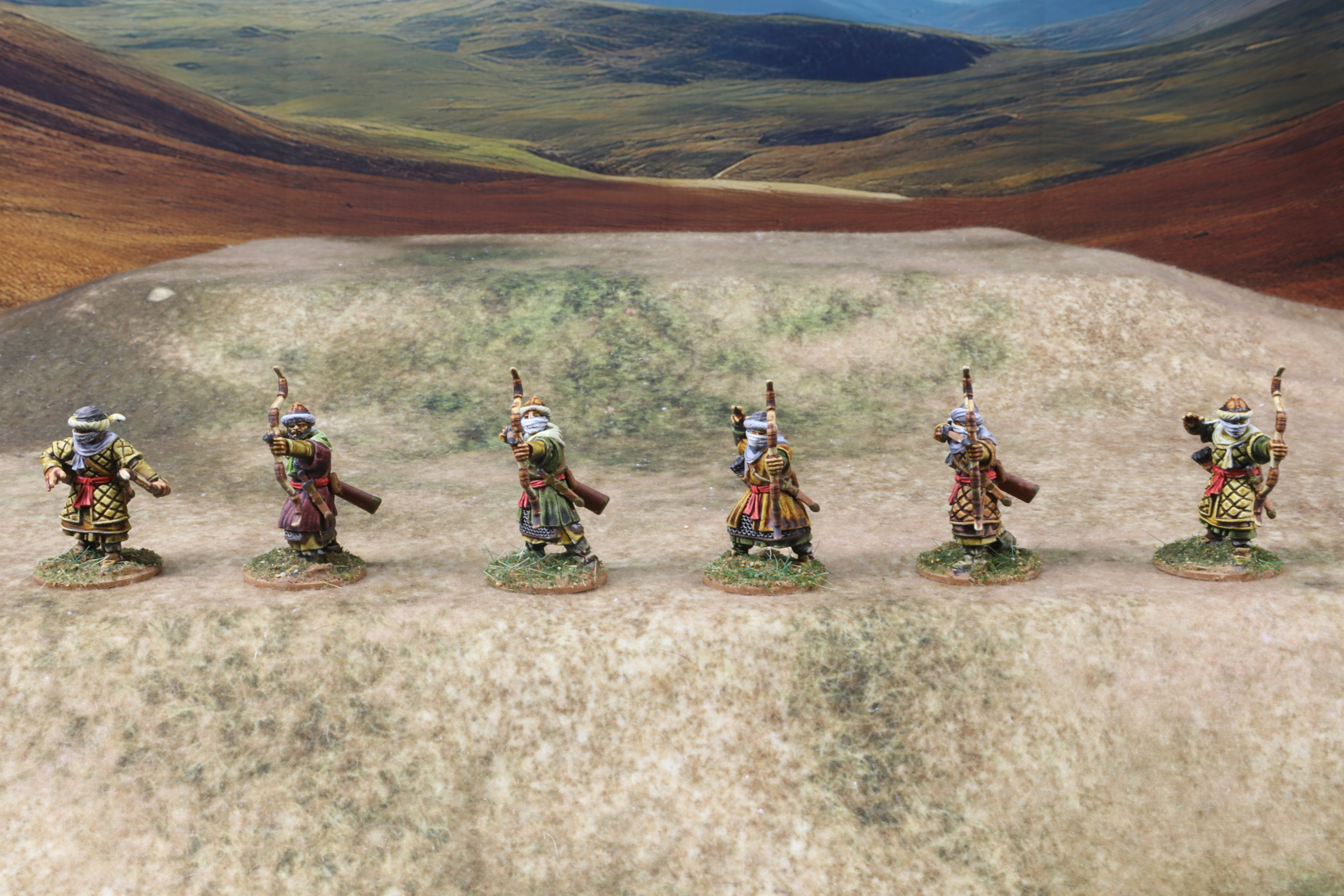
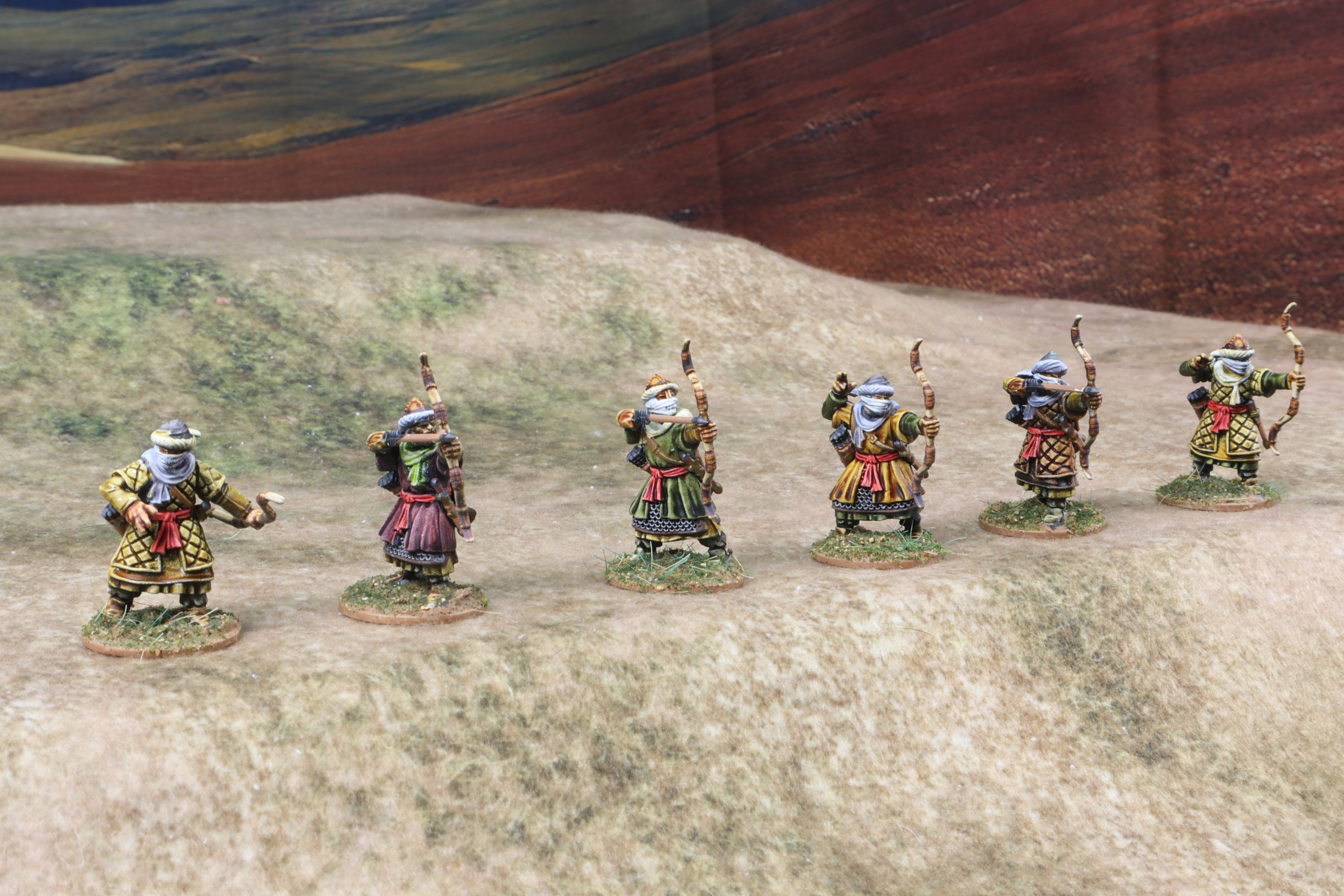
The Xpress paints work really well on detailed models like these. The padded armor looks very three dimensional. The tunics and head gear looks nice. All with one coat of paint. A very good and useful tool in the paint box.
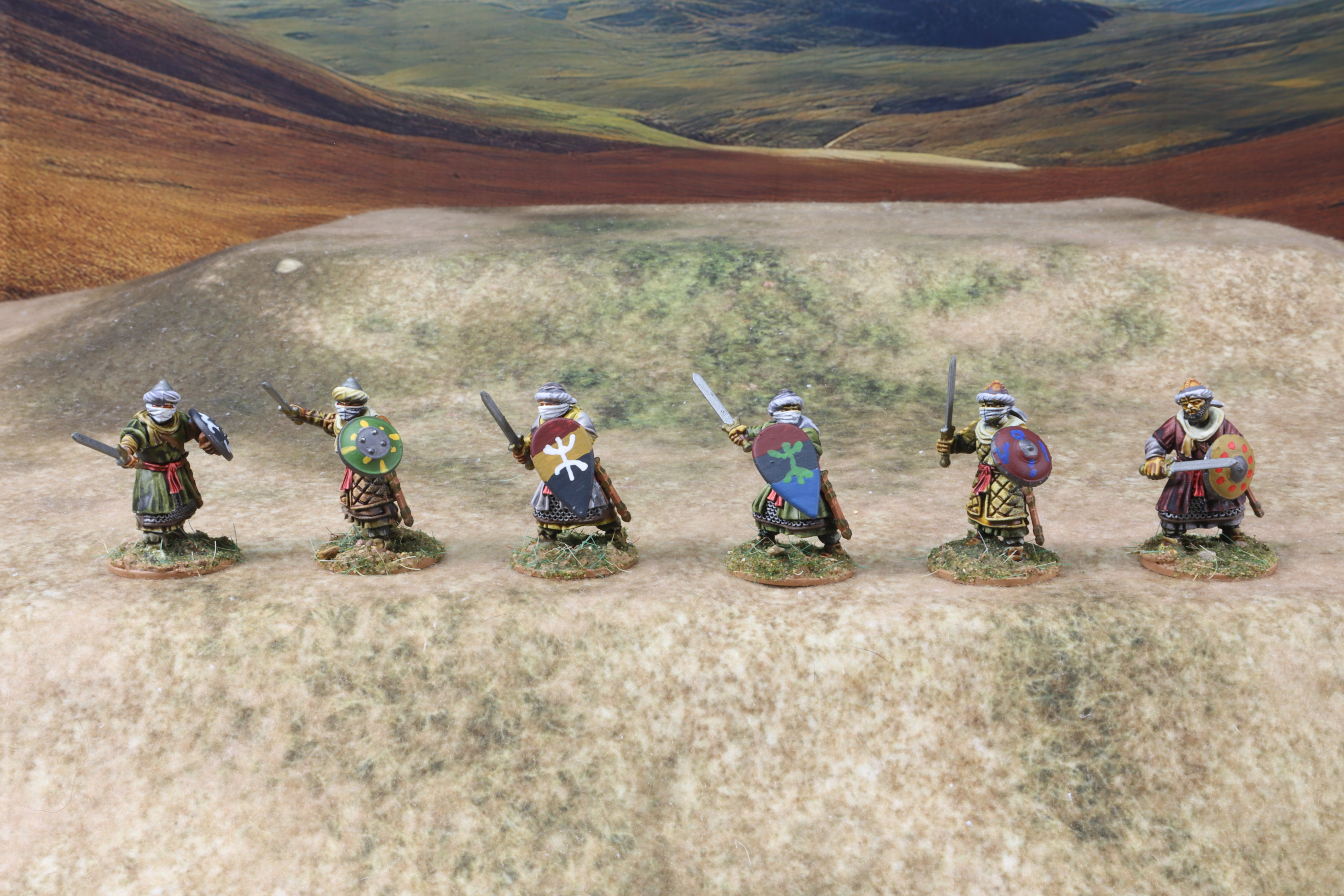
The Berbers have their own script called Tifinagh. It is different than Egyptian, Phoenecian, Greek, or Arabic. It has block letter forms such as "ⵜⵉⴼⵉⵏⴰⵖ".
The shields here have the Tifinagh letter that denotes the Berber people.
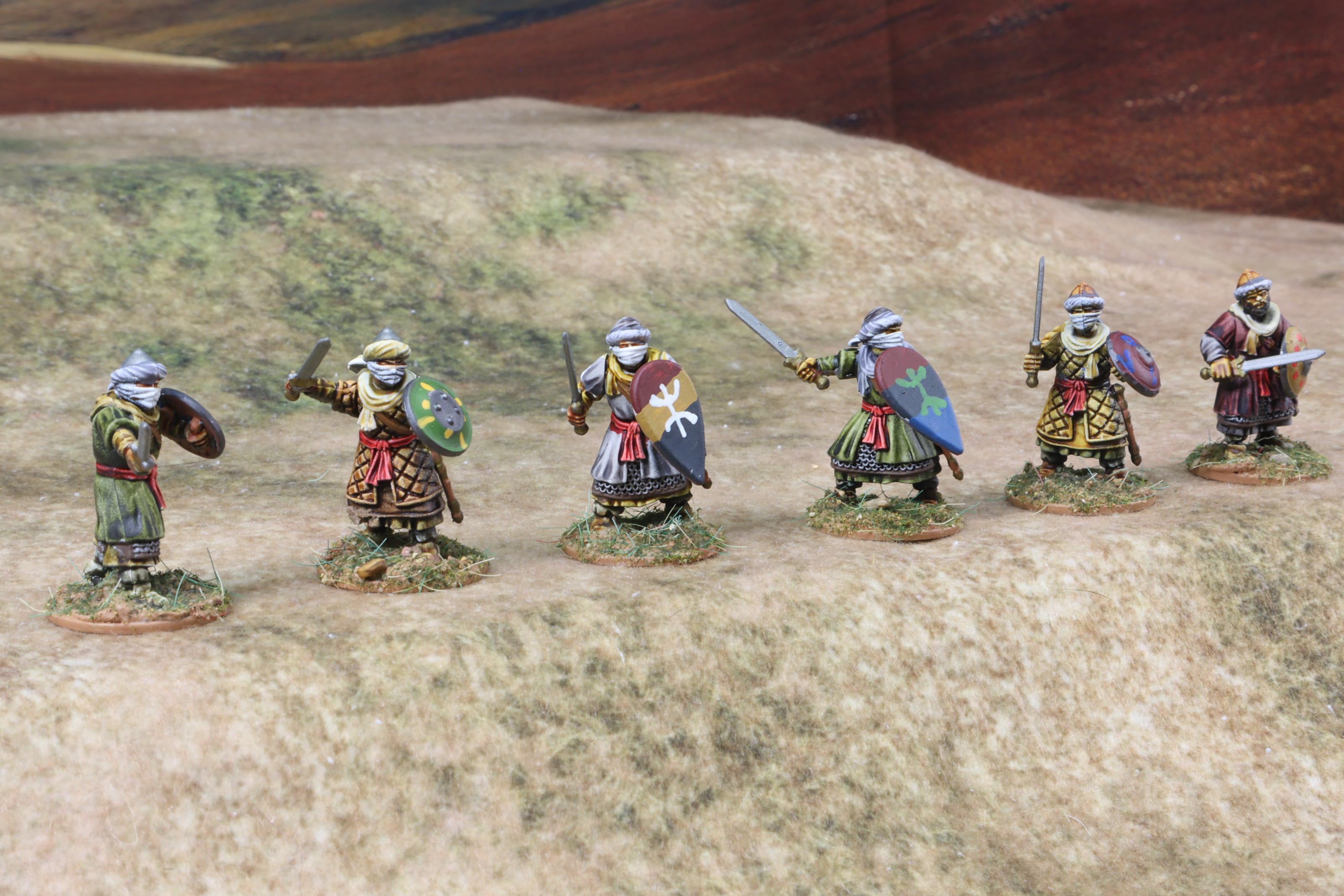
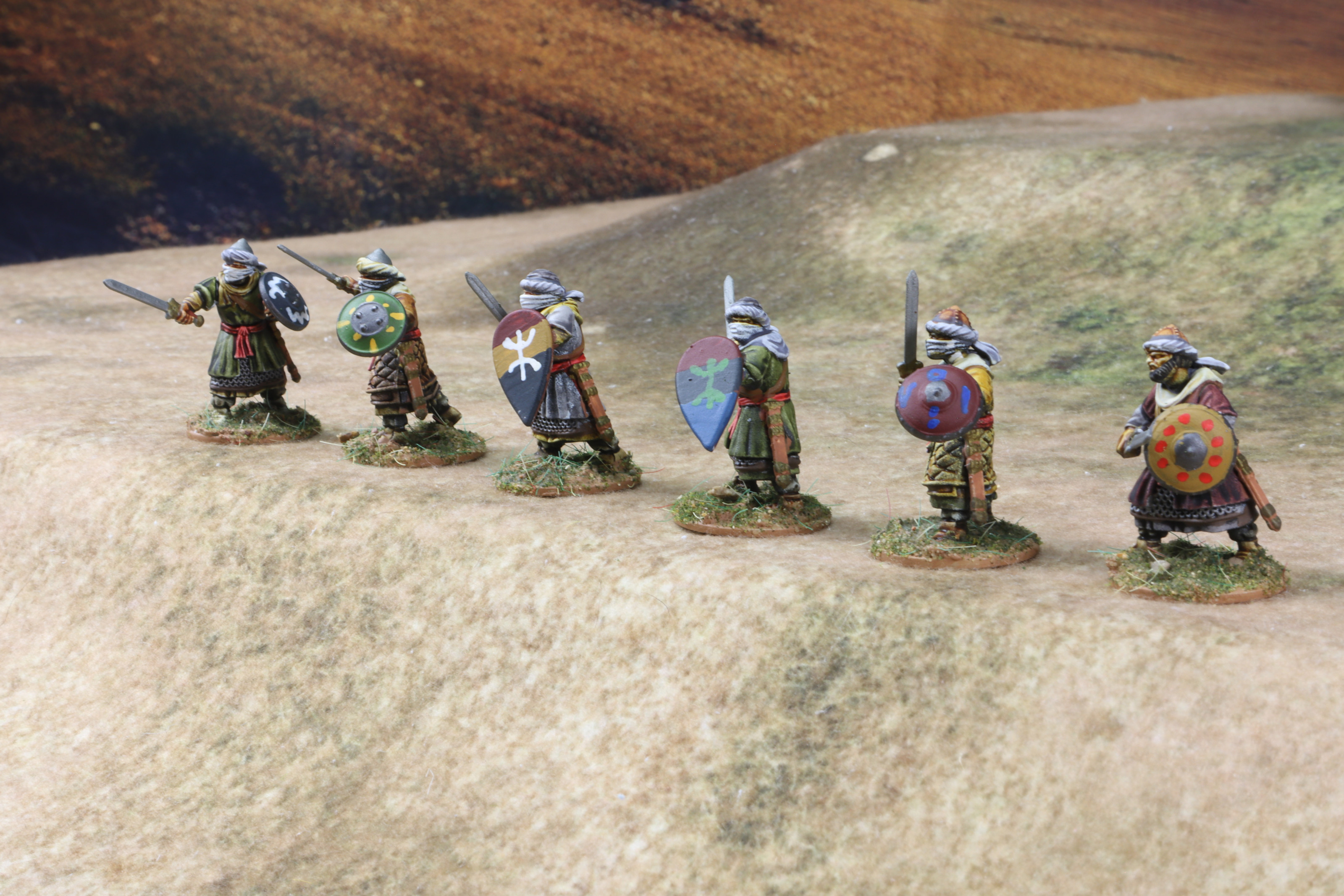
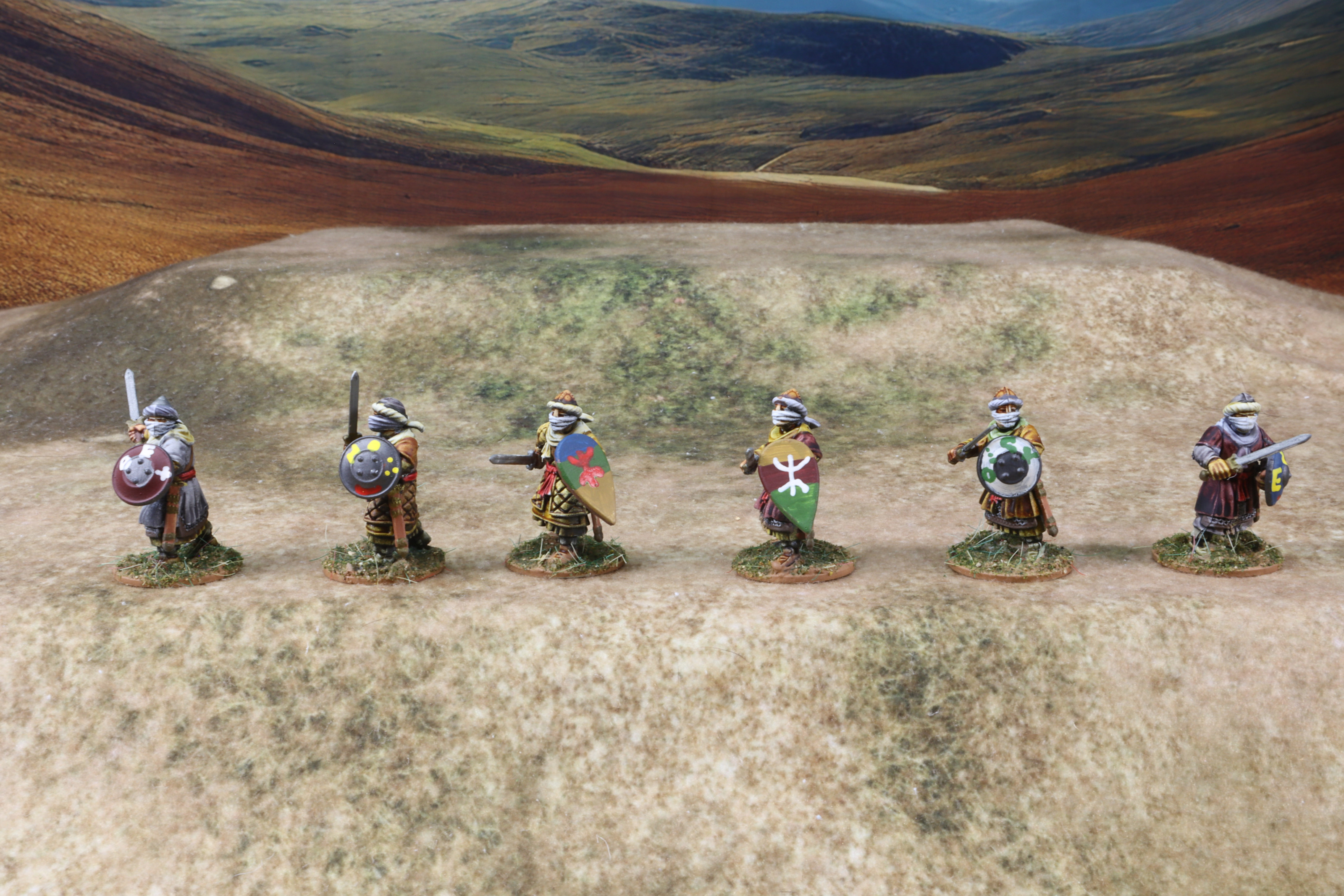
Some of the shields are decorated with geometric designs or "pseudo-Tifinagh" messages - a silly inside joke to myself. I used Tifinagh letters to sound out English words. So the word "die" might show up as "ⴷⵉⴻ" in pseudo-Tifinagh. Good luck trying to read the messages as the letters are somewhat bloated.
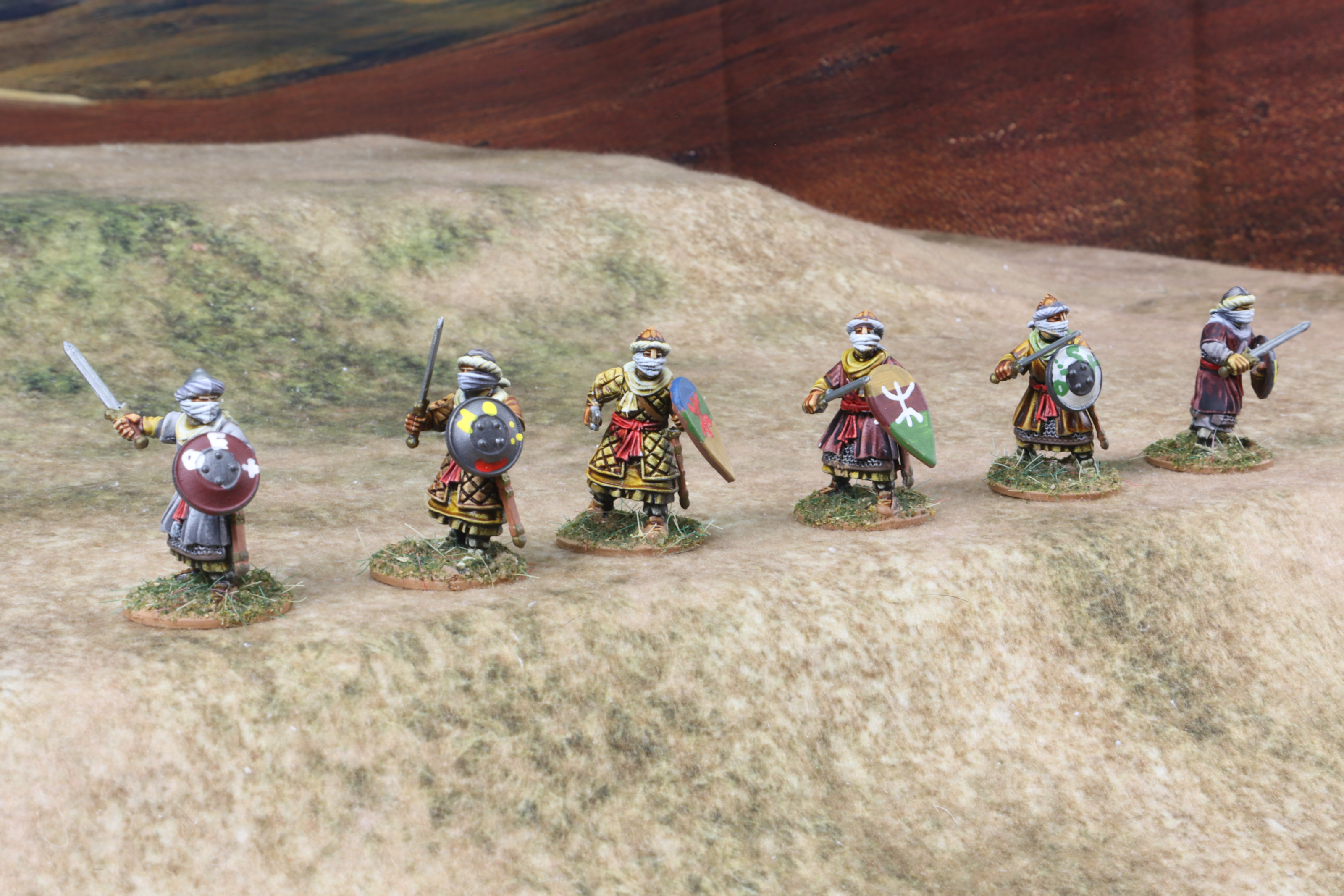
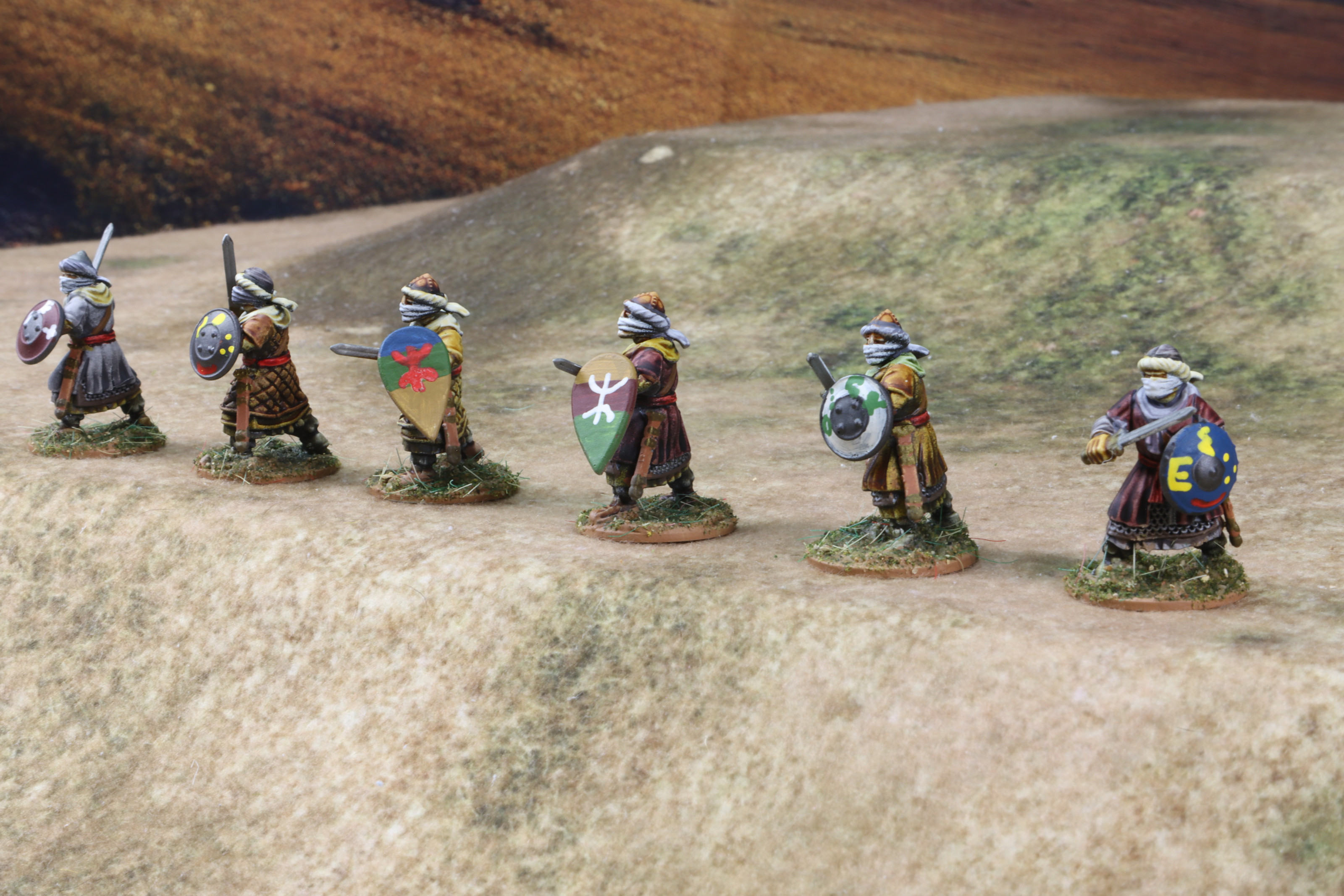
The one shield with the blue, green, and yellow stripes with the letter "ⵣ" is the closest representation I have to the modern Berber/Amazigh flag. This is the flag othe Amazigh ethnic people, about 30 million in North Africa today.