A Paleolithic Search
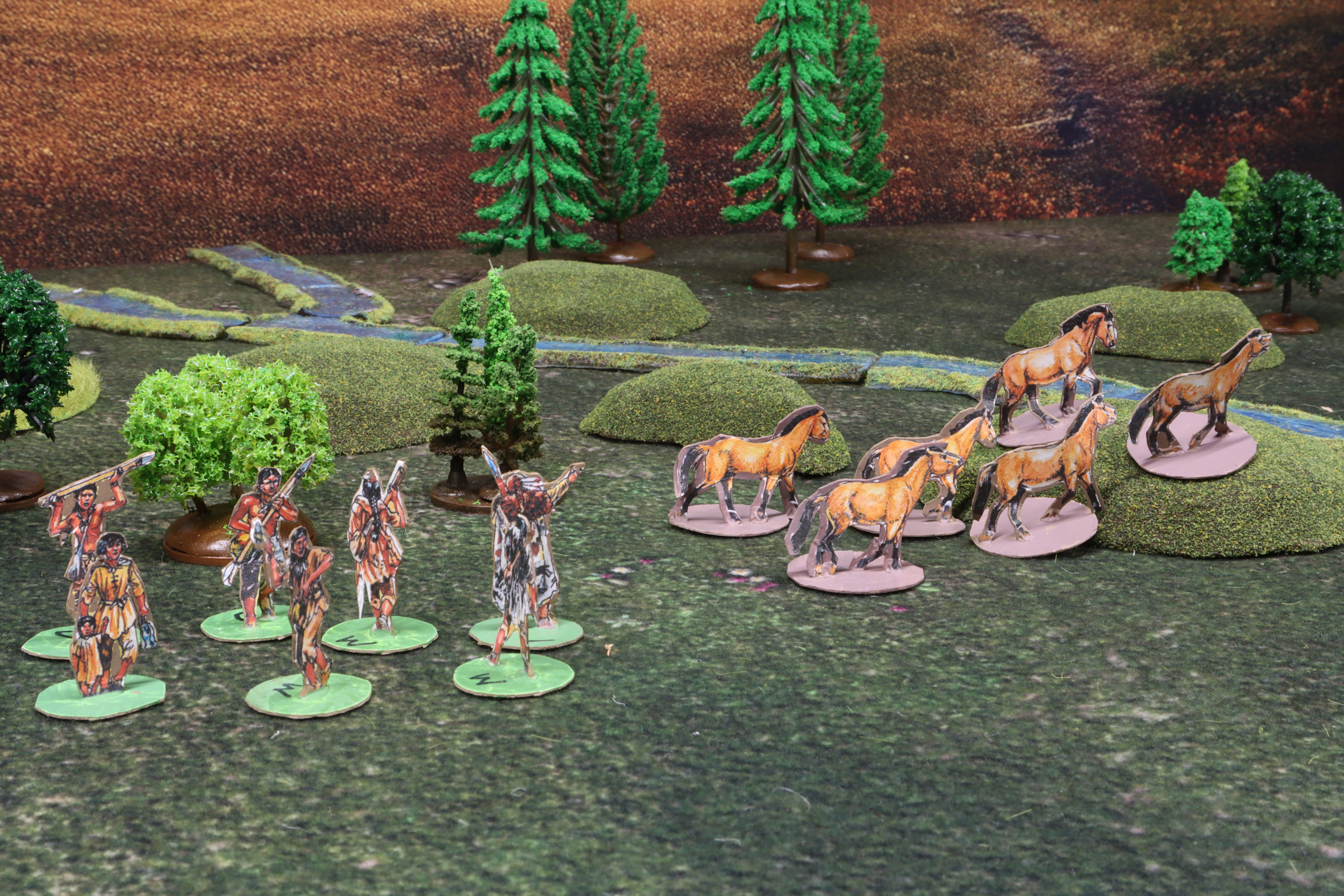
The chase is on.
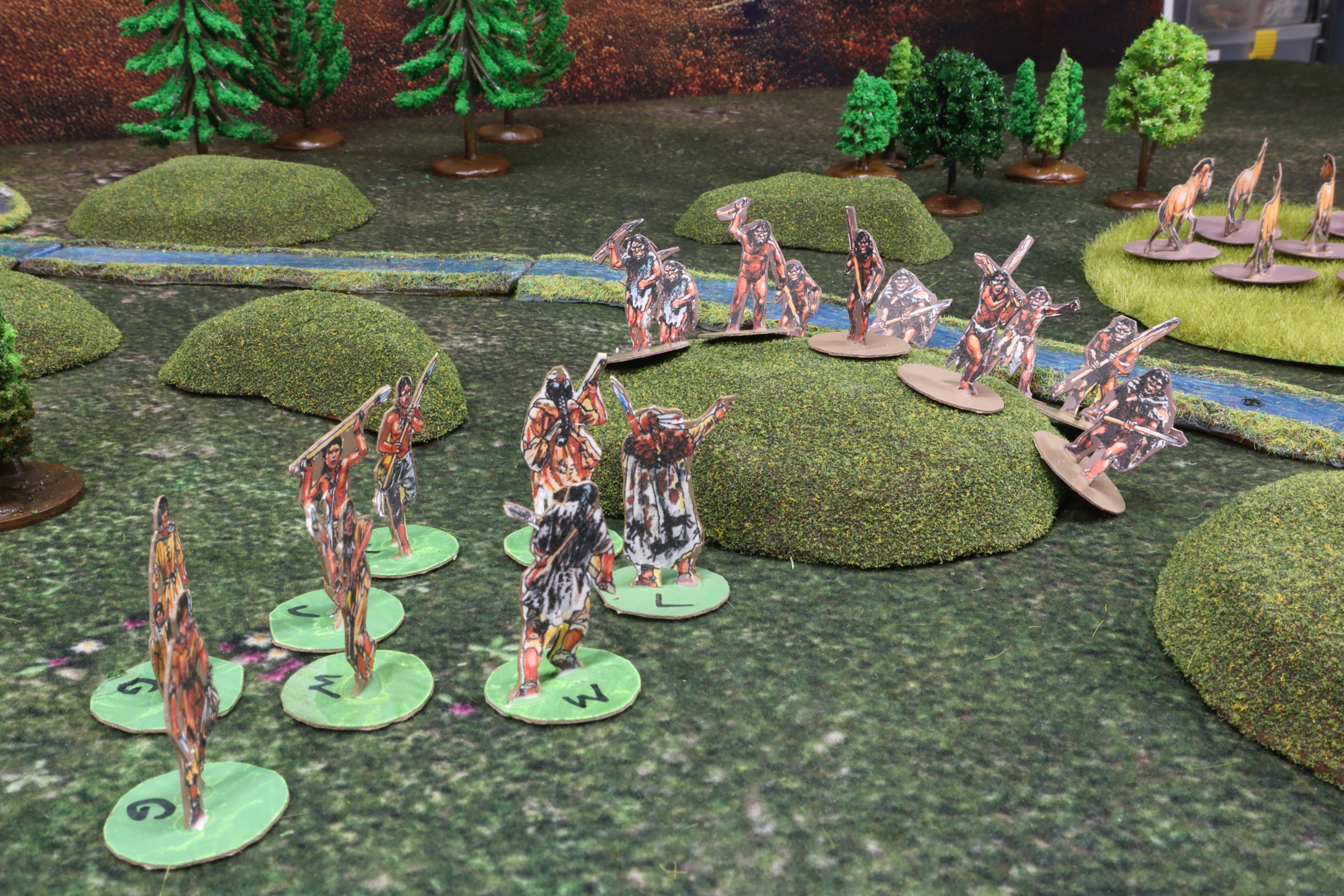
These figures represent earlier species of hominids now extinct such as Homo erectus or heidelbergensis. The Hide, Stone, and Bone rules only discuss Homo Sapiens and Neanderthals, but I model these with statistics similar to the juveniles of other hominids in the game
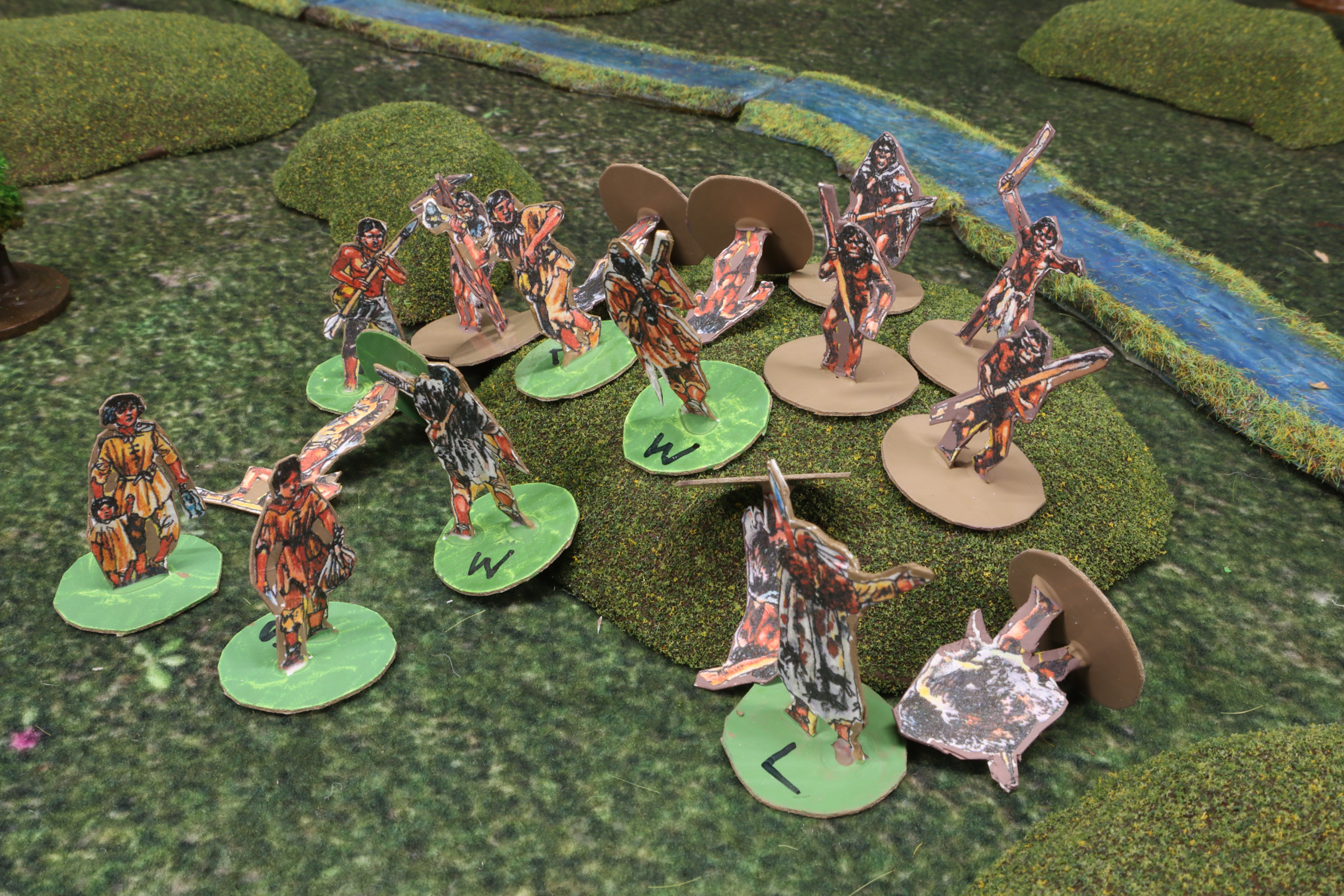
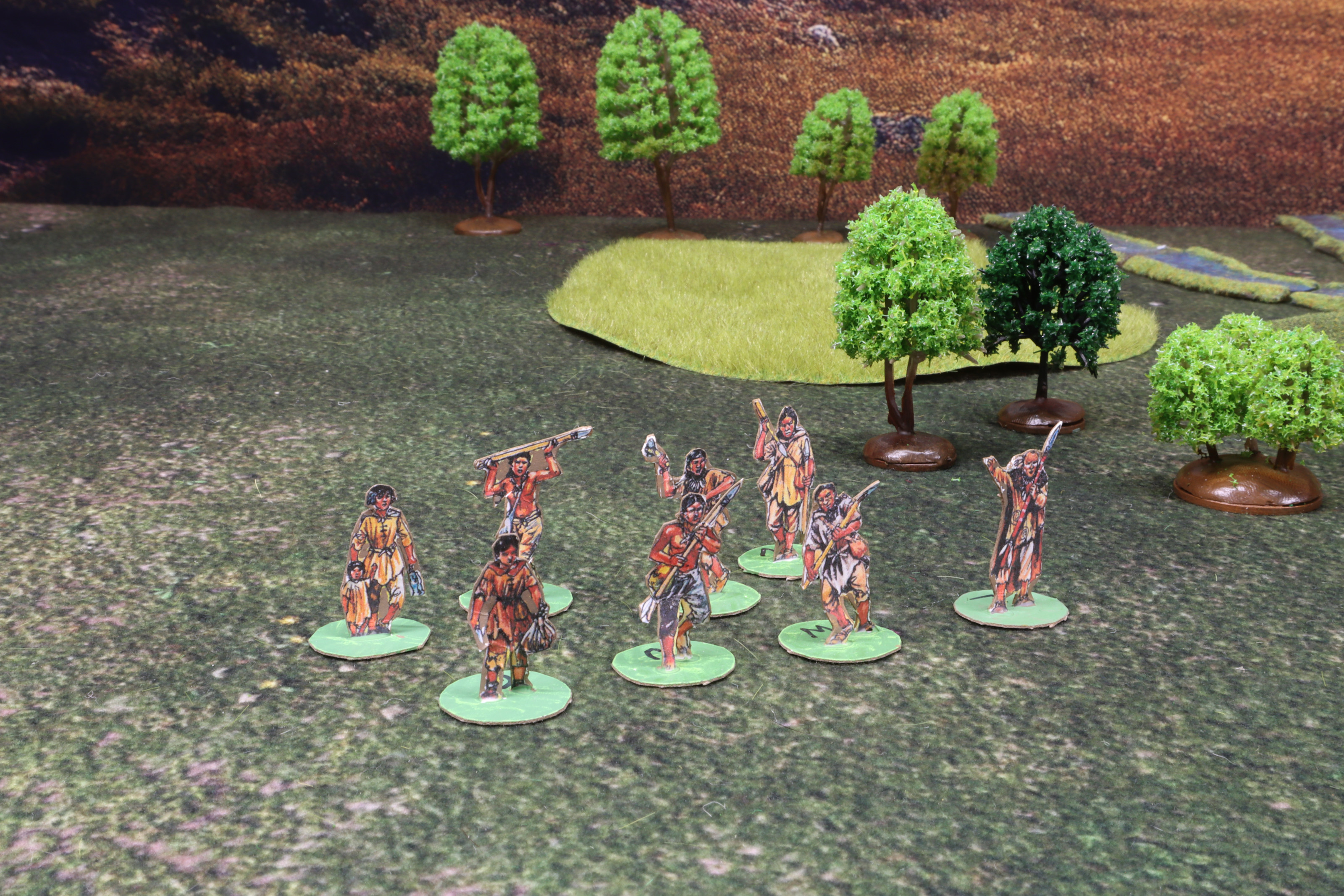
Notice the bases have different colors. This is to keep the homo sapiens, neanderthals, and erectus easily distinguishable. The green bases have letters L, S, W, J, and G. This stands for Leader, Shaman, Warrior, Juvenile, and Gatherer, all of which can be played in the game.
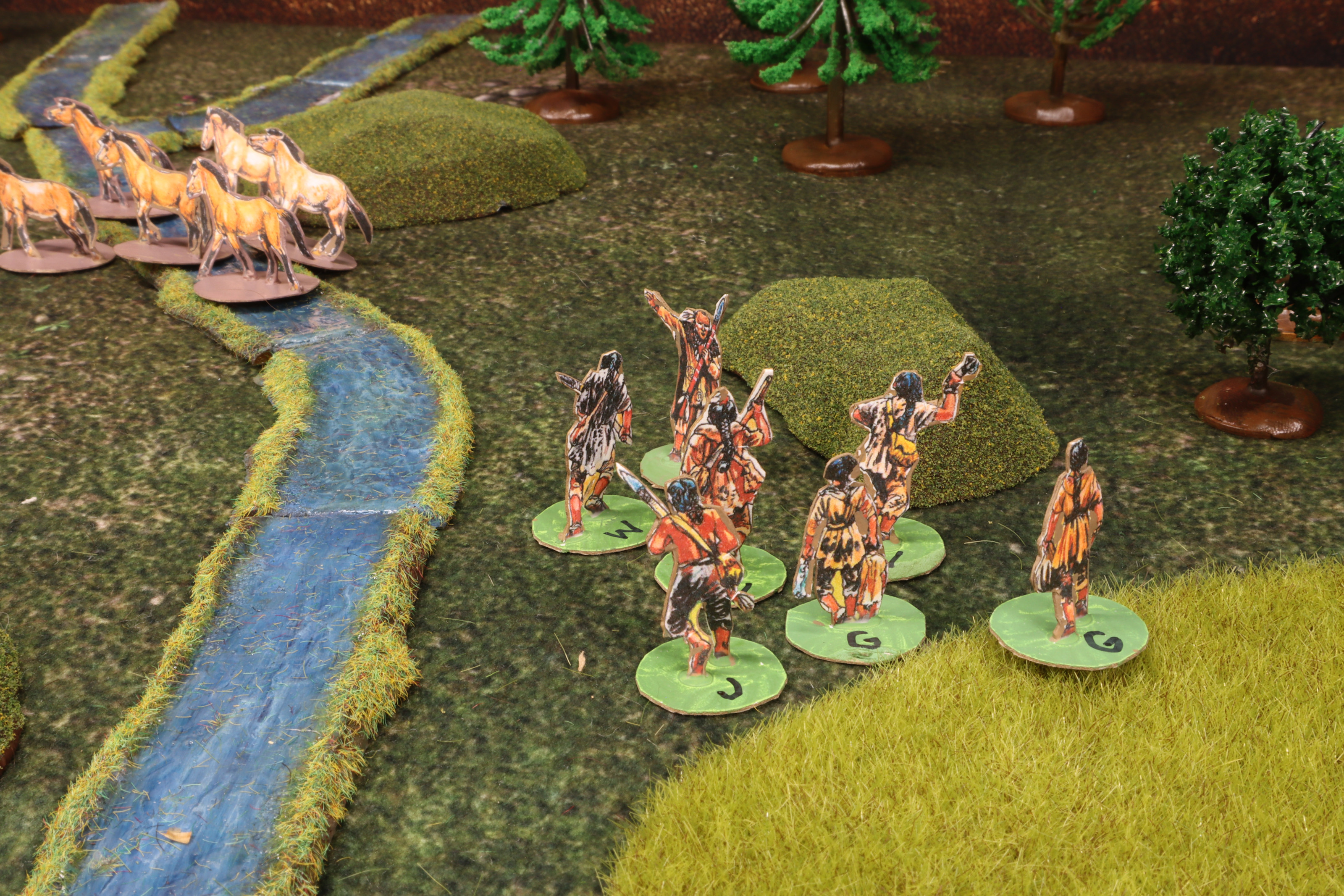
If the humans can catch up with a horse, and leap on its back (a very agile feat), the horse will be captured.
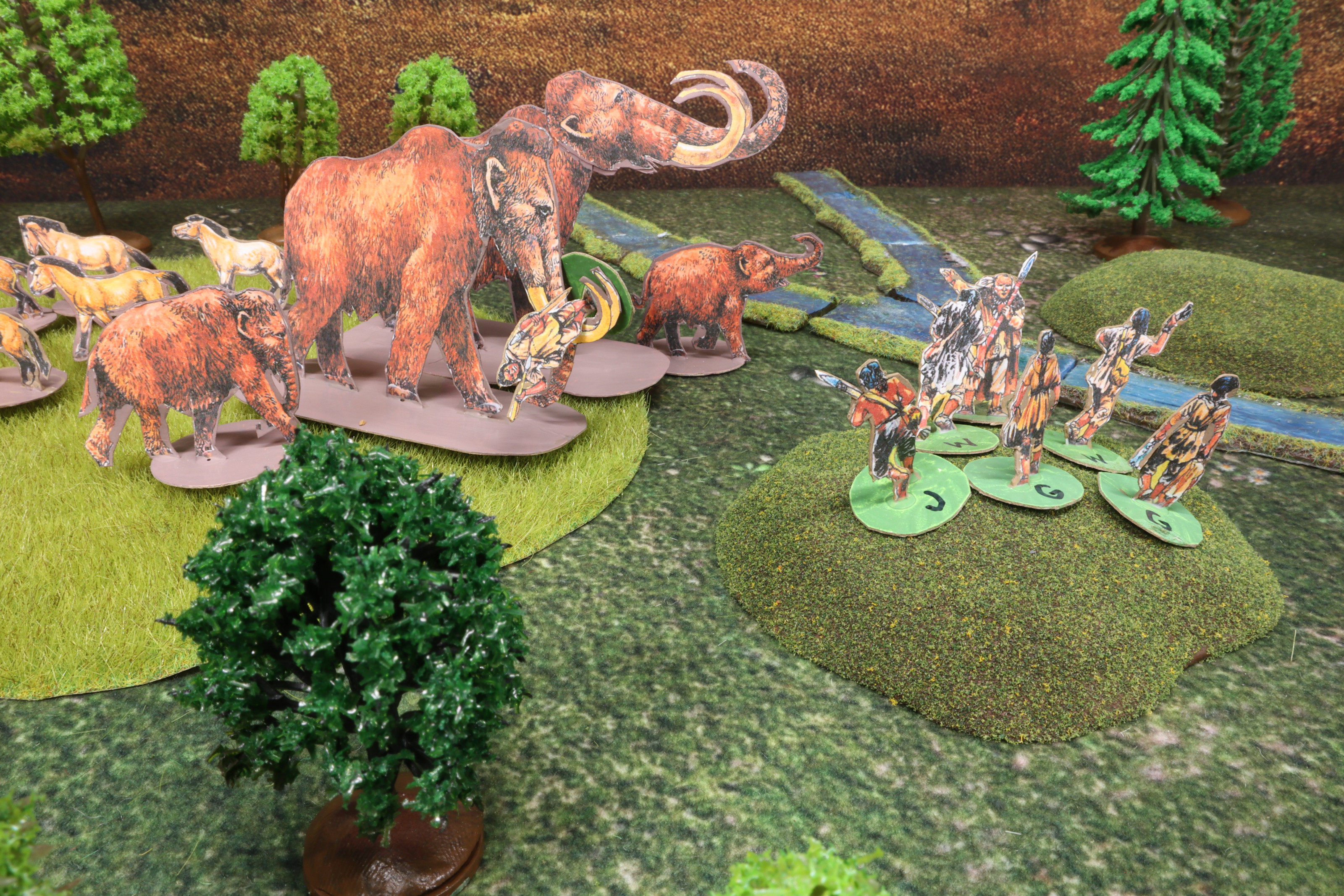
Wisely the humans flee for their lives.
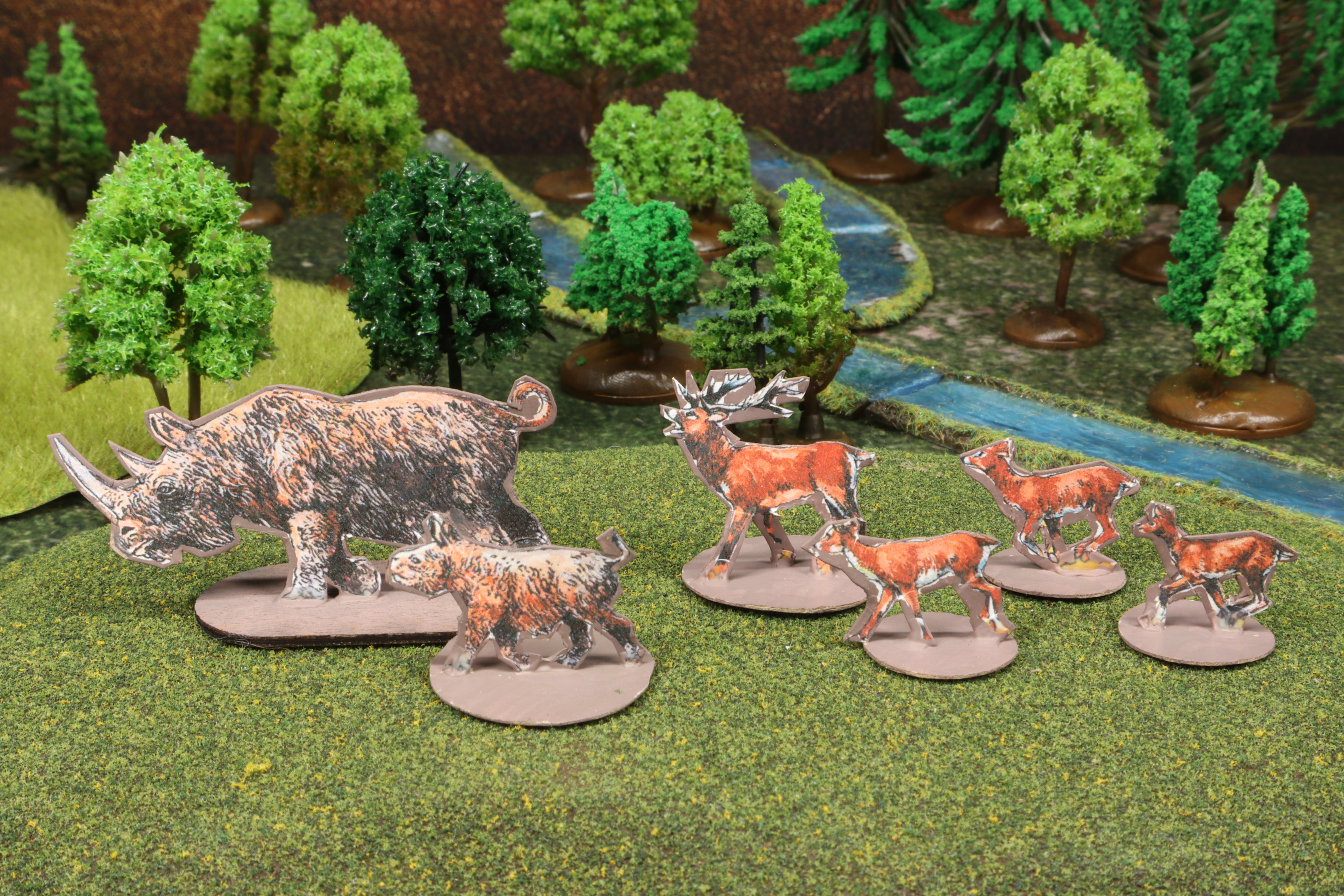
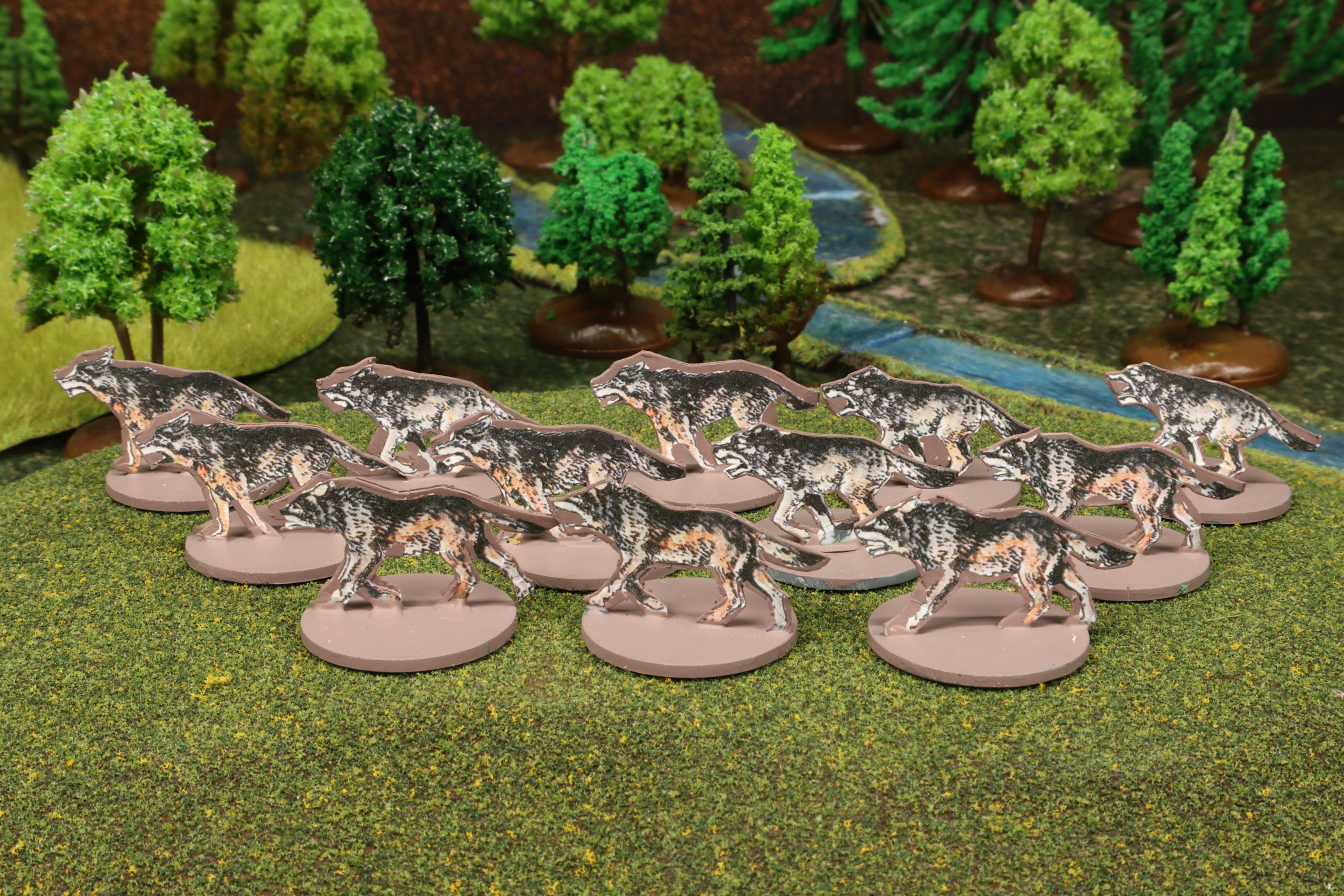
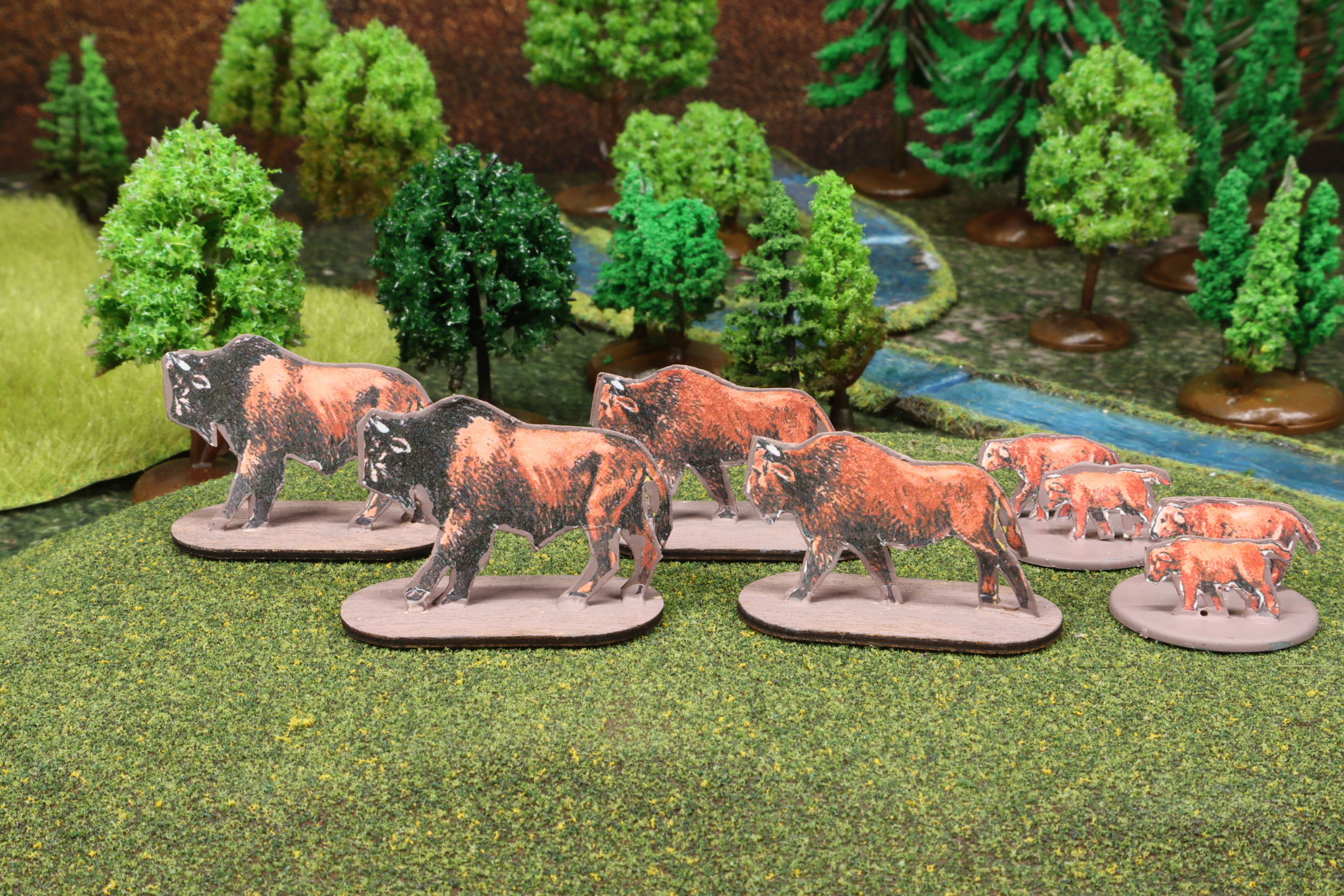
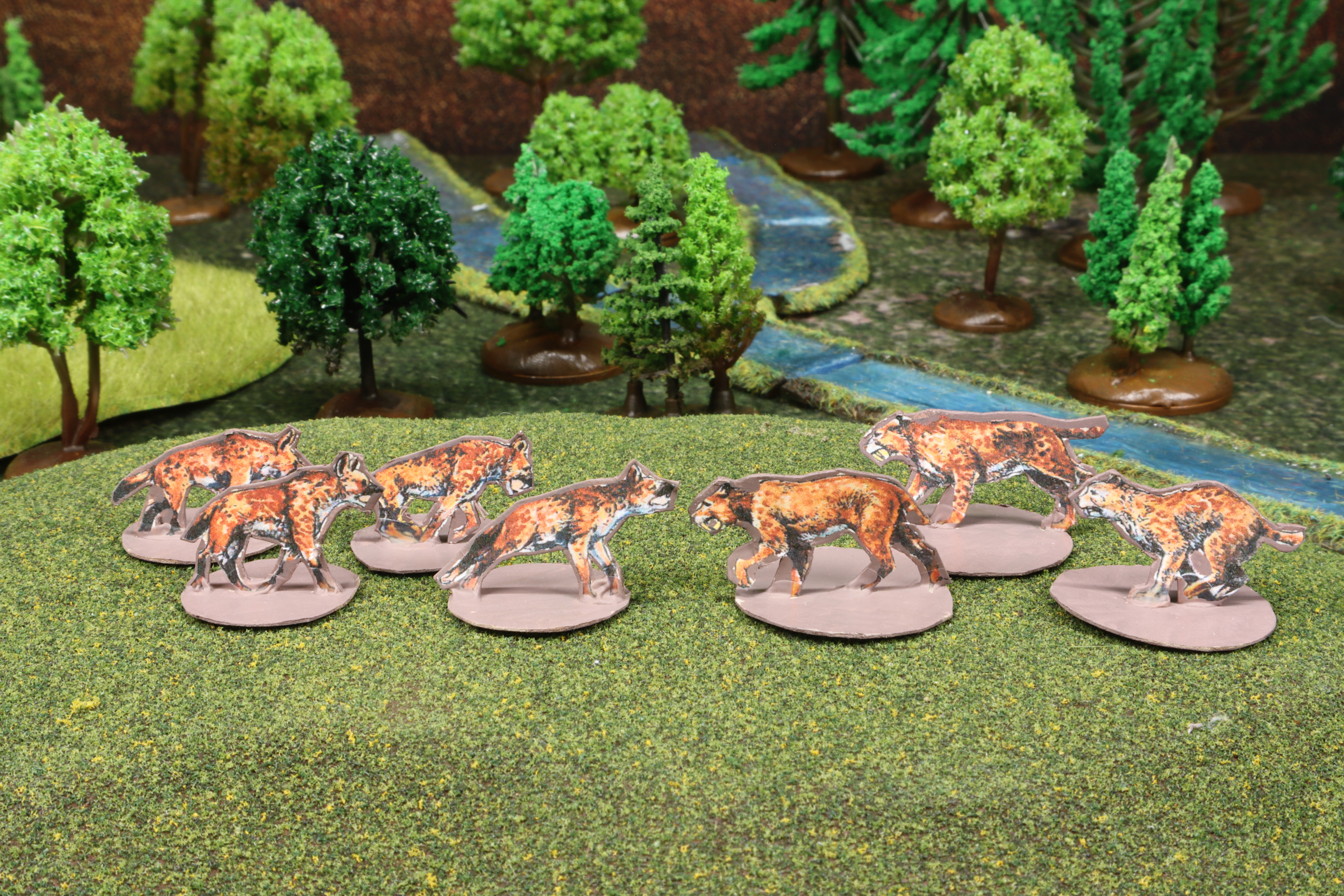
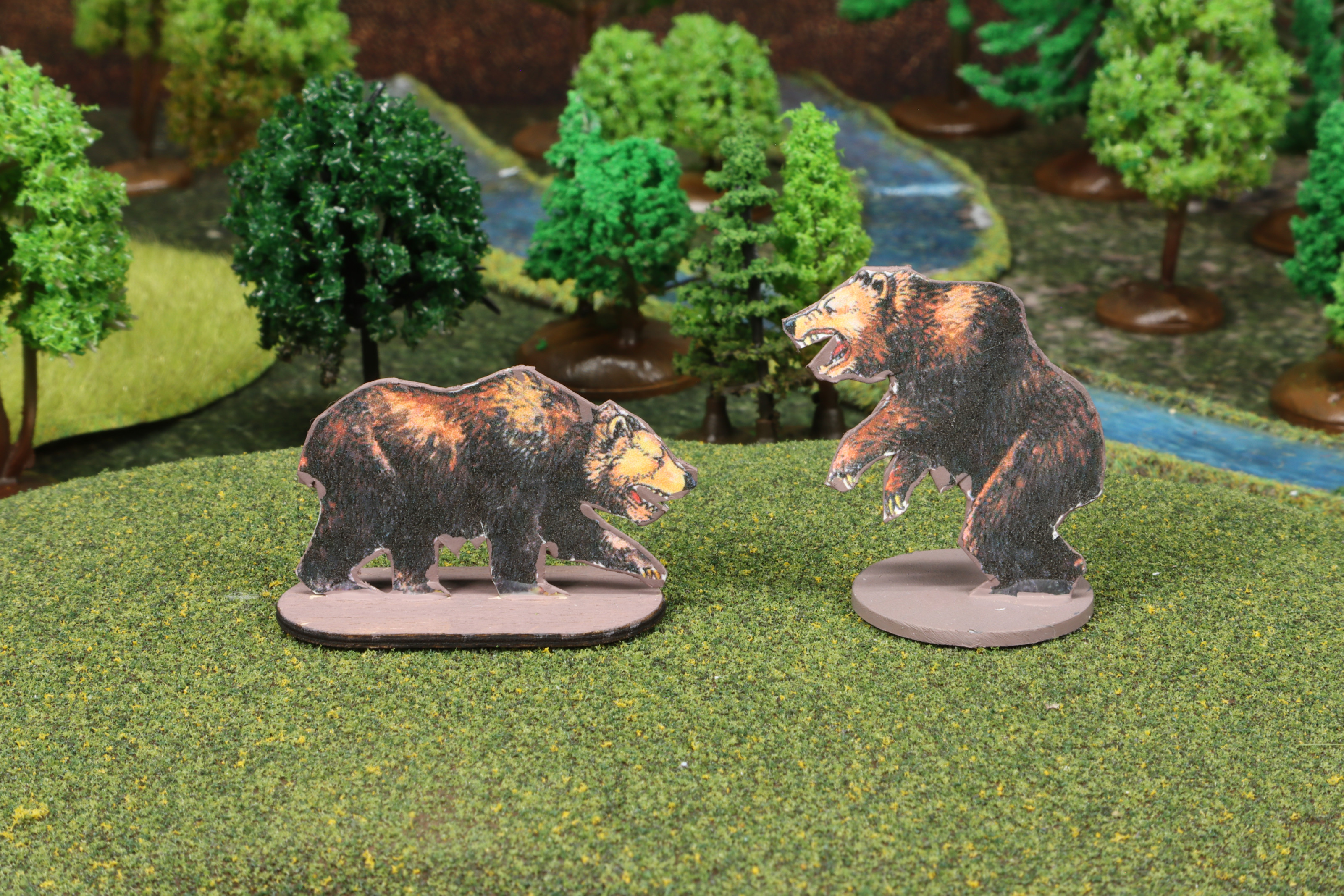
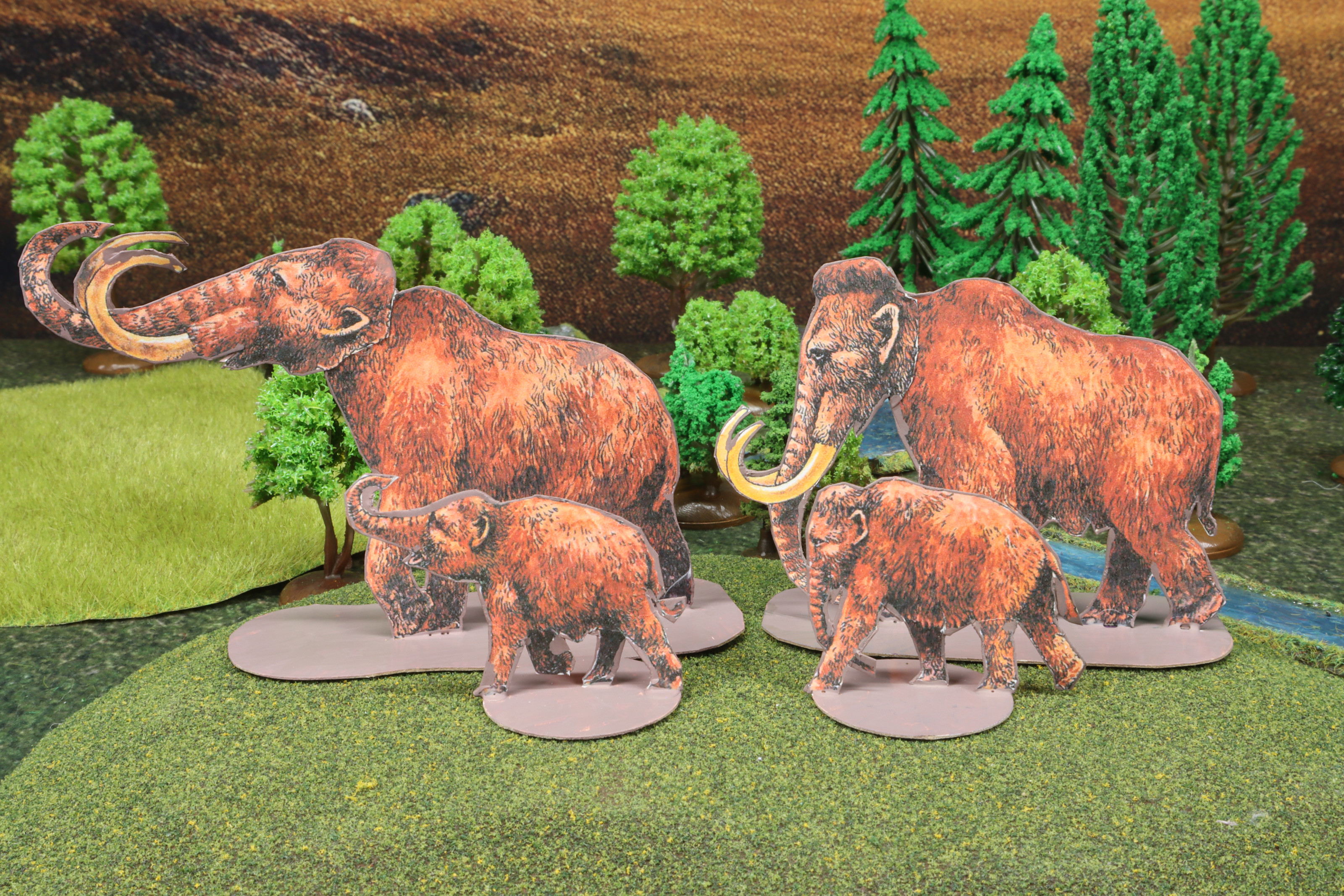
Paleolithic Fauna
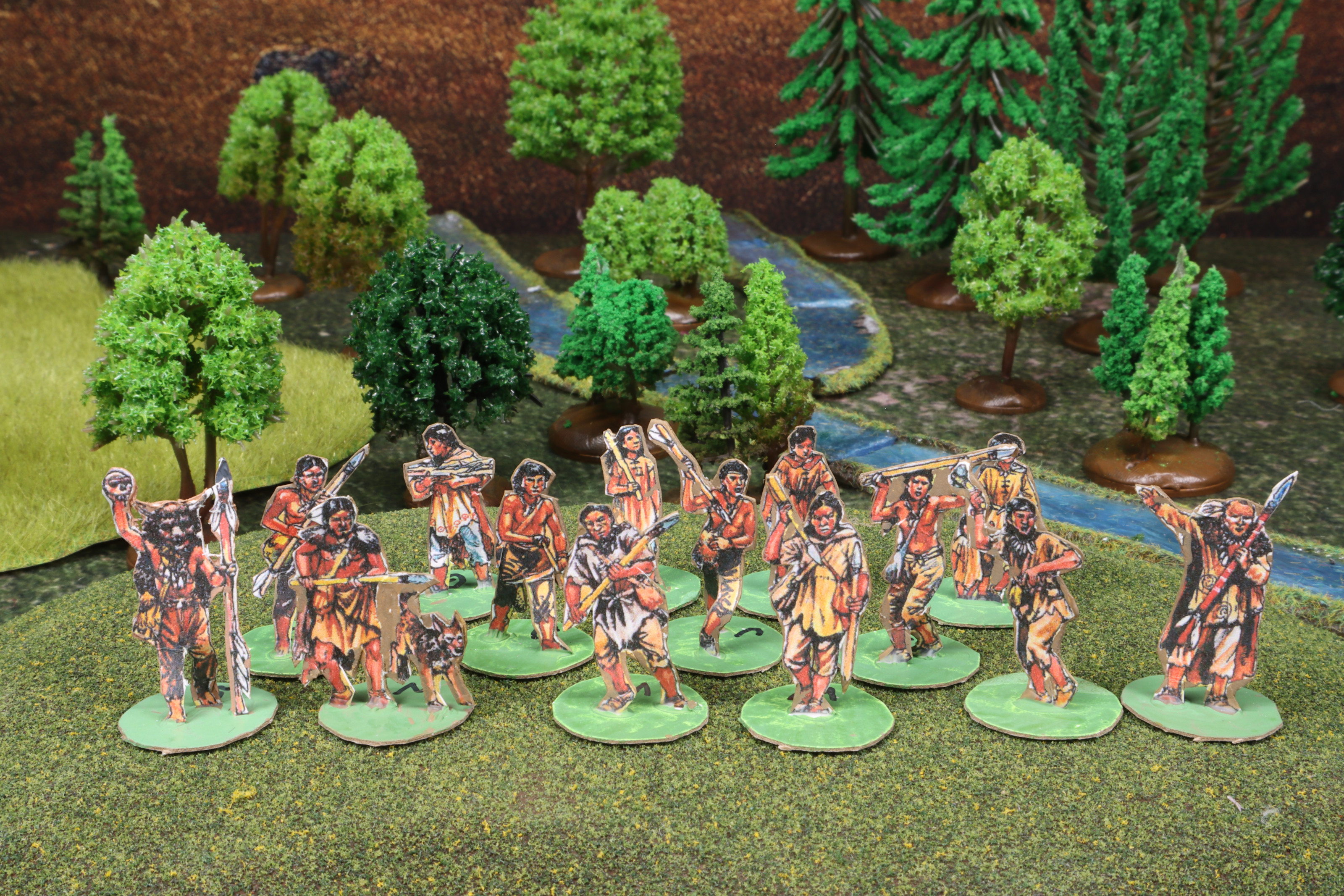
This section describes the Peter Dennis paper figures and the ones I chose to build and use to learn the Hide, Stone, and Bone game.
This photo shows the Homo Sapiens. To the far left is a Shaman, religious leader. To the far right is the leader. The other rows make up the warriors, juvenile, and gatherers that make up a typical tribe in the paleolithic era.
Peter Dennis describes these as 28mm. I measured a few of them, and yes my prints of the adults measure in the 28 to 30mm range. One nice thing about printable paper models is that you can adjust your print scale to 95 or 105 percent, whatever it takes to match any existing models you use.
My paper cutting is not as precise as most of the pros. However, wherever a white outline or edge shows, I have colored it in with a tan marker. This makes the obvious outline disappear into the background.
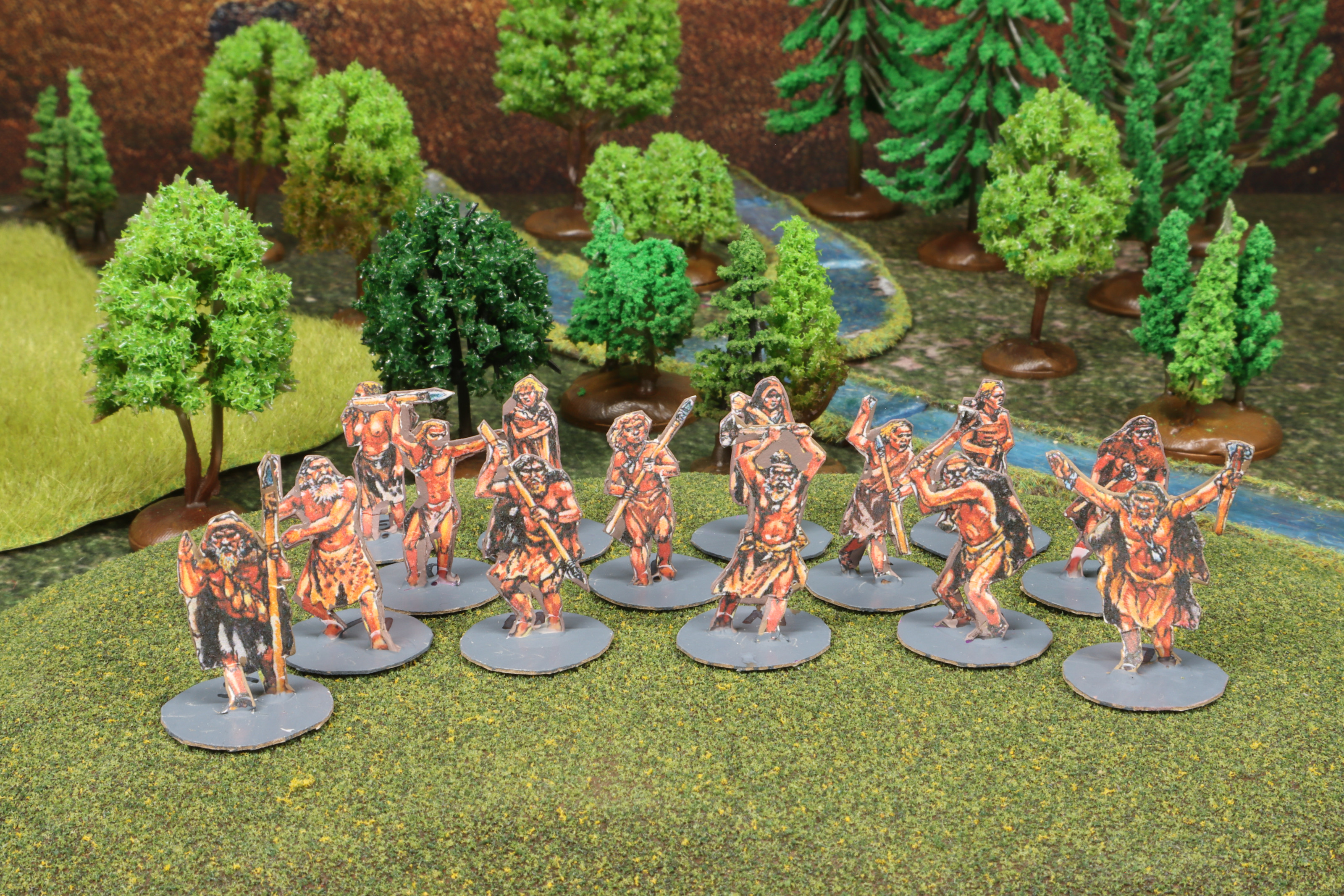
Like the previous group, there is a Shaman to the left and a leader to the right. The remaining rows are warriors, juveniles, and gatherers.
My neanderthals have gray bases to distinguish them from the other hominds. The bases are made from cereal box cardboard. I hand cut these bases, but later I splurged for a one inch circle punch to speed up the process.
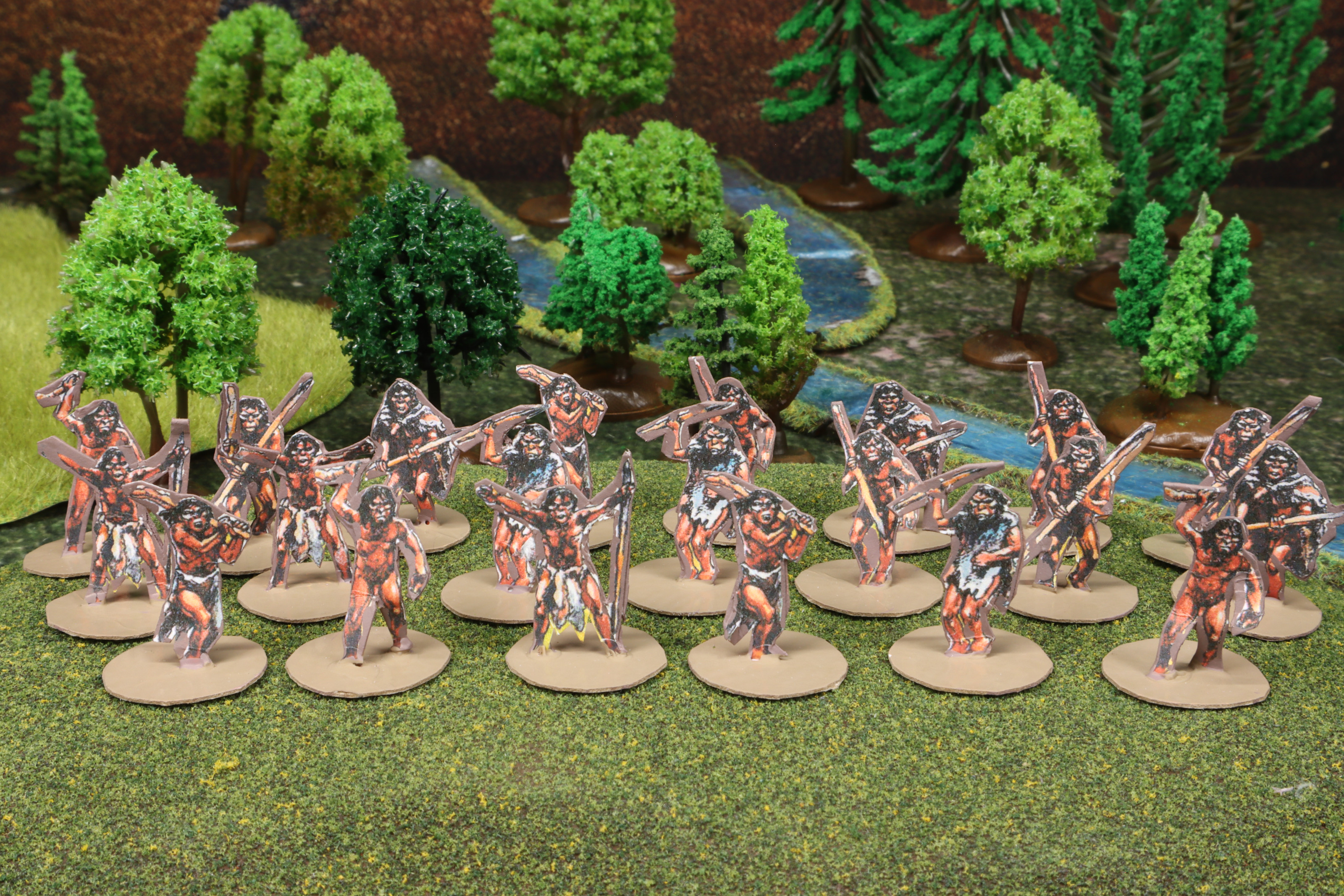
The Hide, Stone, and Bone (HSB) rules have no specific rules for these figures. I just them as juveniles.
HSB has a campaign mode where individuals can age and develop skills, your band can research and acquire tools, and potentially be starved into oblivion. Here I presented a scenario, so I could learn the actions and combat of the game, but the campaign mode has many nice features.
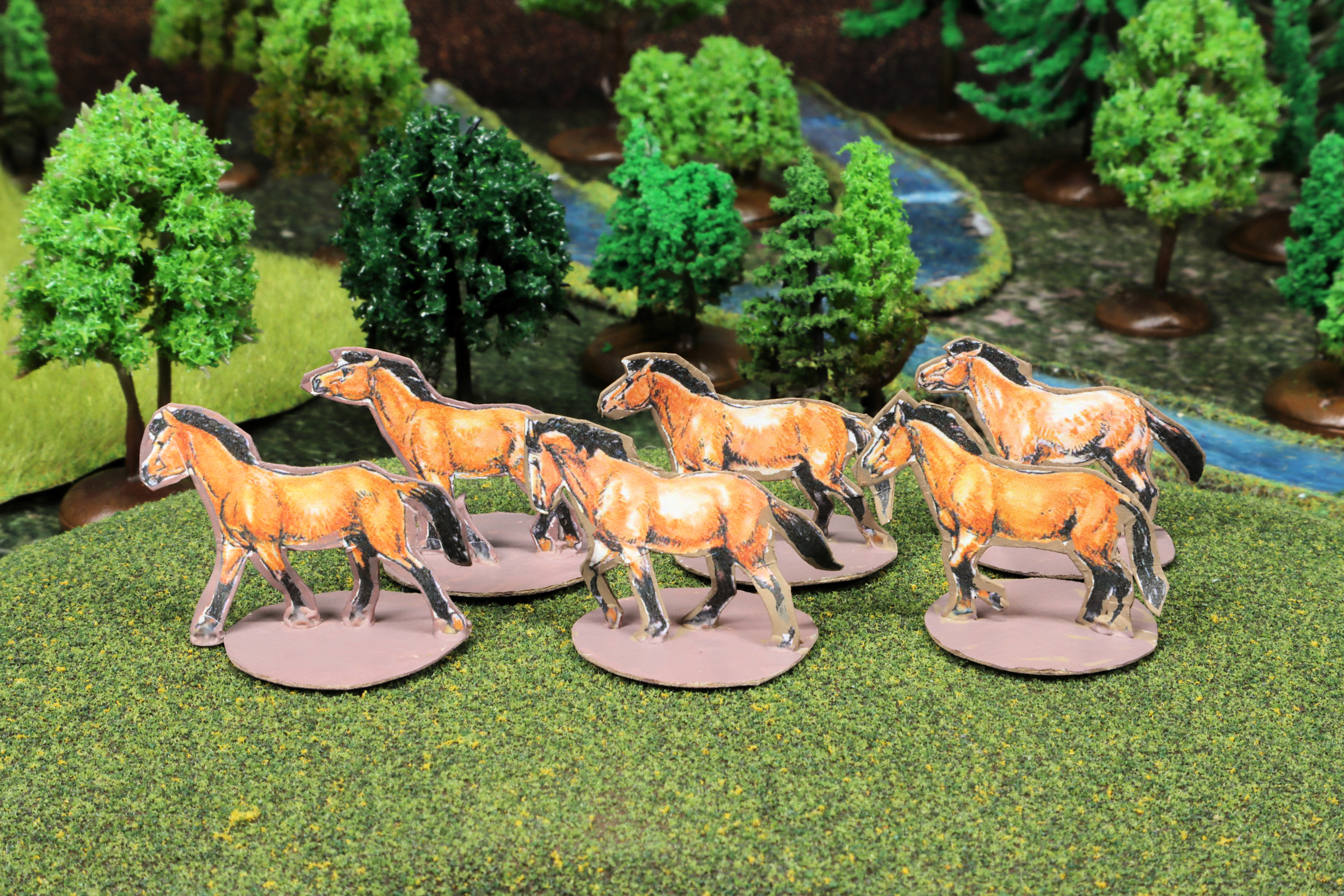
Here are the wild horses of the paleolithic age. An excellent representation with the horse being smaller and a light bay or dun coloring.